


9/11 Anniversary: AV and digital signage technology to commemorate and remember the victims of the terrorist attacks
Trece años después del ataque terrorista más trágico de la historia: he 11 de septiembre de 2001 en Nueva York y Washington, el museo y espacio dedicado a la memoria y recuerdo de sus víctimas rinde un emocionado homenaje a las mismas, con las tecnologías audiovisuales y de digital signage como herramientas fundamentales de esta evocación.
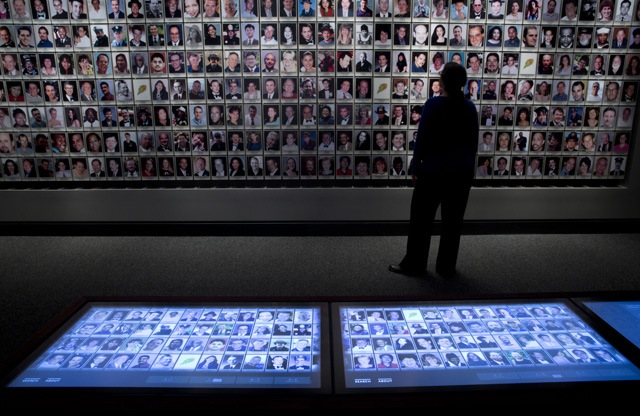
El National September 11 Memorial & Museum capta especialmente en ese día la atención internacional en la conmemoración del decimotercer aniversario de los atentados terroristas de Nueva York y Washington, una fecha que ha quedado marcada en la historia mundial, en el que murieron 2.976 personas.
This space, creado como lugar de homenaje, culto, reflexión y recuerdo a las víctimas del 11-S, abrió completamente sus puertas hace unos meses con la inauguración del museo por parte del presidente de Estados Unidos, Barack Obama, y se ubica en la manzana donde se encontraban originalmente las torres gemelas que componían el World Trade Center, un complejo comercial y empresarial en el Bajo Manhattan formado por siete edificios y en el que trabajaban unas 35.000 personas, que quedó destruido tras los atentados terroristas.
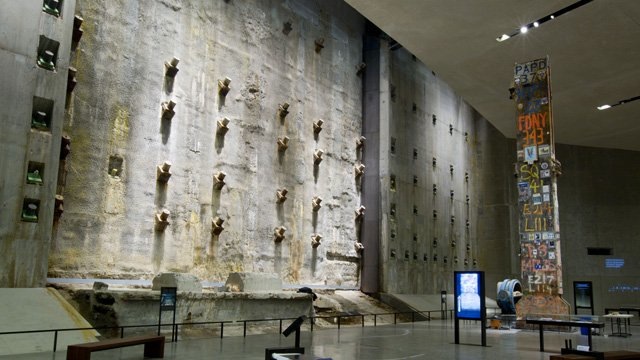
Muchas emociones, reacciones y recuerdos son los que se experimentan cuando se recorre este museo, donde las tecnologías audiovisuales y de digital signage son un elemento fundamental en la recreación de las imágenes, videos, projections,… de ese trágico día y, by extension, de muchos más posteriores al ataque y de su reconstrucción para intentar comprender lo sucedido.
Cerca de un centenar de instalaciones multimedia componen el National September 11 Memorial & Museum; una labor compleja en conceptualización e ingeniería realizada durante casi diez años para intentar canalizar el dolor, apoyar y recordar a cada una de las víctimas fallecidas en el atentado.
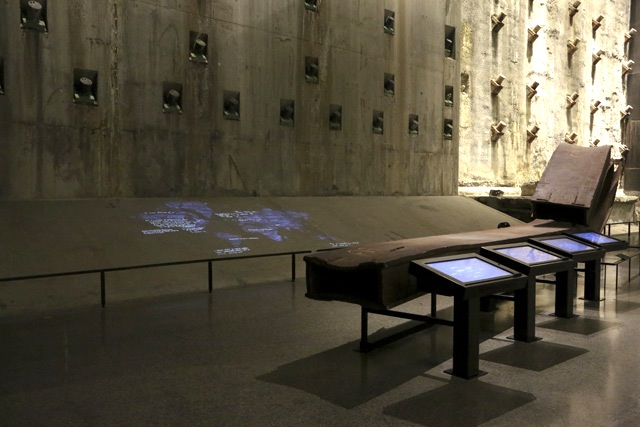
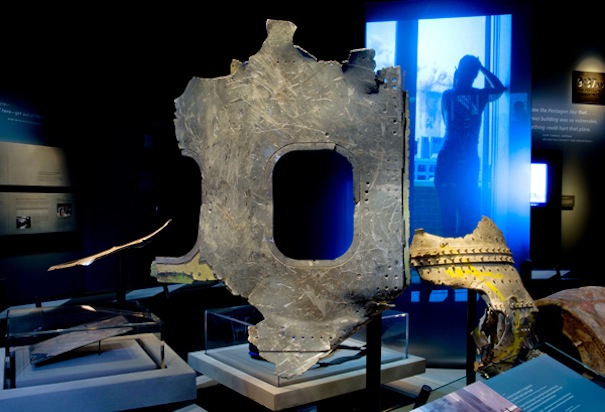
Los visitantes ingresan al museo a través de un pabellón en cuyo atrio se han colocado dos tridentes de acero originales, pertenecientes a la fachada de la torre norte del WTC, así como fuselaje de uno de los aviones, mientras que la exhibición principal se ubica en los cimientos originales y bajo rasante del complejo.
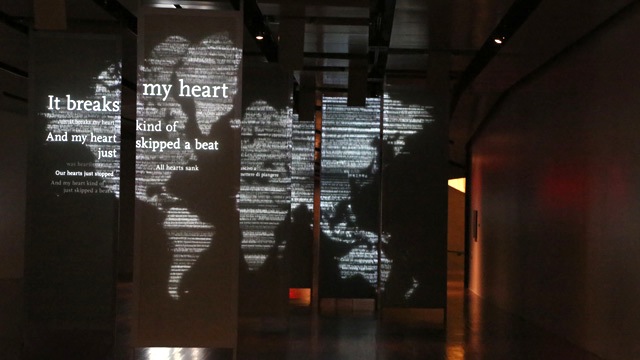
Los sistemas AV y de digital signage del museo han sido suministrados por la multinacional Electrosonic. Seis grandes pantallas verticales, en configuración vertical y escalonadas por una rampa que da acceso al museo muestran los primeros contenidos de la tragedia, que se complementa con la porción de un mapa mundial que se proyecta sobre cada uno de los displays y que dan uniformidad y cohesión al conjunto de elementos audiovisuales, junto con dieciséis altavoces montados en el techo a través de los cuales una voz en off relata en varios idiomas los momentos previos al fatídico día.
La Última columna
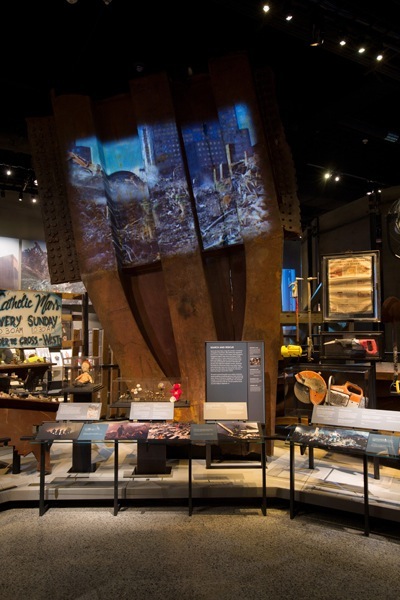
En la zona Foundation Hall, más conocida como la Última columna (Last columna), una pieza de acero más de diez metros de altura perteneciente a las Torres Gemelas preside el espacio, junto con dos pantallas táctiles de 55 inches, en las que los visitantes pueden desplazarse hacia arriba y debajo de la longitud de la columna para visualizar los nombres de las víctimas y los recuerdos que aparecen a su lado.
Besides, ocho mesas interactivas se distribuyen para buscar en detalle la fotografía de la cara de sus seres queridos, cuyas fotos se muestran también en la pared; biografías y más imágenes cedidas por sus familiares.
En las tres paredes que rodean a los visitantes en este espacio, siete proyectores se encargan de mostrar el vídeo, de once minutos de duración, realizado por el cineasta Jim Whitaker durante los últimos trece años, fruto de una laboriosa selección de las imágenes capturadas y seleccionadas por este profesional del entorno en el que actualmente se ubica el museo; desde su estado en ruinas, su limpieza hasta la reconstrucción.
Espacios multidisciplinares para la reflexión y la educación
El museo también cuenta con cuatro aulas de educación, equipadas con pizarras digitales, cámaras de documentos, video conferencing systems, etc. en la que se explica a visitantes y escolares diversas materias relacionadas con la seguridad, la historia y consecuencias de los atentados,…
 Electrosonic también ha proporcionado los sistemas audiovisuales para el pabellón del auditorio, un espacio multidisciplinar con 150 seats, approximately, que se utiliza para mostrar los vídeos del 11-S, películas relacionadas y que también se utiliza para la celebración de conferencias y eventos.
Otro de los espacios que involucran a los visitantes en su recorridos son unas cabinas, dotadas con pantallas, para que cada persona pueda grabar su propia historia, testimonio o recuerdo del 11-S, que luego se proyecta en una pantalla digital de gran formato.
Los sistemas audiovisuales distribuidos por las diferentes salas del museo se gestionan desde tres salas de control de servicios, donde se albergan los racks. El auditorio cuenta con su propia sala de control y los técnicos de Electrosonic se encargan de mantener in situ el mantenimiento de los equipos y su correcto funcionamiento.
Did you like this article?
Subscribe to our NEWSLETTER and you won't miss anything.
Related articles
 The digital signage industry rewards nsign.tv technology for retail
 NEC Display presents its new MediaPlayer powered by Raspberry Pi for digital signage
 Medina Azahara projects a videomapping to commemorate its anniversary as a World Heritage Site
 The Royal Pavilion was filled with light and color to commemorate the 50 Brighton Festival anniversary
 Panasonic will present at ISE 2016 a line of screens for digital signage with SOC technology
 Trilite Trixels: Autostereoscopic 3D technology for outdoor digital signage displays
 Utrecht City Council uses BrightSign technology for its digital signage project
 Bucharest opts for 3D video projection on the façade of Parliament to commemorate its 555 birthday
 FBI ‘Wall Honor’: tecnología digital e interactiva para recordar a los fallecidos en acto de servicio
Samsung and Tripleplay provide digital signage technology for the Ernest-Wallon stadium
FBI ‘Wall Honor’: tecnología digital e interactiva para recordar a los fallecidos en acto de servicio
Samsung and Tripleplay provide digital signage technology for the Ernest-Wallon stadium
 Ateire obtains a digital signage R&D project for the Science and Technology Council of Mexico
 La nueva sede de la Agencia EFE se apoya en la tecnología de digital signage para informar a sus empleados
 The Mercado de San Miguel in Madrid uses Alzinia technology for its digital signage projects
 Digital signage and AV technology to present the new Samsung Galaxy S4 to the world