


The inventors of blue LED light, Nobel Prize in Physics 2014, for being “a new source of light to illuminate the world”
Los inventores de las luces azules LED: los japoneses Isamu Akasaki, Hiroshi Amano y Shuji Nakamura han sido distinguidos con el Premio Nobel de Física 2014 por crear “una nueva luz para iluminar el mundo, una nueva fuente de energía eficiente y respetuosa con el medio ambiente”, tal y como señala el comunicado de la Academia Sueca de las Ciencias.
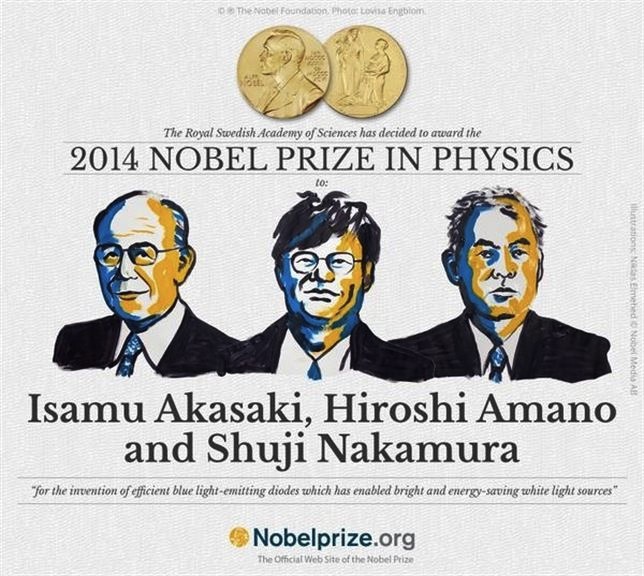
Las luces azules LED, una fuente de luz eficiente y respetuosa con el medio ambiente, ha sido distinguida, a través de sus inventores, los científicos y profesores universitarios Isamu Akasaki, Hiroshi Amano y Shuji Nakamura, con el Premio Nobel de Física 2014, según el anuncio realizado por el secretario permanente de la Real Academia Sueca de las Ciencias, Steffan Normak, en una comparecencia retransmitida en directo por la organización de los Premios Nobel el martes 7 October.
Este prestigioso galardón reconoce al LED (diodo emisor de luz) como “una nueva fuente de energía eficiente y respetuosa con el medio ambiente”, según el comunicado emitido, que se inscribe en “el espíritu de Alfred Nobel” para crear inventos que “aporten un gran beneficio a la Humanidad”, y el LED “es una nueva luz para iluminar el mundo”.
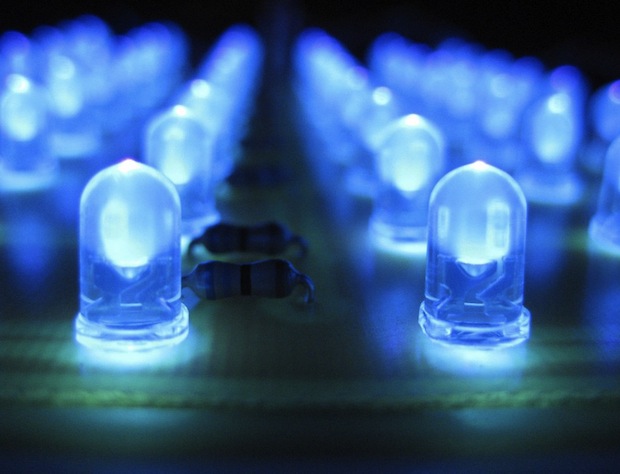 Los científicos japoneses Isamu Akasaki, Hiroshi Amano y Shuji Nakamura (con nacionalidad estadounidense) inventaron las luces azules LED a principios de la década de los 90, ya que hasta la fecha sólo se conocían los diodos emisores de luz rojo y verde, y de ahí su distinción para lograr “una transformación fundamental de las tecnologías de iluminación”, como señala la Academia, para “generar la luz blanca de una nueva forma gracias a la invención de la luz azul LED, que había sido un reto durante tres décadas. Con la llegada de las lámparas LED tenemos más alternativas duraderas y eficientes a las antiguas fuentes de luz”.
In this sense, el comunicado de esta institución subraya que la labor realizada por estos tres científicos “ha triunfado donde todos habían fracasado” y recalcan que sus inventos “han sido revolucionarios. Las bombillas incandescentes iluminaron el Siglo XX y el Siglo XXI será iluminado por las lámparas LED”.
Energy efficiency, durabilidad y respeto al medio ambiente han sido otros de los argumentos que la Real Academia Sueca de las Ciencias han destacado sobre la concesión de este galardón, con especial hincapié en los beneficios para mejorar la calidad de vida de la población: “las lámparas LED son una clara promesa para mejorar el nivel de vida para más de 1.500 millones de personas en todo el mundo que no tienen acceso a las redes eléctricas: debido al poco consumo que requieren pueden ser alimentadas por plantas solares locales”.
El Nobel de Física esta dotado con ocho millones de coronas (882.000 euros), que se repartirán a partes iguales entre los galardonados. La entrega de los Nobel se realizará, como marca la tradición, the next 10 December, aniversario de la muerte de Alfred Nobel, en Estocolmo.
Did you like this article?
Subscribe to our NEWSLETTER and you won't miss anything.
Related articles
 Vorstin once again trusts Robe to illuminate his rooms
 The National hotel chooses Prolights Led technology to illuminate its theater
 Glastonbury 2023 trusts Robe again to illuminate its stages
 The Mall of The Netherlands uses a large format screen to ensure physical distancing
 Prilux contributes its LED technology to illuminate Christmas in Zaragoza
 The Roselli gym is committed to AV technology as support for physical activity
 ACL systems 360 Matrix to illuminate the MTV Europe Music Awards gala
 Toledo joins the 'Monumental Challenge in Blue' to raise awareness about diabetes
 Robert Juliat systems give light to 'An invisible piece of this world', Max Award for Lighting Design
 El vestuario virtual Osram Debut recibe el premio a la innovación en Light Fair 2014
Symetrix will attend ISE 2014 with its solutions for the interconnected AV world
El vestuario virtual Osram Debut recibe el premio a la innovación en Light Fair 2014
Symetrix will attend ISE 2014 with its solutions for the interconnected AV world
 Clear Channel will illuminate New York's Empire State Building with 'Halloween' LEDs to offer the world 'trick or treat'
 Osram Opto launches new high-power blue laser diode for professional projectors
 ETC turns to Christie to illuminate the opening ceremony of the 12th Pan Arab Games