


Indra and Televés apply IoT in the healthcare sector with the Sisens project
This pioneering system in Europe allows monitoring all the parameters related to a patient, It has been developed with Spanish technology as a result of the Indra and Televés joint venture., and is implemented in hospitalization units, boxes and observation area of the emergency unit of the Ourense University Hospital Complex (College).
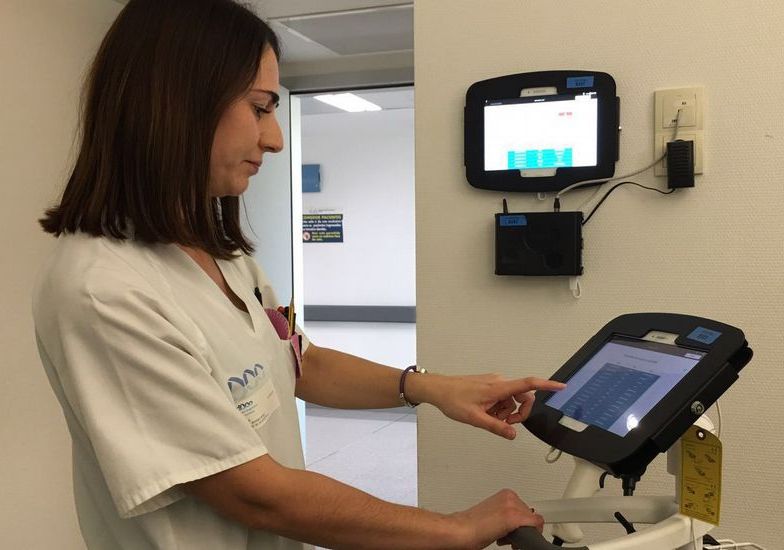
Developed by Spanish multinationals Indra y Televes for the Galician Health Service (Galician Health Service – Sergas), the Experimental Hospital Hospitalization project 2050, called Sixens, has been awarded by the Ad Qualitatem Foundation, in the ICT application category, as the best quality initiative, sustainability and innovation in the socio-health sector.
This pioneering system in Europe allows automatic collection and registration, wirelessly and in real time the parameters, biological and environmental, to monitor the clinical status and evolution of the patient during their hospitalization and include them in their digital medical history thanks to a unique comprehensive monitoring receiver, according to the statement from both companies.
Sisens is based on the combination of Televés smart concentrators connected uninterruptedly to the Sofia2 platform, the IoT solution (internet of things – Internet of Things) by Indra, to capture and upload information on the patient's clinical status and evolution. This advance is included in the 'Innovative Hospitalization' project, which is part of Hospital 2050, a program co-financed by EU Fed funds (80%) and acquired by the Indra-Televés UTE under the Innovative Public Purchase modality (CPI).
Unique integral monitoring receiver
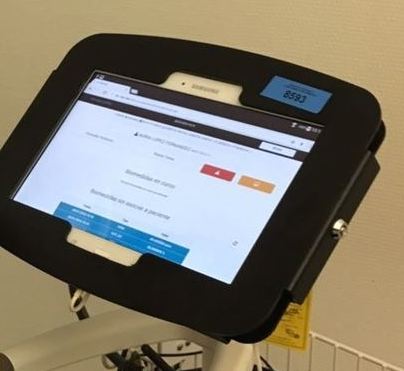 For the development of the Sisens project, the creation of a new technology was financed, consisting of a 'smart concentrator', developed and manufactured by Televés, connected continuously to Sofia2, which acts as a centralizing platform that collects and analyzes in real time all the information received from the devices deployed in the hospital, either from the emergency room, operating rooms, ambulances, hospitalization unit and even from the patient's home.
These concentrators, Small in size to facilitate mobility, allow you to capture and upload information on the patient's clinical status and evolution to Sofia2, which later integrates it into the nursing care application (called Gazelle) and in the electronic medical history implemented in Sergas (Ianus).
This smart receiver captures signals through different technologies (Bluetooth, WiFi, radio frequency and digital broadcasting) of a set of wireless equipment used to measure the vital signs of the admitted patient, from the most basic (temperature, blood pressure, pulse, glycemia,..) even the most complex electrocardiogram, level of analgesia or sedation), as well as monitoring equipment (cardiac, respiratory, oxygen saturation).
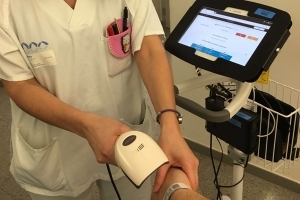 The system is completed with wireless warning buttons and fall sensors, as well as capturing pressure variations in the mattress, with the aim of detecting at all times if the patient is agitated or immobile for too long, with the consequent risk of ulcer formation, as well as detect symptoms that allow the prevention of diseases and improve the effectiveness of treatment..
Health professionals also have the information received by other ICT teams.: a central environmental sensor, installed in the patient's room, that measures the environmental conditions of the same, from temperature to noise, brightness, etc. and alert management. The centralization of all this patient information on the Sofia2 platform generates a big data repository of all the patient's clinical data in Sergas..
Did you like this article?
Subscribe to our NEWSLETTER and you won't miss anything.
Related articles
 The Tokyo robot stars in a pilot project to improve processes in the hotel sector
 The European Parliament wins the AV award for 'Public Sector Project of the Year' with Lawo infrastructure
 Sony brings its innovations to 4K, 3D and IP for the healthcare sector to Medica 2017
 Coruña Smart City completes its first phase of implementation of the project led by Indra
 Haivision Calypso 1.2 expands its spectrum to reach the educational sector, corporate, military and healthcare
 Indra will personalize user interaction with digital content with the Adapta project
NEC Display Solutions expands its offering for the healthcare sector with the MDview272 display
Indra will personalize user interaction with digital content with the Adapta project
NEC Display Solutions expands its offering for the healthcare sector with the MDview272 display
 Indra coordinates the first test of the European R&D project Perseus for maritime control and video surveillance
3MP boat, LED backlit display systems for healthcare
Indra coordinates the first test of the European R&D project Perseus for maritime control and video surveillance
3MP boat, LED backlit display systems for healthcare
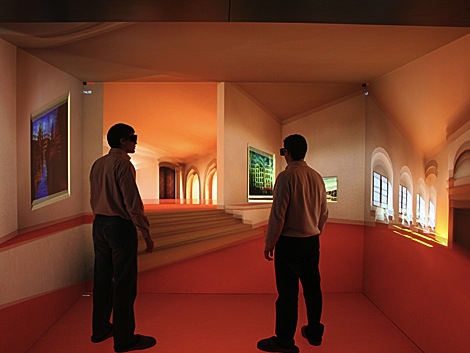 The 'Immersive TV' project’ by Indra integrates the user with the action that is broadcast on TV
 Forética awards the virtual sign language interpreter project developed by Indra
 Elo Touch Solutions presents VuPoint Touchcomputer touch monitors for the healthcare sector
 Indra prepares the Adapta project, that will allow you to interact with personalized digital content
 NEC and Citec-B will offer cloud solutions to the healthcare sector