


How to select the ideal sound solution for a meeting room (I)
In this article, Davida Rochman, communications manager de Shure, aconseja sobre cuáles son los sistemas de microfonía más idóneos que se deben instalar en una sala de reunión, atendiendo a su tamaño, número de asistentes y tipo de presentación que se va a realizar.
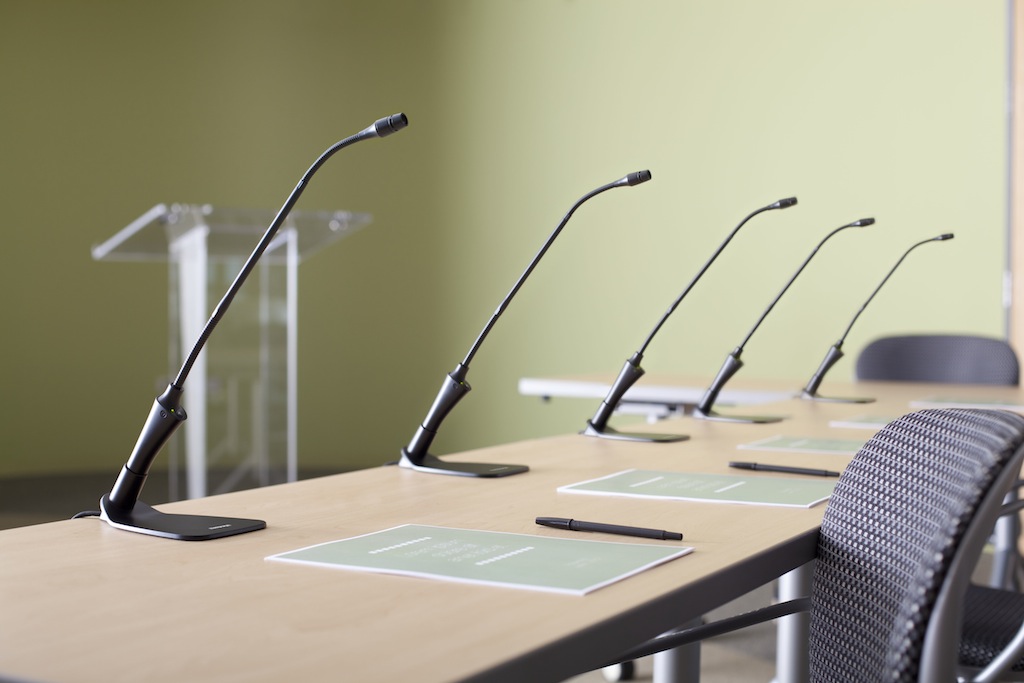
No existe una solución microfónica universal para aplicaciones de ámbito corporativo, municipal e institucional, en las que la inteligibilidad de la palabra en reuniones y conferencias es tan crítica.
A medida que el personal informático abarca cada vez más roles audiovisuales, este se ve forzado a pensar en aspectos analógicos, en lugar de en digitales. Este cambio de rol incluye la responsabilidad de realizar buenas selecciones microfónicas.
Este artículo va destinado a cualquier persona encargada del sonido en un entorno de reuniones y conferencias, ya provenga del mundo de la informática o del audiovisual.
A la hora de seleccionar la solución de sonido ideal para una reunión hay que tener en cuenta aspectos como las dimensiones de la sala, el número de personas involucradas y el de presentadores. También habrá que atender al estilo de la presentación; that is to say, si se trata de una persona a varias (como una conferencia), de varias personas a varias personas (como un foro) o híbrido, de varias personas a varias personas, con acceso restringido o con prioridades para utilizar los micrófonos (como en los juzgados, plenos de los ayuntamientos o en mesas redondas con moderador).
Besides, también se ha de considerar si existe un sistema de refuerzo sonoro involucrado o no.
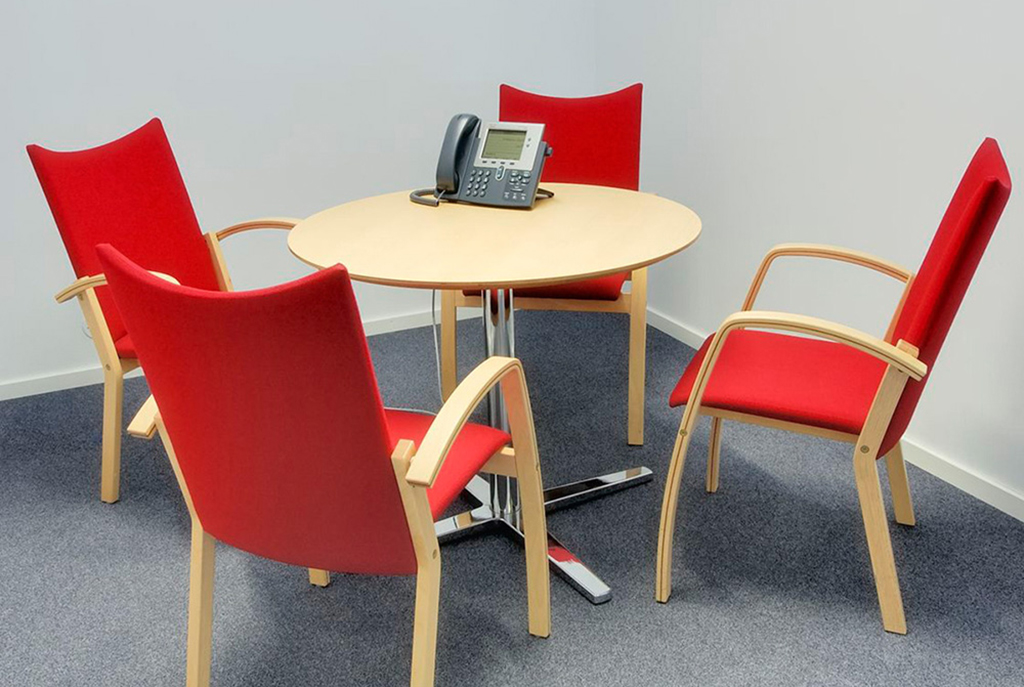
Sala de reuniones pequeña, grupos reducidos
Cuando hablamos de una sala pequeña, nos referimos a un espacio en el que caben de 4 a 8 personas, normalmente sentadas alrededor de una mesa redonda.
In general, en este tipo de entornos no se precisa de refuerzo sonoro alguno, pero muchas de estas salas cuentan con equipos de teleconferencia (audio ó audio y vídeo), que pueden ser portátiles o fijos.
En lo que respecta a los micrófonos, no existe sistema de PA en estos espacios, así que es la situación perfecta para un enfoque con micrófonos de superficie. Si el sistema no tiene sus propios micrófonos dedicados, se puede probar colocando un par de micrófonos de superficie alámbricos o inalámbricos sobre la mesa. Uno o dos micrófonos de condensador pequeños, colgando a unos palmos por encima de la mesa, también pueden ser una buena alternativa.

Sala de reuniones estándar
Esta es una versión más grande que la sala descrita en el punto anterior. En este espacio caben entre 6 y 30 personas, sentadas en torno a una o más mesas grandes, de modo que los participantes puedan verse unos a los otros.
Si la sala cuenta con una buena acústica, that is to say, si no es muy reverberante, puede que no sea necesario un sistema de refuerzo sonoro. However, tanto los sistemas de grabación como los de teleconferencia son comunes en este tipo de salas, lo que significa que se necesitarán micrófonos en ellas.
Siempre que se cuente con cuatro o cinco micrófonos, recomendamos que se cierren aquellos que no están siendo utilizados. La manera más fácil es usar micrófonos con conmutadores on/off integrados y confiar a los presentadores la tarea de manejar sus propios micrófonos.
Otra buena opción es un sistema de debate dedicado o un mezclador automático, que ahorra esta responsabilidad a los participantes, mejorando su concentración en la propia reunión. Un sistema de debate también tiene la ventaja de integrar un pequeño sistema de sonido en cada estación microfónica, eliminando prácticamente cualquier posibilidad de realimentación y facilitando a la vez que personas que se encuentren en extremos opuestos de la mesa puedan escucharse.
En la mayoría de los casos se elige disponer de un micrófono de sobremesa para cada participante, but, really, uno para cada dos participantes es normalmente suficiente.
Los micrófonos de cuello de cisne de sobremesa son la opción preferida en las salas de reuniones, ya que son siempre visibles, aunque también pueden utilizarse micrófonos de superficie, que a menudo pasan desapercibidos y son golpeados o cubiertos por papeles.
Si las mesas son móviles, los micrófonos de cuello de cisne inalámbricos pueden ofrecer flexibilidad y rapidez de configuración. Para el moderador del debate, un micrófono inalámbrico de diadema o de solapa es una buena opción.
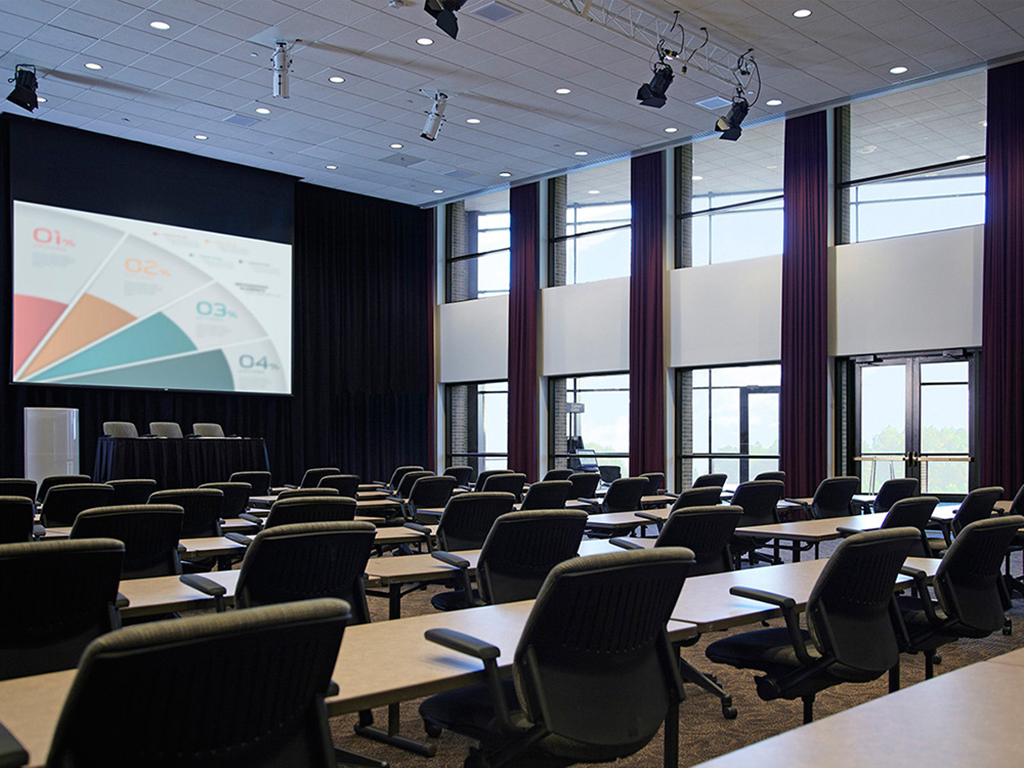
Sala de formación/aula
Este es un escenario clásico de comunicaciones de una persona hacia varias, que suele incluir hasta 30 asistentes sentados en sillas mirando al ponente o profesor.
Cuanto más grande y reverberante sea la sala, mayor será la necesidad de un sistema de refuerzo sonoro en la parte frontal dirigido hacia los asistentes. Las salas más pequeñas, que no precisan de un sistema de sonido, puede que necesiten realizar la toma de sonido del ponente para retransmisiones en streaming, para vídeoconferencia y/o grabación de la presentación. Maximizar la inteligibilidad es crítico en cualquier entorno de aprendizaje.
El ponente puede que esté situado en un atril, pero es más normal que deambule durante la presentación para usar una pizarra, una pantalla u otras herramientas de presentación. Para integrar la captación de voz con manos libres, la solución preferida es un micrófono inalámbrico de diadema o de solapa.
Las preguntas de los alumnos se pueden captar de varias maneras. Se puede ubicar un micrófono dedicado en una mesa concreta o en un pie de micro, para que los alumnos se acerquen a plantear sus preguntas. También se puede utilizar un micrófono de mano inalámbrico, que pueda pasarse de mano en mano hasta llegar a la persona que quiere plantear la pregunta.
Los micrófonos aéreos ubicados por encima del área de público sólo deben considerarse cuando no hay sistema de refuerzo sonoro alguno y la acústica de la sala es buena. Si la sala se ha diseñado para que haya una dinámica interactiva, se debe considerar un sistema de micrófonos de sobremesa con mezclador automático o un sistema de debate.
En una segunda parte, Davida Rochman ahonda en otro tipo de espacios como son el salón de actos, entornos de videoconferencia, salas de reuniones con sistema de control AMX y los salones de plenos y grandes salas de reunión.
Acceso a la segunda parte de esta tribuna
Davida Rochman
Communications Manager de Shure Incorporated
Distribuidor en Iberia: Earpro

Did you like this article?
Subscribe to our NEWSLETTER and you won't miss anything.
Related articles
 SPC For Business Yealink MeetingBoard Pro: AIO solution for meeting rooms
 Crestron and Jabra offer smart video solution for small meeting rooms
 Kramer DSP-62-AEC: quality sound for meeting spaces
 Dell presents its new UltraSharp monitors and a solution for meeting spaces
 Ricoh develops a comprehensive management and collaboration solution for meeting rooms
 TrauluxDS is presented as a cloud solution for content management
 NEC unveils its wireless solution for presentations in classrooms and meeting rooms
 ImaginArt markets the Vaddio HuddleShot solution for small meeting rooms
 What does a great room need to have a productive and collaborative meeting??
Panasonic and Atlona join forces to offer a collaboration solution for meeting rooms
Crestron and Microsoft develop enterprise Skype solution for meeting rooms
Yealink VC120-12X: video conferencing solution for medium and large meeting rooms
Maverick markets Logitech's collaboration solution for meeting rooms
How to select a projection technology based on our own priorities
What does a great room need to have a productive and collaborative meeting??
Panasonic and Atlona join forces to offer a collaboration solution for meeting rooms
Crestron and Microsoft develop enterprise Skype solution for meeting rooms
Yealink VC120-12X: video conferencing solution for medium and large meeting rooms
Maverick markets Logitech's collaboration solution for meeting rooms
How to select a projection technology based on our own priorities