


The Royal Pavilion was filled with light and color to commemorate the 50 Brighton Festival anniversary
La fachada de este palaciego edificio fue el lugar elegido para proyectar el videomapping de 10 minutos de duración ‘Dr Blighty’. Para su puesta en escena se precisaron 6 proyectores Christie Boxer 4K30 de 30.000 lumens and 16 WU20K-J de 20.000 lumens, dispuestos en orientación vertical y horizontal y con una gama de lentes de entre 0.72:1 y 3.89:1.
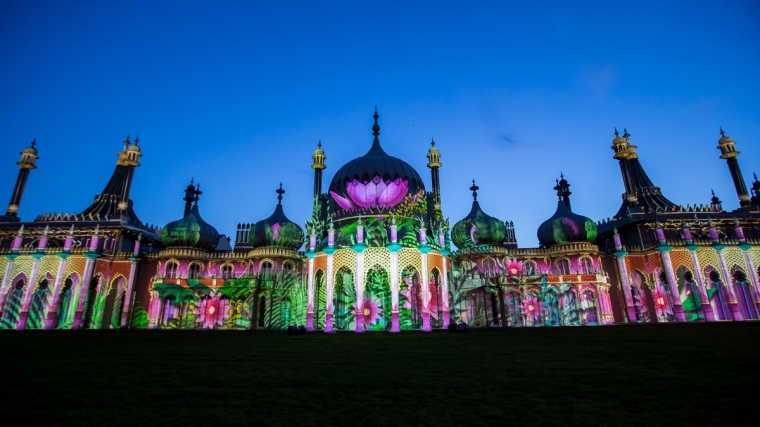
El Royal Pavilion es una antigua palacio localizado en Brighton (United Kingdom) que fue construido en el siglo XIX como un residencia de retiro para Jorge IV de Inglaterra. Hoy está abierto al público y se utiliza para eventos educativos, banquetes y bodas.
He Brighton Festival es una celebración anual en la que durante tres semanas se organizan, en diferentes lugares de la ciudad, espectáculos de música, theater, danza, circo, until, cine y todo tipo de eventos culturales. Con motivo de su 50 birthday, el Brighton Pavilion se convirtió en un enclave emblemático gracias al videomapping que se proyectó sobre su fachada.
La temática elegida para realizar esta proyección se basaba en la historia del propio edificio y en el papel que jugó durante la Primera Guerra Mundial como hospital para los soldados de la India heridos. Con este argumento nació ‘Dr Blighty’, una pieza de diez minutos de duración dirigida por Ajay Chhabra y cuyo contenido fue creado por los expertos en animación inmersiva Novak con música de Shri Shriram. La voz del diseñador de sonido Ed Carter narra la historia, hoy casi olvidada, de aquellos soldados que atravesaron medio mundo para luchar.
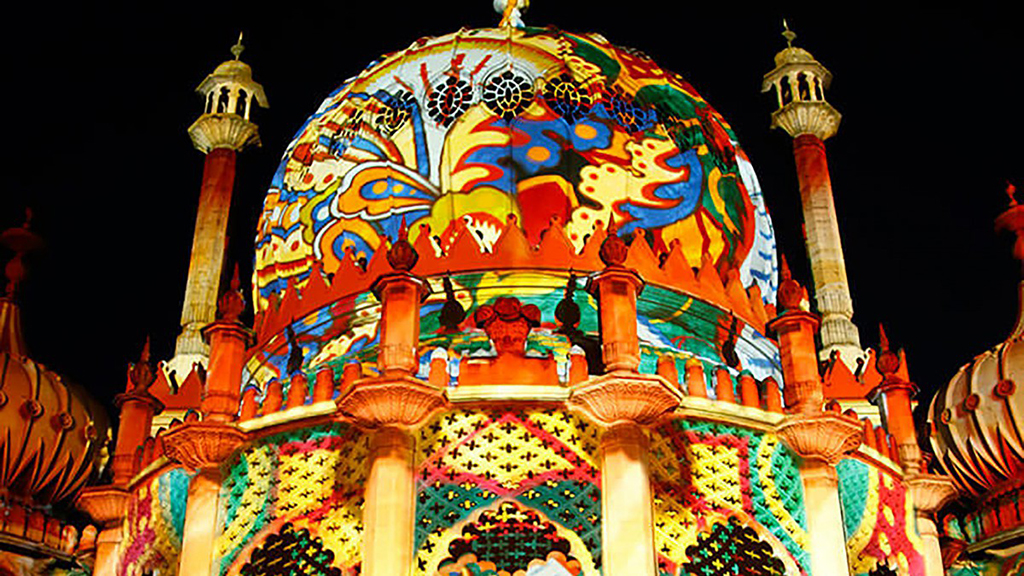
The company QED Productions y su director Paul Wigfield fueron los responsables de transformar la pieza de John Nash para conmemorar el 50 Aniversario del Brighton Festival. En colaboración con la empresa de diseño y montaje de espectáculos e instalaciones Nutkhu, convirtieron el Brighton Pavilion, no sólo en telón de fondo de un show sino en protagonista de la obra.
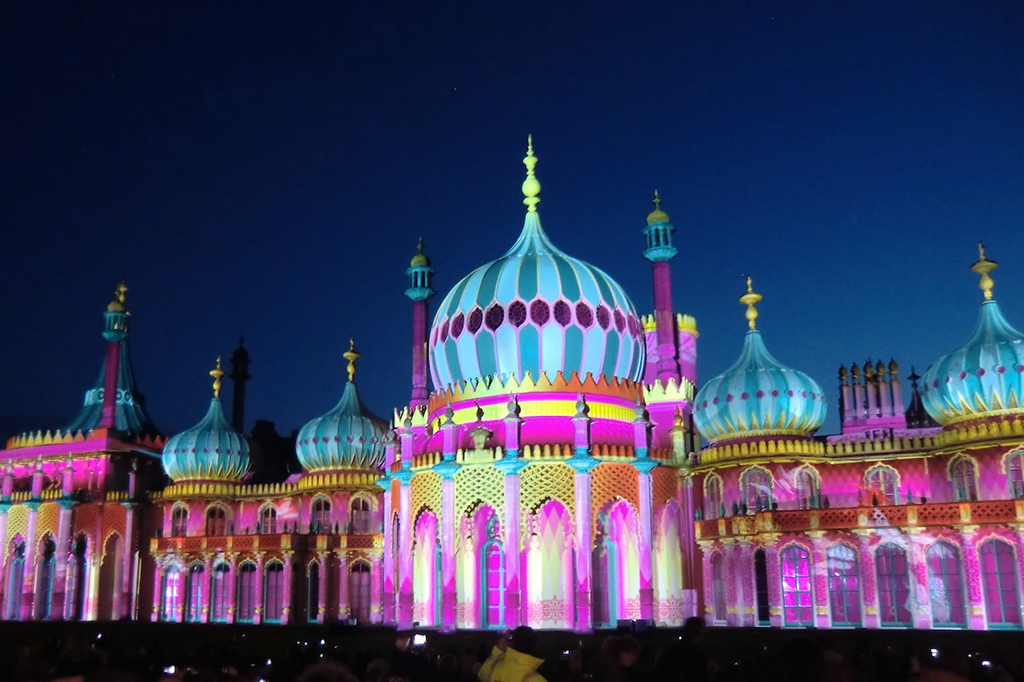
Su fachada, que recuerda el palacio de un Maharajah, se iluminó con brillantes imágenes que resaltaban aún más sus detalles arquitectónicos con vibrantes colores.
El diseño de Novak exigía una proyección continua, que fluyera sin interrupciones por todas las superficies, lo que implicaba cubrir de luz proyectada todos los elementos arquitectónicos y desde todos los ángulos posibles, de los hitos arquitectónicos más destacables a la parte posterior de las columnas.
Para lograr la cobertura necesaria se precisaron 22 salidas HD sincronizadas, enviadas desde dos servidores d3 4x4pro de D3 Technologies, y una potencia de proyección de 500.000 lumens.
Seis proyectores Christie Boxer 4K30 de 30.000 lumens and 16 Christie WU20K-J WUXGA de 20.000 lumens, dispuestos en orientación vertical y horizontal y con una gama de lentes de entre 0.72:1 y 3.89:1, fueron necesarios para la realización de este videomapping. Las señales llegaban a cada proyector individualmente a través de fibra óptica multicore, con 9 estructuras alojadas en los proyectores y el equipo de control. La infraestructura de sonido era entregada por un sistema de d&b audiotechnik.
Did you like this article?
Subscribe to our NEWSLETTER and you won't miss anything.
Related articles
 The exhibition 'Imagine a Festival' ends a successful 70 SSIFF anniversary
 Christie D4K40-RGB powers mapping to commemorate Victory Day in Russia
 Apollo Pavilion celebrates its 50 anniversary with a large scale mapping
 Medina Azahara projects a videomapping to commemorate its anniversary as a World Heritage Site
 Musical movements framed in a mapping to commemorate the end of World War I
 The Nocturnal Wonderland electronic music festival lights up its 20th anniversary with Elation
 Danny Rose debuts his multi-channel sound system to commemorate the Italian resistance
 Bucharest opts for 3D video projection on the façade of Parliament to commemorate its 555 birthday
 9/11 Anniversary: AV and digital signage technology to commemorate and remember the victims of the terrorist attacks
 Spectacular video projection at the Opera House and Sydney Harbor to mark the centenary of the Australian fleet
 DPA fully enters microphones for installation
 The Panasonic PT-DZ21K fills the Brandenburg Gate with color at the Berlin Festival of Lights
 The Sagrada Familia is filled with light and color to commemorate the La Mercè festivities
 Disneyland Paris celebrates its 20 anniversary with an explosion of light and color