


A spectacular 'Led' water waterfall welcomes visitors to the Salesforce building
To make this realistic simulation, its creators, Obscura Digital y Fusion CIS, They have used a 32 LED screen×4,5 metros con una resolución de 8.112×960 píxeles que se integran en el entorno como si formara parte de él.
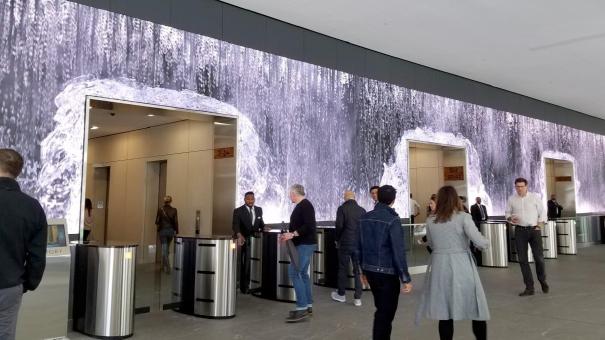
Con una espectacular cascada de agua es como se recibe a los visitantes en el edificio de Salesforce en San Francisco. Una realista simulación que se ha integrado en el espacio formando parte del vestíbulo.
Este efecto digital ha sido creado por el estudio creativo Obscura Digital y Fusion CIS utilizando una pantalla Led de 32×4,5 metros con una resolución de 8.112×960 pixels. La cascada, generada por ordenador, no se presenta como una imagen de fondo sino que forma parte de la escena. De su instalación se ha encargado la empresa SNA.
Para producir el efecto que se buscaba, se precisaron 1.100 frames y mientras que Renderstorm se encargó del procesamiento físico, Fusion CIS se centró en los retos que planteaban las simulaciones y la iluminación.
Se utilizó RealFlow (Next Limit Technologies) para crear esta simulación física dinámica, ya que Fusion CIS ha desarrollado una completa biblioteca de métodos y herramientas que amplían sus capacidades y permiten la gestión y control para lograr resultados personalizados.
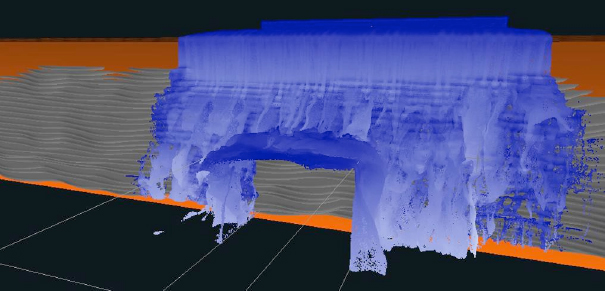
Para realizar este proyecto se diseñaron dos cascadas. Una versión básica que comienza a fluir gradualmente para convertirse en una completa cascada que salpica contra las puertas del vestíbulo, and?, gradualmente, se ralentiza hasta detenerse; y, una segunda, que planteó mayores retos ya que comienza con una cascada que fluye completamente para luego interactuar con un conjunto que se deforma en escalones, parece que sale fuera de la pared y retrocede.
Obscura Digital proporcionó el diseño de la pared como un archivo digital, con dimensiones ajustadas para coincidir con la pared del vestíbulo, y también creó la deformación de la geometría en niveles para la segunda cascada. Para lograr el nivel exacto de detalle, Fusion CIS diseñó un sistema digital de cascada con cuatro paneles solapados, que fueron reunidos en un archivo de iluminación para crear la cascada completa. Cada panel realiza la simulación por separado, permitiendo un mayor detalle en el agua de lo que habría sido posible si la cascada se hubiera realizado como una sola unidad.
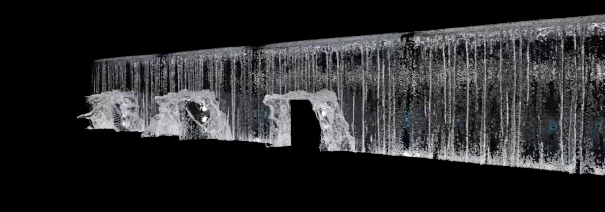
El agua en la simulación se vierte sobre un borde y hacia abajo. Fusion CIS diseñó un conjunto dinámico de pequeños cubos en el borde del acantilado, por lo que el agua desarrolla pequeños canales internos que cambian y evolucionan, evitando así una pared de agua plana sin rasgos. Besides, se creó un conjunto de fuerzas alrededor de las puertas del vestíbulo que permiten que el agua fluya de manera natural y dinámica.
Las simulaciones se realizaron en varias máquinas y el equipo de Fusion CIS generó las versiones de ‘superficie’ a través de un proceso denominado mallado. Cada panel de agua se ha generado con entre 50 y 100 millones de mallas poligonales por trama, de manera que la cascada total está compuesta por entre 200 y 400 millones de polígonos.
[youtube]https://youtu.be/czmrCp8U4jw[/youtube]
Did you like this article?
Subscribe to our NEWSLETTER and you won't miss anything.
Related articles
 The largest mobile Led screen in the world welcomes visitors at ISE
 Veristor receives visitors from an SNA Displays Led screen
 Guiyan Int. Financial Center welcomes its visitors with visuals of 52 million pixels
 Optoma Led screen welcomes visitors to Schindler's headquarters in Berlin
 Digital Projection's Radiance Led video wall welcomes visitors to the ISE headquarters in Munich
 WHEREAS 2019 welcomes the global AV industry in the largest and most spectacular edition in its history
 The OUE tower in Los Angeles welcomes its visitors with a brilliant work of visual engineering
 Western Sydney University's new campus welcomes visitors with a large-format curved LED screen
 TD Maverick welcomes its visitors at ISE 2017 with cutting-edge technologies in digital signage and collaboration
 Volkswagen Forum Drive in Berlin welcomes visitors with an eyevis video wall
 Gaudí's La Pedrera welcomes its visitors with a digital totem made up of four LED and LCD screens
 A large Christie Microtiles video wall greets visitors touring the LKAB mine
 A large video wall welcomes visitors to the new Oregon Ducks building
 Río 2016 invites the world to the Games with a spectacular projection on the water