


Libelium's IoT technology allows us to discover the interior of the Boca del Infierno volcano
El objetivo del proyecto ha sido construir un sistema digital de detección temprana para predecir las erupciones volcánicas. Con la información obtenida con los sensores Waspmote se va a construir una familia de ‘gemelos digitales’ que simule digitalmente lo que está ocurriendo dentro del cráter y poder experimentar con un volcán en activo en tiempo real.
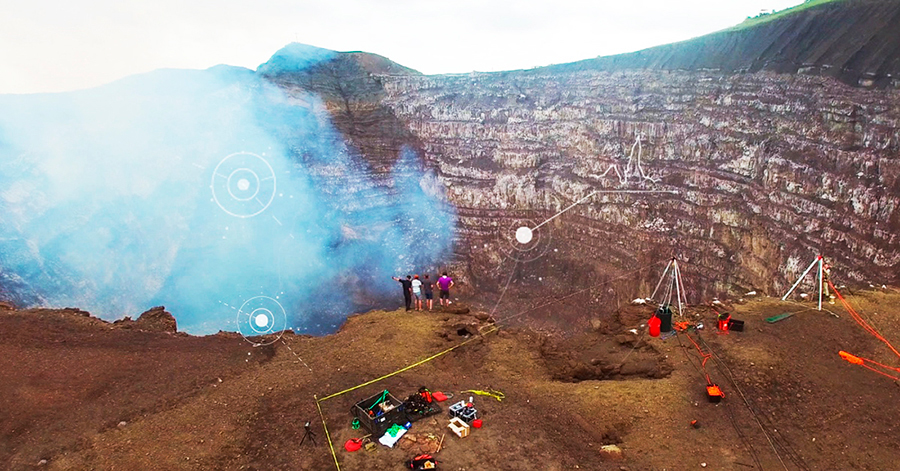
Los vulcanólogos apuestan por las últimas tecnologías que ofrece el Internet de las Cosas (IoT) para monitorizar en tiempo real todo lo que ocurre dentro y fuera de los cráteres, y predecir erupciones. La compañía que combina expediciones científicas innovadoras con proyectos de tecnología para impulsar cambios positivos, Qwake, ha confiado en la tecnología de Libelium para desarrollar una red de sensores inalámbricos en la Boca del Infierno, nombre por el que se conoce al volcán Masaya de Nicaragua.
Masaya es uno de los volcanes latinoamericanos más activos. In fact, durante el último trimestre de 2008 su caldera arrojó ceniza y vapor alcanzando una altura de 2,1 kilometers. En estos momentos, uno de sus cráteres cuenta en su interior con un lago de lava de 600 metros cuadrados que permite visualizar el comportamiento dinámico del magma en donde se aprecian efectos cascada, explosiones y erupciones de lava.
El equipo de Qwake, encabezado por el explorador y el director de documentales Sam Cossman, he Gobierno de Nicaragua, Libelium y General Electric (GE) han trabajado en este proyecto para lanzar el primer volcán online. La expedición tuvo lugar en los meses de julio y agosto de 2016.
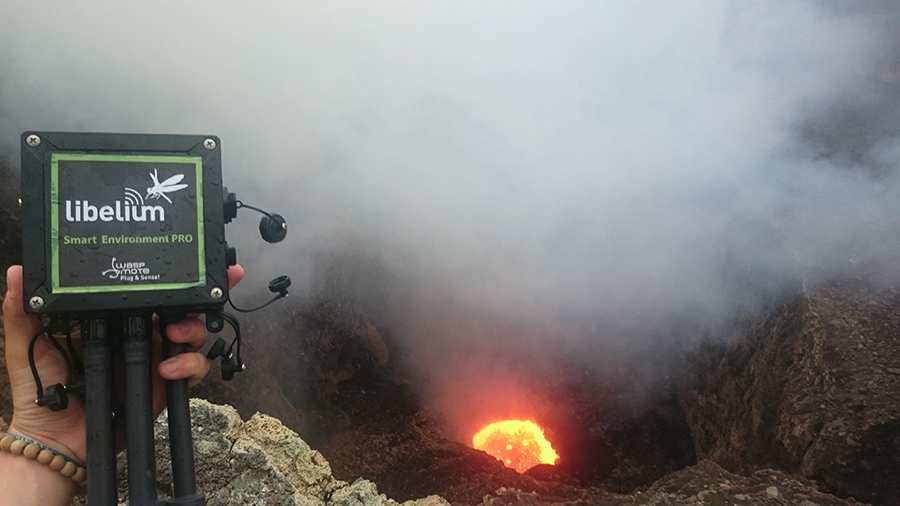
Qwake necesitaba implementar un sistema inalámbrico de monitorización capaz de recoger, transmitir y almacenar datos en tiempo real. For this reason, eligieron la tecnología de Libelium para obtener información directamente del cráter.
Para poder acceder de manera segura al Cráter Santiago, donde se encuentra el lago de lava a cielo abierto, Sam Cossman y su expedición desarrollaron un sistema de tirolinas que permitiera descender de manera eficiente tanto al propio equipo de la expedición como al material. Esto permitió instalar las plataformas de sensores Waspmote cerca del cráter para obtener datos en un ambiente tan extremo como difícil y casi inaccesible.
Las plataformas de sensores implementadas en el Volcán Masaya fueron Waspmote Plug & Sense! Smart Environment PRO y Waspmote Plug&Sense! Ambient Control que actuaron como repetidores de la señal enviada por los primeros. Se conectaron más de 80 de sensores para medir CO2, H2S, temperature, humidity and atmospheric pressure.
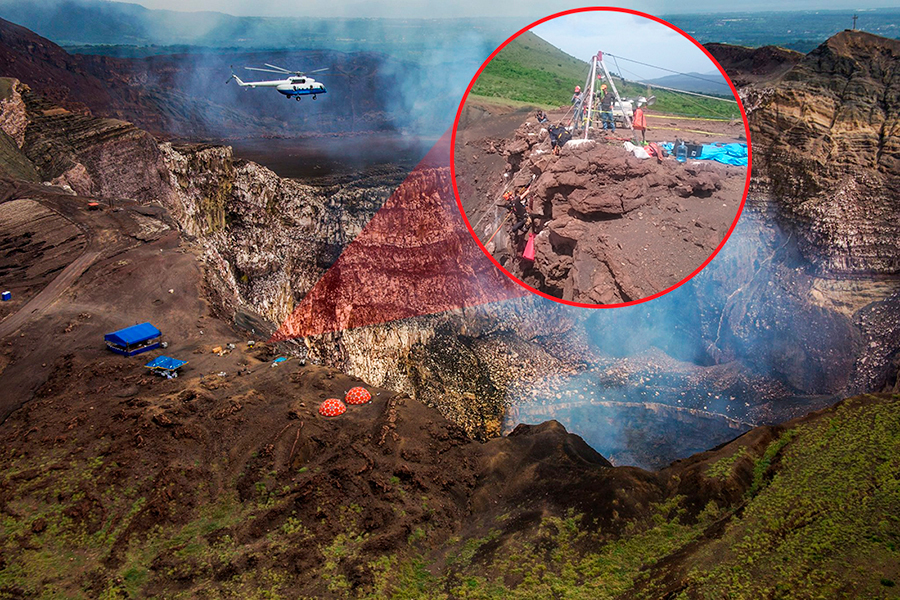
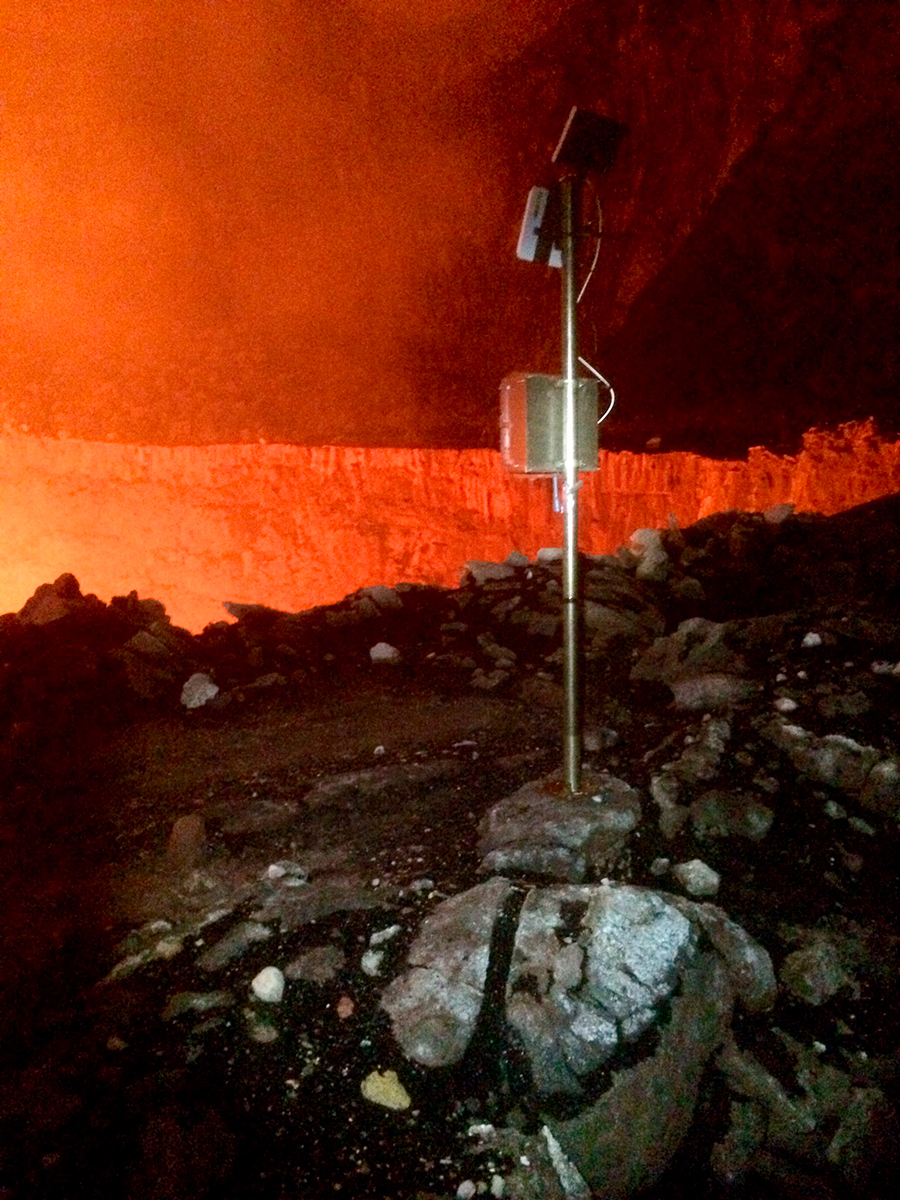
Las plataformas de sensores encapsuladas fueron selladas al vacío para protegerlas contra el calor dentro del cráter y también en las zonas cercanas al volcán. La temperatura donde colocaron la mayoría de los sensores estaba en torno a 150 grados Farenheit (approximately 65 degrees Celsius), aunque en algunas partes del volcán se alcanzaban entre 800 y 1.000 grados Farenheit (between 426 y 537 degrees Celsius).
Waspmote Plug & Sense! Smart Environment PRO enviaba la información directamente al Meshlium Gateway y en algunos casos, cuando la señal era baja, a los Waspmote Plug&Sense! Ambient Control que actuaban como estaciones repetidoras. Estos datos se enviaban a través de Xbee 900HP de Digi International. El IoT Gateway recogía los datos y enviaba información por 3G a la base de datos de GE donde luego era visualizada en Predix, un plataforma Cloud de GE desarrollada para el Internet Industrial.
Detección temprana de las erupciones
 El principal objetivo del proyecto ha sido construir un sistema digital de detección temprana para predecir las erupciones volcánicas. Esta información será utilizada por investigadores y científicos para construir una familia de “gemelos digitales” que simule digitalmente lo que está ocurriendo dentro del cráter.
El objetivo final de este proyecto consiste en ofrecer un servicio público dando acceso a la población y a los responsables de la toma de decisiones para permitirles experimentar con un volcán en activo en tiempo real.
Las herramientas analíticas predictivas basadas en la plataforma cloud utilizan una combinación de los datos recabados tras más de 20 años de trabajo sobre el terreno en el Volcán Masaya y la información obtenida por los sensores conectados a las Plataformas de Sensores Waspmote Plug & Sense! que se instalaron en este proyecto. Todos estos datos ayudarán a anticipar crisis volcánicas y actuar de manera pionera como un Sistema de Alerta Temprana. Después de este primer proyecto, la expedición considera que existe un gran potencial para desarrollar otras aplicaciones en volcanes de todo el mundo.
Did you like this article?
Subscribe to our NEWSLETTER and you won't miss anything.
Related articles
 Scala inaugurates a showroom in Madrid to learn about and test its technology
 Elation encourages integrators to discover the creativity of their technology at InfoComm
 Alexander Dennis announces his rebranding with Absen Led technology
 Christie uses UV technology for commercial indoor disinfection
 Zytronic technology allows the physical and online world of ebebek to merge
 MMD and Philips unveil a complete line of screens with SoftBlue technology
 A video wall allows you to see from inside the 111 Town Square Place what's happening in Manhattan
UltraHaptics, una emergente tecnología que permite manejar las pantallas táctiles sin tocarlas
Sony unveils its first curved television with LED technology 65 inches
A video wall allows you to see from inside the 111 Town Square Place what's happening in Manhattan
UltraHaptics, una emergente tecnología que permite manejar las pantallas táctiles sin tocarlas
Sony unveils its first curved television with LED technology 65 inches
 Philips presenta Video System Manager Pro, allowing you to create video on almost any indoor or outdoor surface
 Microsoft develops revolutionary projection technology that allows remote collaboration
 NEC develops a technology that allows the control of information through gestures
 Wi-Fi Display, new technology that allows you to connect different devices without cables
 An innovative technology allows you to analyze buyer behavior using Kinect