


The grandeur of the oceans in the heart of Madrid
Basada en el documental ‘Oceans’ de Jacques Perrin, se está exponiendo en el Museo Nacional de Ciencias Naturales de Madrid ‘Océanos. El último territorio salvaje’, una muestra que emplea un formato expositivo fundamentalmente audiovisual.
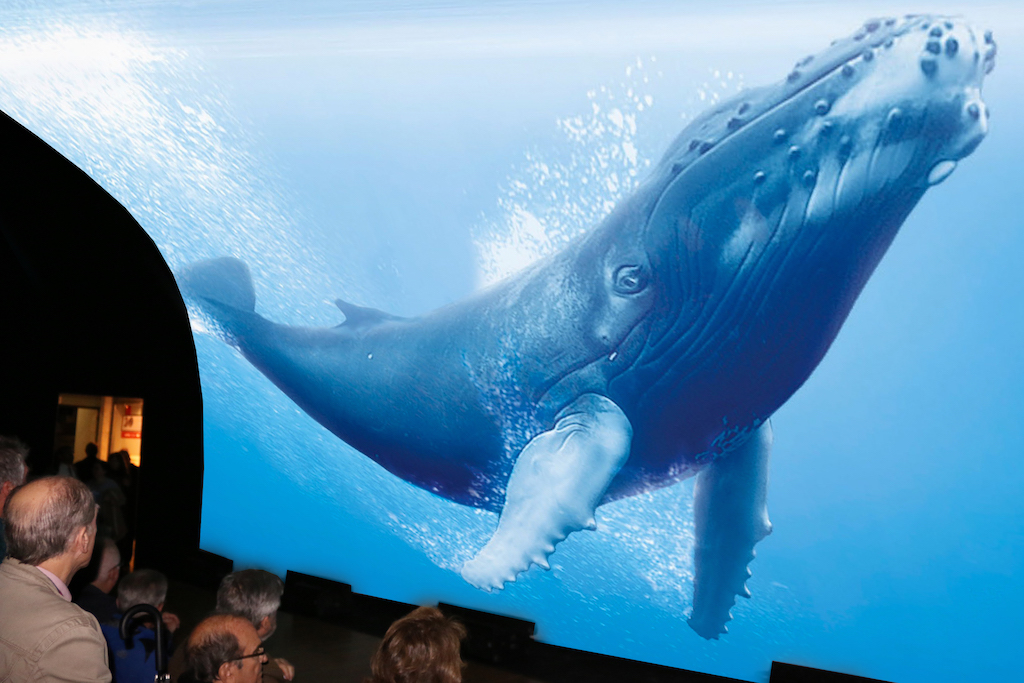
El Museo Nacional de Ciencias Naturales de Madrid (MNCN-CSIC) está acercando con la exposición Océanos. El último territorio salvaje los misterios de las profundidades marinas hasta el corazón de la capital.
Este proyecto plantea al visitante un recorrido por la riqueza de los océanos basado en el material procedente del documental Oceans, el mayor testimonio filmado sobre el fondo marino que se haya realizado jamás. La filmación, dirigida por el “oscarizado” Jacques Perrin (Nómadas del Viento, Los Chicos del Coro) junto con Jacques Cluzaud, requirió un total de 7 años de trabajo, 75 expediciones en las que participaron más de 500 personas. Se obtuvieron 480 horas de material con enorme valor divulgativo y científico, grabando imágenes de más de 200 especies marinas de los cinco continentes. Esas imágenes, totalmente inéditas y de gran belleza, constituyen ahora el soporte audiovisual de la exposición.
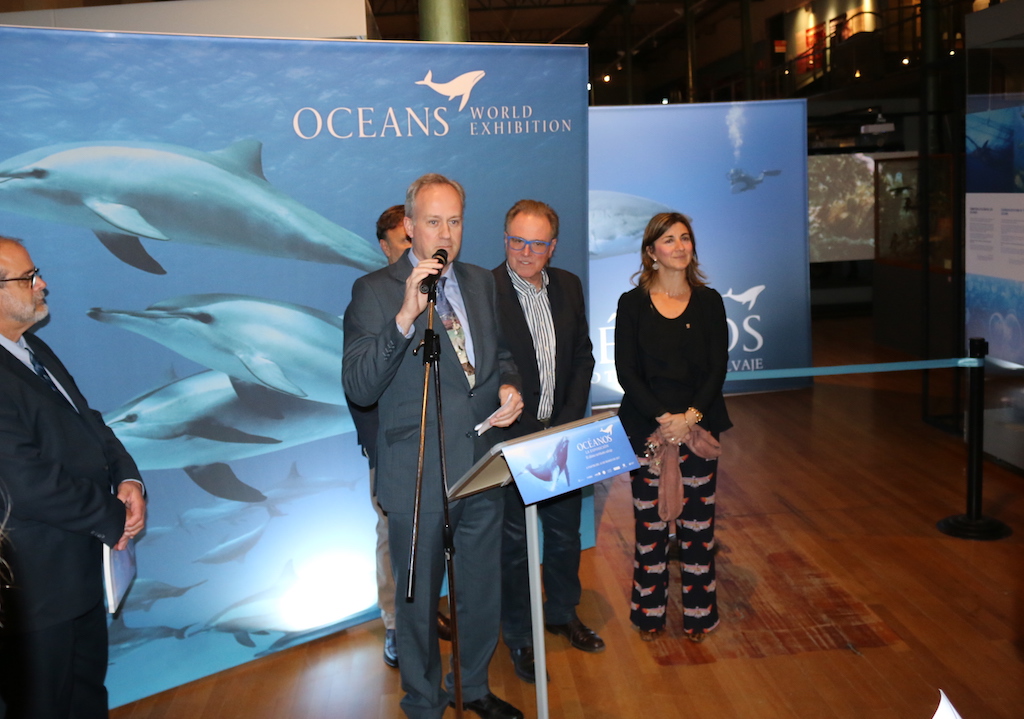 Tras su paso por Murcia, Gijón, Alicante y Chile (Santiago, Concepción, Los Cerrillos, Iquique y La Serena), la muestra recala ahora en Madrid con un gran despliegue audiovisual.
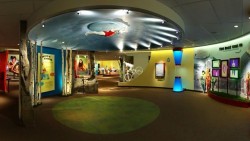
En esta experiencia, con gran valor científico, el público puede sumergirse a través de pantallas interactivas, experiencias 3D o una gran superficie curva que produce un efecto inmersivo. Para los más pequeños también cuenta con una zona de juegos donde pueden hacer esculturas con arena o realizar puzzles.
El visitante se adentra en la exposición a través de un circuito de vídeo donde once equipos Optoma (1080 3000M) proyectan imágenes procedentes de reproductores 4K Zenopllige Z11Pro sobre pantallas suspendidas.
La zona interactiva la componen una decena de monitores LG of 42 inches (LB5610) dotados de superficies táctiles que permiten obtener información sobre diversos aspectos del entorno marino.
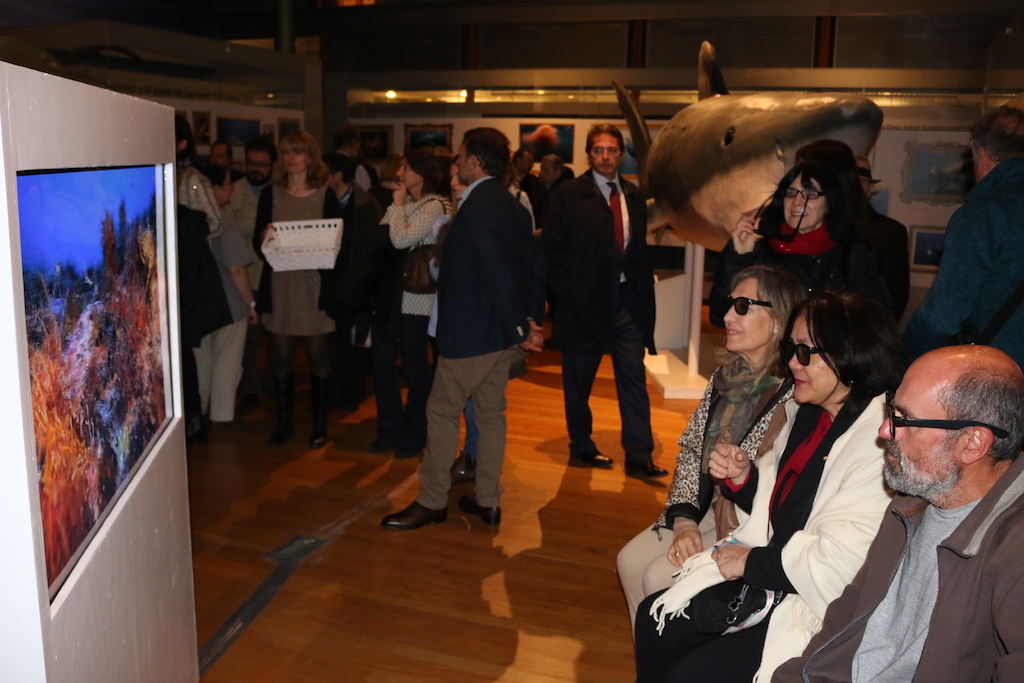 On the other hand, a través de un sistema de gafas pasivas y tres pantallas LG de 55 inches (UH625V), una producción 3D holográfica permite al visitante bucear por las profundidades. La proyección reproduce algunas de las imágenes que el director de fotografía especializado en tomas subacúaticas Roberto Rinaldi captó para la película Oceans.
Pero quizás una de las zonas que más impresiona al visitante es una gran pantalla curva de 12×6,65 metros (260 square meters). Gracias a nueve proyectores Sony VPL-FHZ55 con lentes de 1,39 y 0,8, a un sistema Watch Max de Dataton y un sistema de audio de Beringer y Element, Oceános. El último territorio salvaje ofrece impactantes escenas con efecto inmersivo.
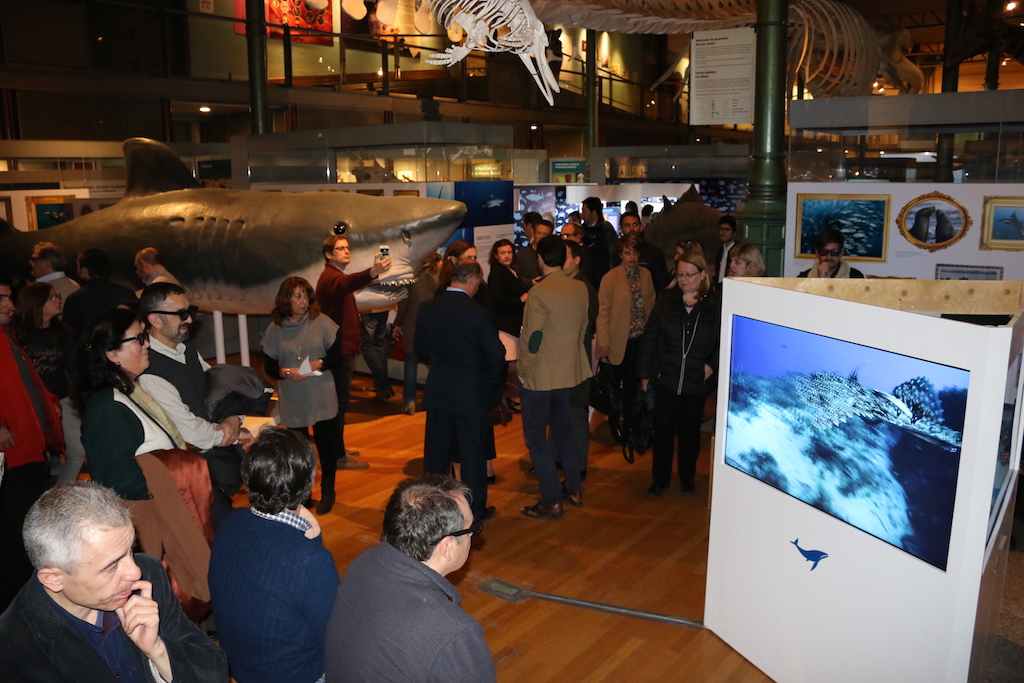
La exposición se completa con numerosas réplicas a tamaño real donde podemos encontrar hasta un gran tiburón blanco de 6,5 metros.
Sin fronteras físicas
Los océanos, formados hace 4.000 millions of years, ocupan el 70% de la Tierra y son el hogar de más de un millón de especies animales, de las que sólo se conoce un 20%. El conocimiento y la concienciación son los mejores mensajes para tratar de mantener la diversidad de especies, y qué mejor forma que tomar conciencia de algo que contemplando su belleza con unas imágenes inigualables.
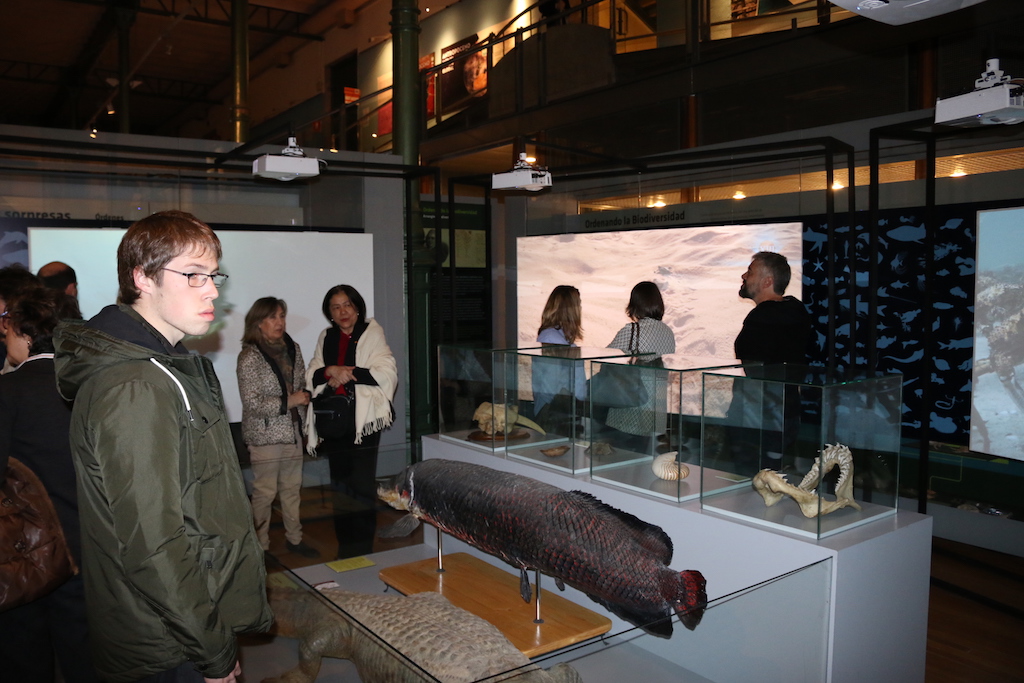 “Conocemos mejor la superficie de la Luna que el fondo marino; no es una broma. Estamos esquilmando los recursos del océano de forma irresponsable y absurda, y nos arriesgamos a producir cambios irreversibles en este medio que llena tres cuartas partes de la Tierra”, asevera el comisario de la exposición Oscar Vega.
Vega mantiene que el océano es el último territorio sobre la Tierra, que aún no tiene fronteras físicas, en el que los animales pueden moverse como otros hicieran sobre los continentes, es “el último territorio salvaje”
The sample, que cuenta con el respaldo del Centro Superior de Investigaciones Científicas y la Fundación Príncipe Alberto II de Mónaco, está organizada por World Exhibitions y podrá visitarse en la sede del Museo Nacional de Ciencias Naturales hasta el 25 November.
Did you like this article?
Subscribe to our NEWSLETTER and you won't miss anything.
Related articles
 Avolites brings its media server to the heart of Rio in Las Vegas
 RCF boosts sound in the heart of the Las Vegas Strip
 Vioso 6 SIM promotes the Seven Oceans Simulation Center
 Kgear brings its sound to a leisure venue in the heart of Nice
 Renkus-Heinz helps reinvent hospitality in the heart of Manchester
 SpinetiX digital signage is installed in the heart of the Millennium
 SeaWorld Abu Dabi crea recorridos inmersivos por los océanos y sus hábitats
 The 'heart' of Samsung KX is a large-format concave Led video wall
 Samsung brings the Smart Led experience to the heart of Times Square in New York
 DiGiCo SD12 becomes the audio heart of the Alexandra Palace theater
 Brandenburg Gate Museum: an immersive showroom in the heart of Berlin
 AMD at the heart of New York's largest screen, en Times Square
 Pantallas y kioscos digitales ofrecen un ‘latido’ interactivo en el museo dedicado al corazón
 US FDA gives green light to Philips EchoNavigator for heart interventions