


Schneider y XBS desarrollan un simulador que reproduce la emoción de conducir una Moto GP
Pensado para el entrenamiento de pilotos profesionales y semi-profesionales, este simulador cuenta con la tecnología de realidad virtual para conseguir una mayor inmersión en el entorno, consiguiendo que la experiencia sea más realista y se transmita la emoción de conducir una verdadera moto de gran cilindrada en un circuito de carreras.
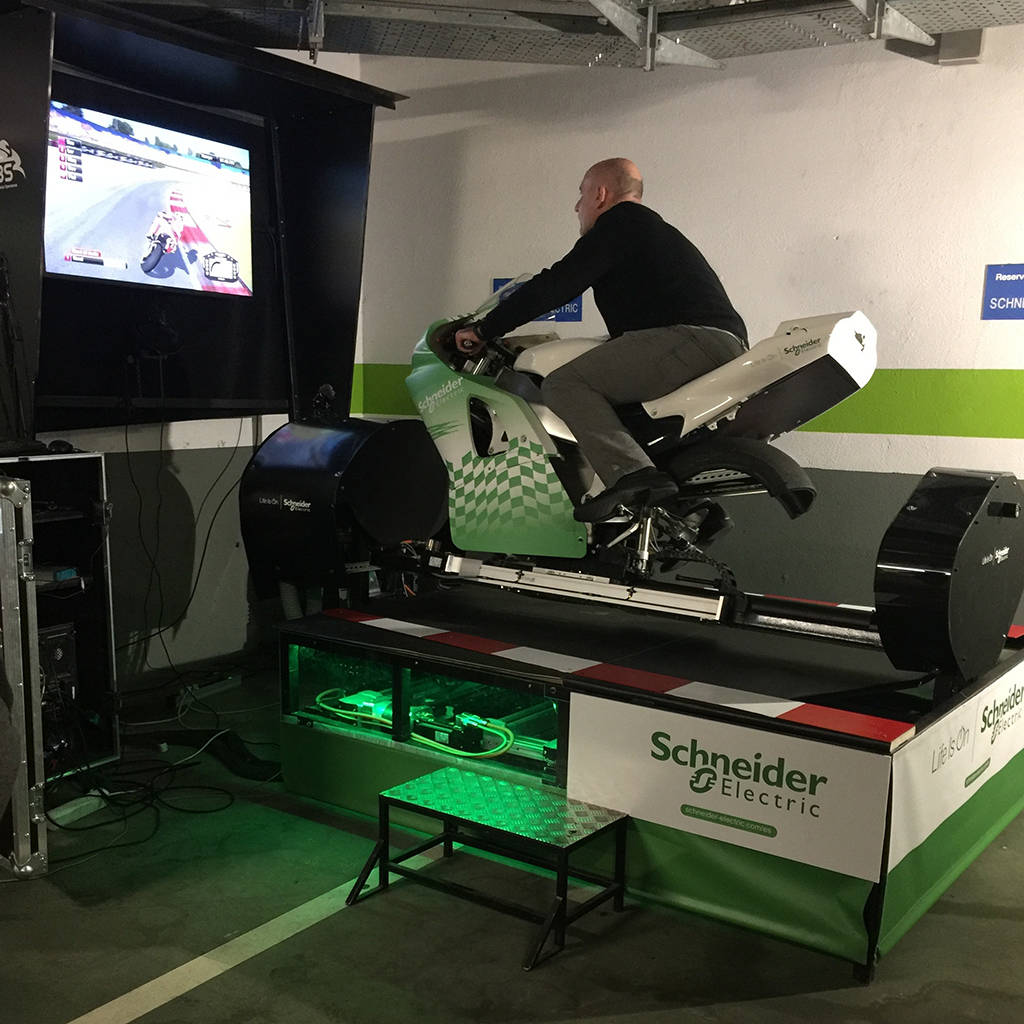
En colaboración de Schneider Electric, la startup XBS ha desarrollado un simulador de moto GP eléctrico y sostenible bajo las premisas de open innovation y colaboración. Cuenta con 5 ejes, lo que permite emular derrapadas, invertidos, caballitos, aceleración y plegadas, con una sensación de más de 200 kilómetros por hora.
Este simulador, que permite sentir la emoción de conducir una moto de gran cilindrada en un circuito de carreras, ha sido concebido gracias a la colaboración conjunta del Instituto Schneider Electric de Formación (ISEF), XBS y la ayuda de estudiantes de La Salle y la Universidad Politécnica de Cataluña.
XBS es una start-up formada por dos emprendedores catalanes, que desde su garaje empezaron a trabajar en la creación de simuladores de Moto GP para el entrenamiento de pilotos profesionales y semi-profesionales.
El resultado es un simulador de Moto GP únicamente eléctrico, con una respuesta más rápida, un consumo más eficiente y que se conecta a la red monofásica. Se trata de una solución donde se utiliza tecnología servo accionamientos eléctricos y el sistema de control de Schneider Electric.
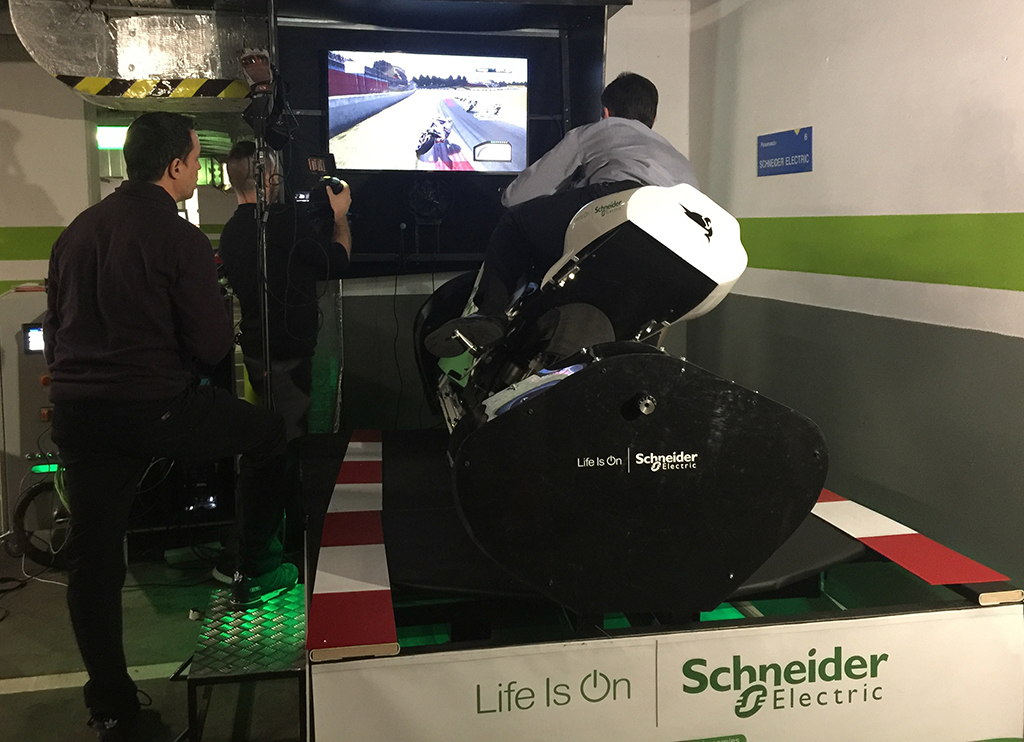
 Consta de tres elementos principales. La parte mecánica con el carenado de una moto de 1000 cc real, que se ha colocado en un sistema mecánico de 5 ejes y permite que el equipo simule cualquier movimiento que puede hacer una moto de verdad: aceleración/frenada, caballito/caballito invertido, derrape trasero/delantero y el movimiento de plegada, llegando al 60%.
Estos movimientos se consiguen gracias a la interconexión mecánica de diferentes servomotores y ejes eléctricos, diseñados para que el simulador soporte a usuarios de hasta 100 kilos.
La interacción de usuario con la dirección del manillar, puño de aceleración y frenada, así como la inclinación de la moto y del resto de botones es enviada al PC a través de una tarjeta electrónica. Y, gracias a un programa informático, el PC desglosa los valores de movimiento de cada uno de los ejes eléctricos del simulador y se envían vía Ethernet/OPC, en un tiempo de ciclo muy ajustado (<10ms) para que sea imperceptible para el usuario, al PLC que gobierna el control de cada uno de los ejes.
Esta tecnología permite al usuario vivir una experiencia realista y sentir la emoción de estar conduciendo verdaderamente una moto de gran cilindrada en un circuito de carreras.
La solución de Schneider Electric
Entre los retos del proyecto, estaba pasar de los tres ejes habituales a los cinco, que permitieran vivir la experiencia real de conducir una auténtica Moto GP en un proceso de simulación.
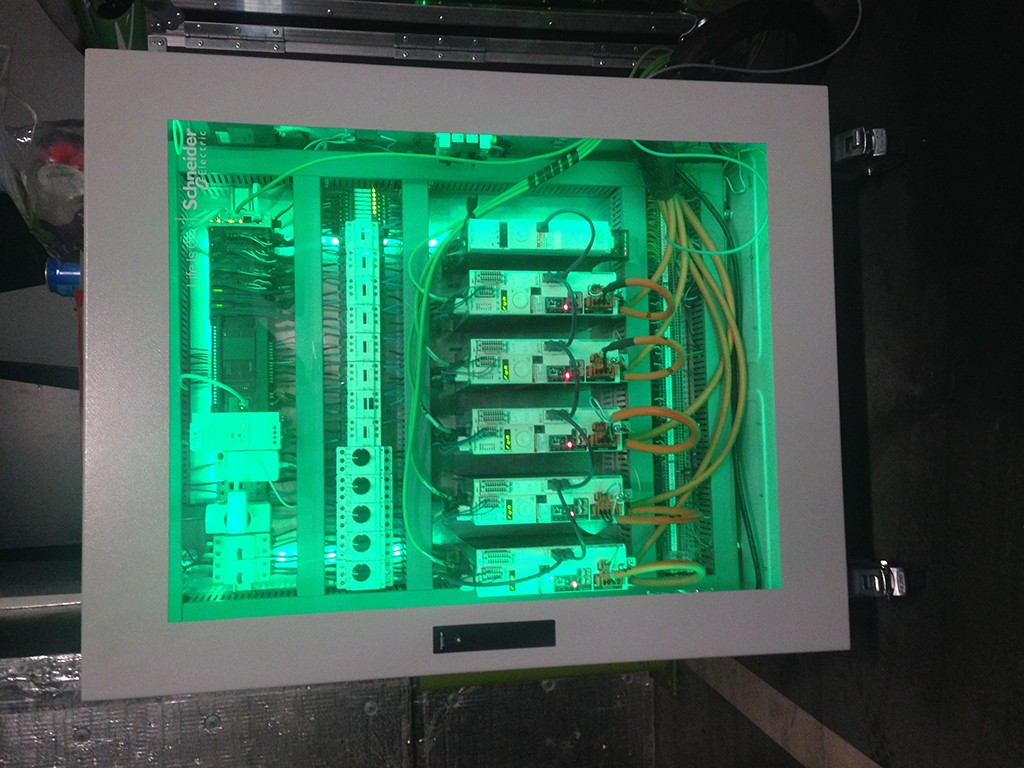
Para la realización de la parte mecánica se ha optado por la instalación de Servomotores y Servodrivers (con alimentación monofásica) de la gama Lexium 32 de Schneider Electric. Con cinco Lexium 32 se puede controlar el movimiento de cinco ejes lineales PAS4x o MAXR de Schneider Electric.
El cuadro de control dispone de todas las protecciones eléctricas de Schneider Electric necesarias para cada uno de los ejes. Las órdenes de movimiento de cada uno de los ejes las proporciona un controlador lógico (PLC), el modelo Modicon M241 de Schneider Electric, a través de un bus CanOpen. El PLC recoge la posición de cada uno de los ejes y las envía a través Ethernet y por OPC-DA al PC y recibe las órdenes de movimiento desde el ordenador.
La interfaz de control para los diferentes modos de juego se puede realizar a través de una pantalla HMI instalada en el cuadro de control y también a través de un webserver, conectándolo vía WiFi al PLC. Con los datos recibidos desde el PLC y los datos del manillar de la moto, el PC interactúa a través de una aplicación informática. Esto permite diferentes modos de funcionamiento o la posibilidad de cargar telemetrías reales para el perfeccionamiento del piloto en un circuito en particular.
Finally, se ha introducido la tecnología de realidad virtual para conseguir una mayor inmersión en el entorno y conseguir que la experiencia sea más realista y se transmita la emoción de conducir una verdadera moto de gran cilindrada en un circuito de carreras.
Did you like this article?
Subscribe to our NEWSLETTER and you won't miss anything.
Related articles
 Vibe Budapest fusiona efectos de iluminación y emoción visual con Prolights
 Adif y Virtualware desarrollan un simulador de infraestructuras ferroviarias
 “Sony's goal is to fill the world with emotion through technology and creativity”, Bastien Cahan
 Philips ofrece entretenimiento y emoción en sus pantallas MediaSuite con la integración de Netflix
 Las pantallas Led de Daktronics realzarán la emoción de los partidos en el BBVA Stadium
 Moto GP confía la microfonía del campeonato en las soluciones de Audio-Technica
 La consola de iluminación GIO de ETC refuerza la emoción de ‘Antígona’ en su estreno en Mérida
 Videoreport lleva la emoción de las carreras de caballos a las pantallas del Hipódromo de la Zarzuela
Dynadock 4K de Toshiba reproduce contenido en Ultra HD, Full HD y dual 2K
Videoreport lleva la emoción de las carreras de caballos a las pantallas del Hipódromo de la Zarzuela
Dynadock 4K de Toshiba reproduce contenido en Ultra HD, Full HD y dual 2K
 Pelco by Schneider Electric optimiza a IP su sistema de cámaras PTZ Esprit SE
 Schneider Electric centralizes the technical service of its video security systems
 Schneider Electric brinda la versión HD de los HVR DX4700 y DX4800
 The excitement of football, new leisure offer in shopping centers
 La emoción de las carreras captada con robóticas BU-45H