


Collaborative learning at Keele University with Panasonic audiovisual equipment
The British integrator Pure AV has used Panasonic LCD screens to convert a laboratory at the Faculty of Pharmacy into a modern collaboration space.
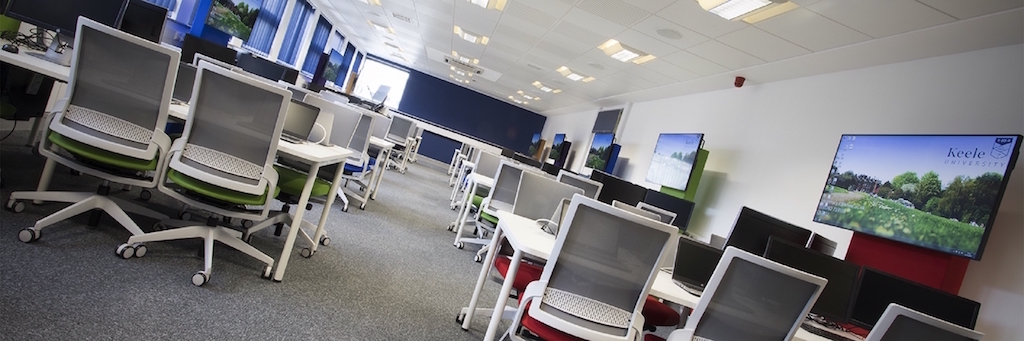
The Faculty of Pharmacy of the Keele University, located in the English countryside of Newcastle-under-Lyme in Staffordshire, advocates an interdisciplinary approach to students, which explores both the scientific and clinical aspects of this career in order to offer a broader range of learning objectives.
To meet this requirement, This faculty has opted to install audiovisual solutions, converting a traditional computer laboratory 48 seats in a modern collaborative space with capacity for 60 personas, according to the project carried out by the integrator Pure OFF, who has used LCD screens Panasonic del model TH-49LF80.
Specifically, Those responsible for the Faculty of Pharmacy wanted a new approach to the layout of the room. Pure AV designed a layout that encouraged teamwork, with ten tables, six-seat and color-coded to enhance group activities; each of them with an integrated 49” screen, replacing traditional banks of desks and computers.
The screens, con panel IPS, offer a shine of 700 cd/m2 and offer optimal lateral visibility even in brightly lit environments. The presenter can present the content of each conference on the screens using the control panel of Extron which is on the lectern.
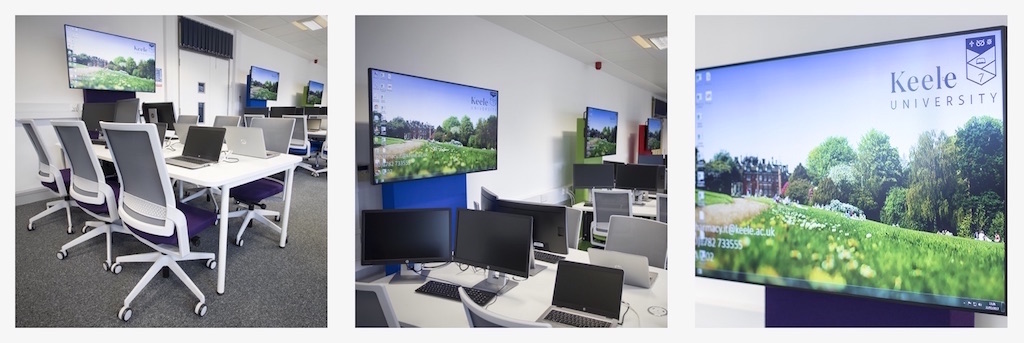
Another innovative solution is a system Kramer Via Connect Pro for collaborative casting over the wireless network, which encourages students to work together and encourages interaction with augmented reality educational tools that are increasingly used in the Faculty of Pharmacy.
Another challenge posed by the project was to increase the flexibility of this space to adapt it to various activities.. This is explained by the director of the MPharm course, Katie Maddock: “We wanted to design something that was very flexible and would allow us to do all kinds of creative things.”. We have our own augmented reality technology that we can project to students, from traditional image or web content presentation sessions to the review of diagnostic images”.
The initial response to this digital transformation has been positive, driven in part by the improvement of the sound system and the addition of LCD screens, systems that have greatly influenced the quality of the educational experience, As those responsible for this faculty point out.
The new environment creates excellent note-taking opportunities, use digital whiteboards, share files and even take turns controlling linked displays and presenting them throughout the room. Also, The Dicom standard of Panasonic LCD screens have significantly improved the learning of diagnostic imaging for Radiography students.
Did you like this article?
Subscribe to our NEWSLETTER and you won't miss anything.
Related articles
 Extron Quantum Ultra transforms content into collaborative learning
 Australia's CQ University relies on AMX to foster collaborative learning
 Mobile County Public School System relies on Extron AV technology for collaborative learning
 Promote collaborative learning with artificial intelligence technology
 What is the future of collaborative learning?
 Clevertouch screens encourage collaborative learning at the University of Leeds
 IESE implements Barco's newest collaborative learning tool
 Edge Hill University creates flexible learning space with Panasonic
 NCCU University uses digital signage to create a collaborative learning environment
 Panasonic AV solutions transform learning at the University of Copenhagen
 ViewSonic develops complete solutions for interactive and collaborative learning
 SMART takes a new leap in collaborative learning with Learning Suite and kapp iQ
 Ultra-short throw projectors for collaborative learning
 WizeFloor, interactive floor for collaborative and mobile learning