


The power of 112 Panasonic 4K projectors immerse the visitor in the history of Qatar
The PT-RQ13K model from this manufacturer has been chosen for the National Museum of Qatar, both for its level of quality and compatibility with Ultra High Resolution content, as for its flexibility and ease of use, in a compact format.
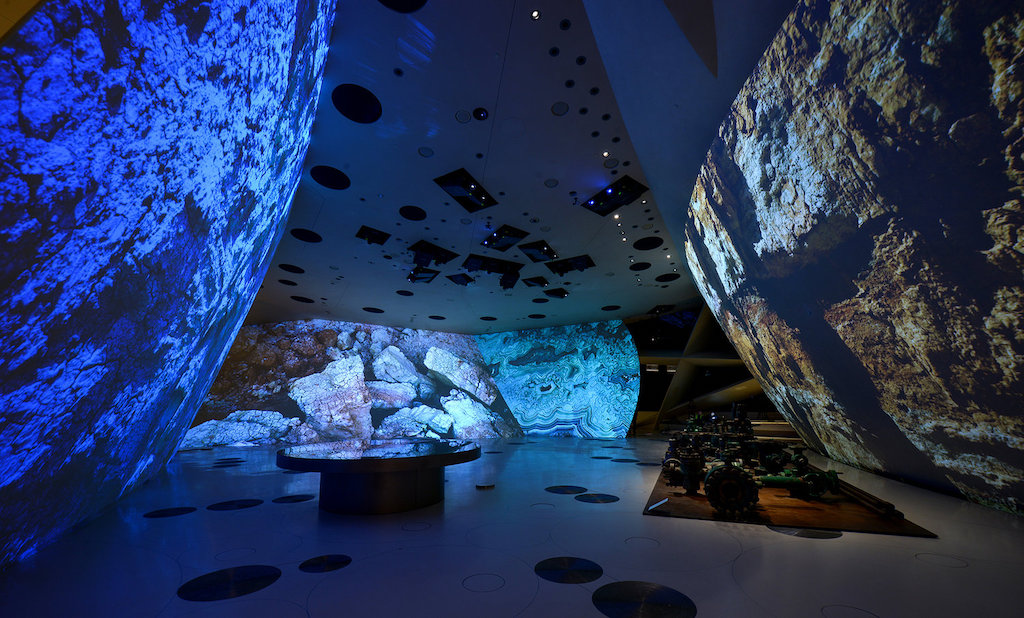
He National Museum of Qatar exhibits a new immersion project for its visitors, which aims to be an example in facilities of this type throughout the world. Designed in the shape of the desert rose, It is a daring and complex architectural proposal in the Doha landscape, composed of 130 juxtaposed discs, created by the French architect Jean Novel (of Ateliers Jean Novel) and recognized with an award from the Leading European Architects Forum (LEAF).
An architectural proposal intended to attract both visitors and tourists that has been organized into three sections: Origins, Life in Qatar y Nation Building, so you can enjoy an immersive experience through eleven clearly differentiated galleries, designed to educate and inspire.
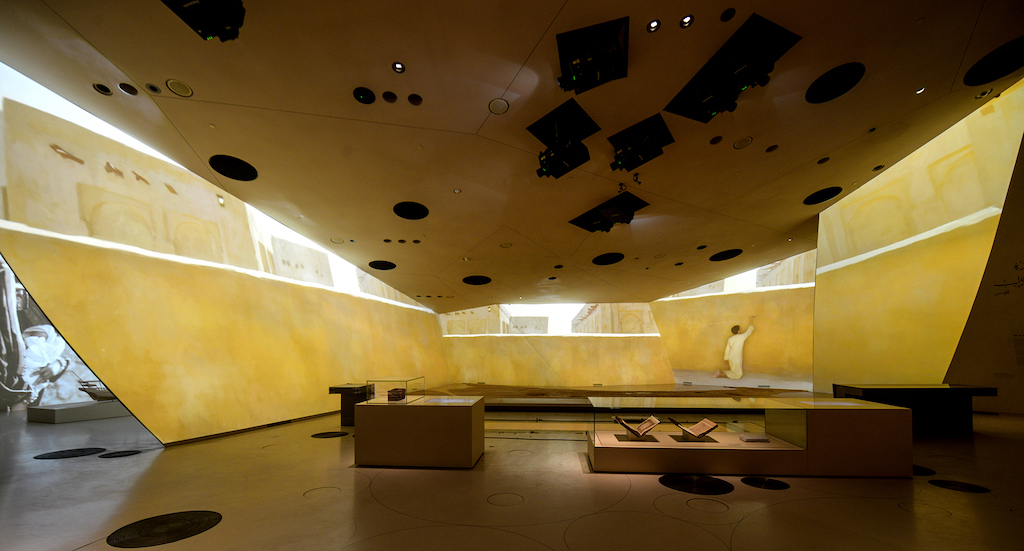
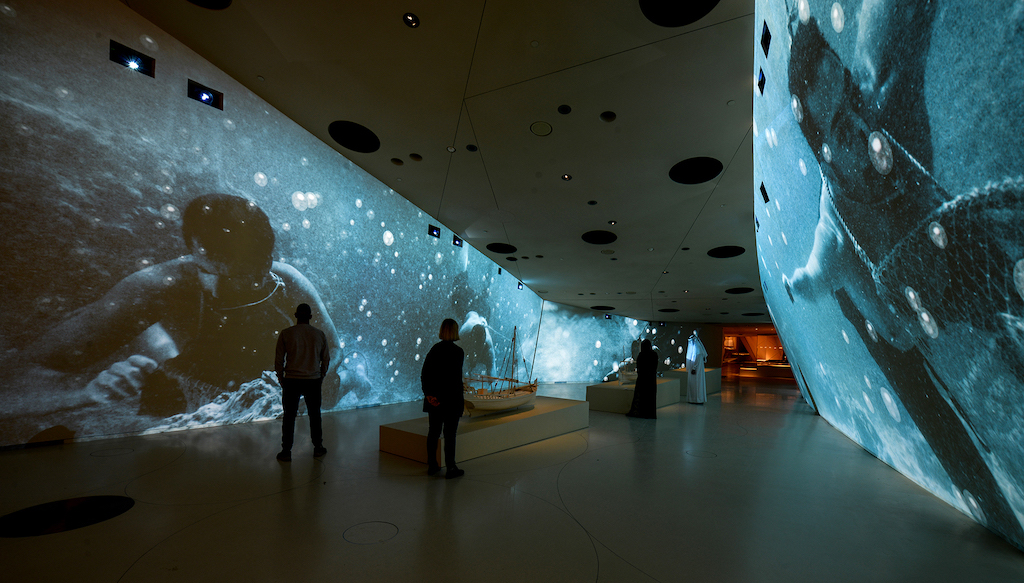
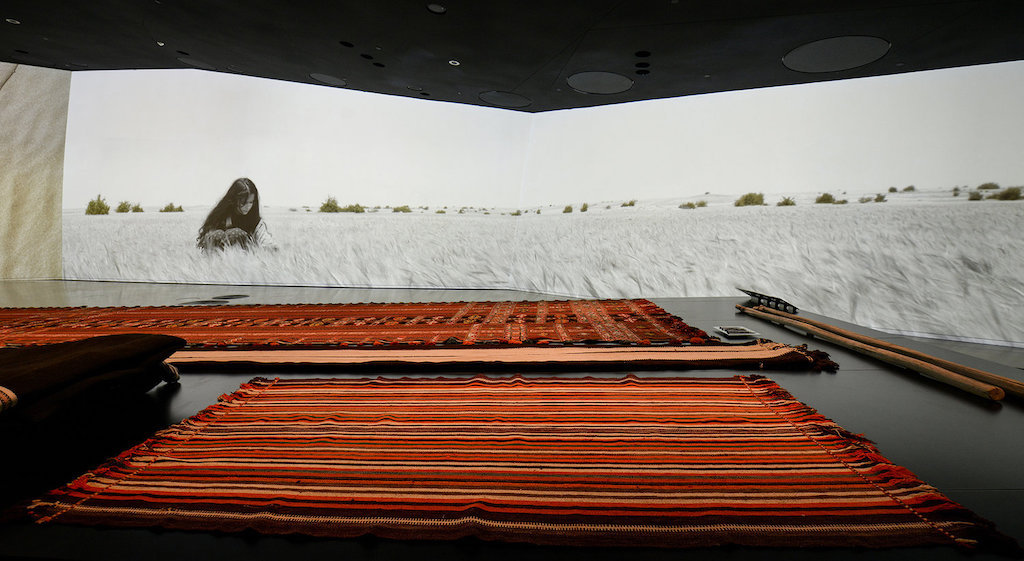
Realtime Environment Systems (RES) has been responsible for selecting AV technology to achieve this purpose, whose core are 112 powerful laser projectors 3 chips DLP,compatible with 4K images, of the PT-RQ13 model of Panasonic, which have been distributed in seven galleries to project nine different artistic films.
Multidisciplinary team
The Qatar Museum Authority was particularly interested in using audiovisual technology to display a wide range of content.. Contrataron a Man Empty Joint Venture (MEWW) to install, configure and carry out the audiovisual design of the entire space, así como las exposiciones y las experiencias de los visitantes, creando un contenido que se cedió al Instituto Cinematográfico de Doha (Doha Film Institute – DFI) de Catar.
En el proyecto trabajaron conjuntamente Dean Winkler, ingeniero superior y asesor de producción y posproducción, y Ricardo Cebellos, del DFI, e incluyó la producción de material artístico local, regional e internacional sobre la cultura de Catar.

Later, MEJV y DFI contactaron con Realtime Environment Systems para que les suministrara un sistema de servidor multimedia de gama alta para la reproducción y el mapping con proyección, que debía además dar soporte a todo el contenido artístico del director.
Para cumplir con los requisitos, RES utilizó el software Ai de la empresa londinense Avolites, a platform originally created by Dave Green, technical director of RES. Its great flexibility and adaptability were especially positive for the project., in addition to offering functionalities different from those of the competition.
MEWW, DFI and RES have been teaming together for over two years to create a blueprint for the content and a compatible media server. Additional RES workflow included producing museum-wide projection designs that reflected the creative needs of directors in more than ten different galleries., each with its own requirements.
Small and compact case
To find the most appropriate audiovisual technology to display the content, MEWW, DFI and RES needed some projectors 3 chips DLP, support high quality 4K images; something essential to recreate the best quality images for movies.
Besides, The laser source also ensures that the project is more environmentally friendly and requires less maintenance. To facilitate the installation process, RES needed projectors that fit into the smallest possible housing, to adapt flexibly to the different rooms and exhibitions of the museum, as well as the infrastructure of the buildings.
Mark Calvert, CEO of RES, explains that “after carrying out an extensive market study, We concluded that Panasonic was the most suitable option, since it met all the criteria required by the museum. The PT-RQ13K projectors that were installed not only offered the best image quality, but they were the most compact, which made them ideal for installation”.
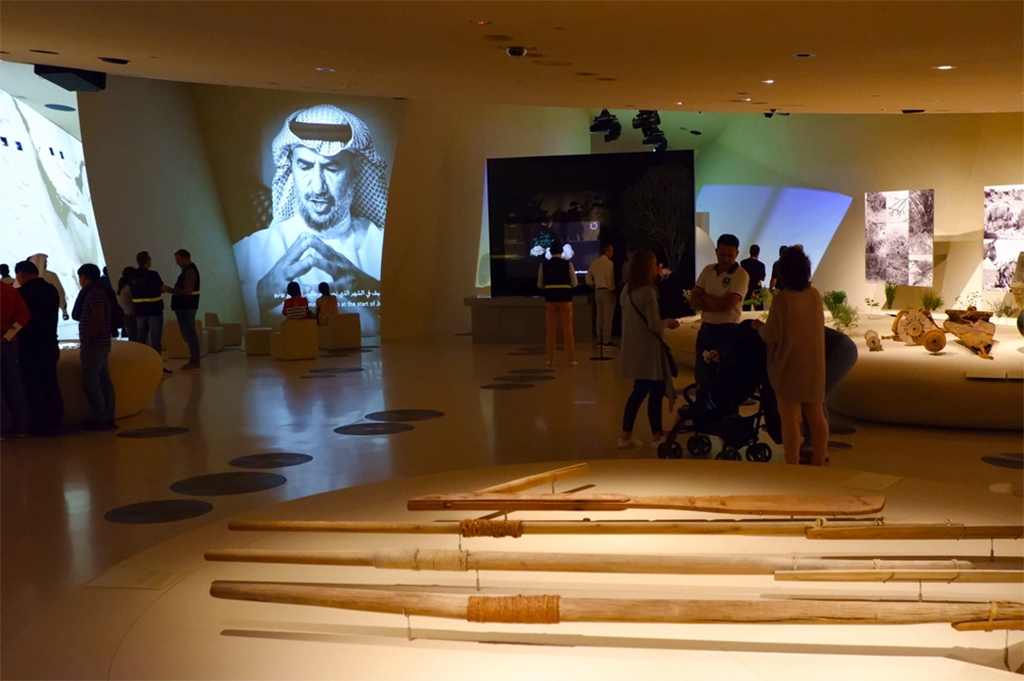
Regarding the experience that the museum offers to its visitors, “The material produced by the DFI is one of the most impressive examples in history of high-quality storytelling and mapping”, subraya Calvert.
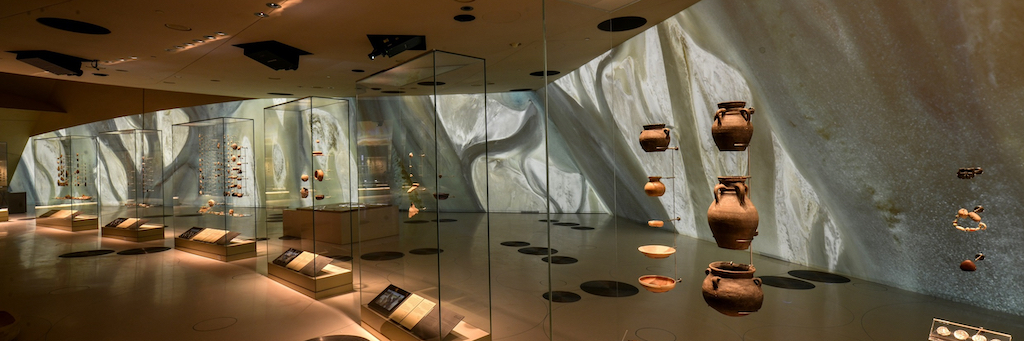
Installation with guarantees
After establishing the aforementioned bases, MEJV started installing, configure and constitute each of the large galleries; an operation that takes place with the installation of a total of 172 multimedia servers in the building: nine Ai Q3 units from Avolites and others 163 Ai Miami licenses, operated via custom 1U 8K media servers designed by RES.
All these systems are responsible for sending signals to the 112 Panasonic projectors, distributed in seven galleries, that show nine different artistic films.
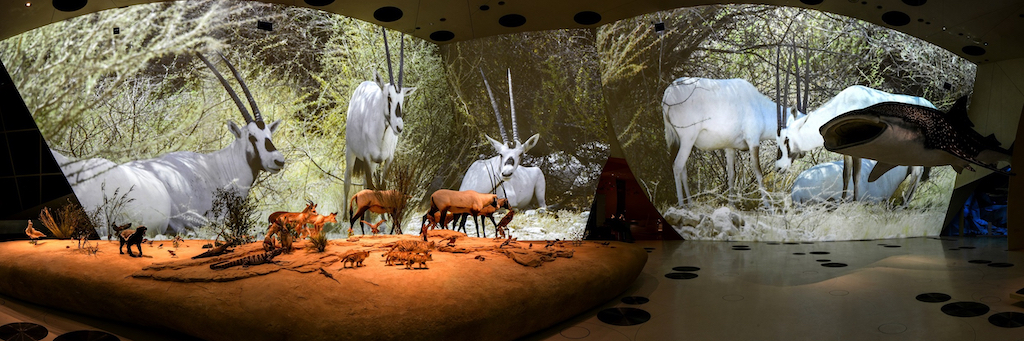
“The magnitude of the installation required that everything function in the best possible way, now and in the future - assures Calvert -. Trust in Panasonic as a manufacturer was a fundamental element that not only allowed us to use high quality equipment, but also the possibility of working with people who understood our needs and who were willing to help us overcome the challenges of the project., and meet the museum's objective: Immerse its visitors in the culture of Qatar”.
Another of the fundamental elements has been the software to control the AV equipment of artistic film companies and generate information in real time related to their maintenance and support., for what Hive Media Control (RES partner company) has integrated its Hive platform, Compatible with Panasonic projectors.
Did you like this article?
Subscribe to our NEWSLETTER and you won't miss anything.
Related articles
 Panasonic projection revives the history of the ancient city of Ephesus
 RCF enhances the history of the Croatian castle of Trsat with immersive audio
 A large-format LED screen envelops the visitor in the universe of Galactica
 Christie projectors help tell Canada's story in a miniature immersive experience
 Panasonic potencia Monumental Tour 2021 with their laser projectors
 Panasonic makes history at the Olympic Games with its innovative AV technology
 Pixera accompanies the visitor on an AV journey through the history of Singapore
 JVC demonstrates at ISE the power of its 8K e-shift and simulation projectors
 KidZania's interactive city optimizes visitor experience with Panasonic
 Panasonic laser projection envelops visitors in 'Welcome to Rome' show
 Panasonic technology recreates the story of the Terracotta Warriors at the World Museum in Liverpool
 Petersen Automotive Museum, first to use Panasonic LinkRay to interact with visitor
 Panasonic projectors immerse visitors in the history and wreck of the Titanic
 Christie brings the power of its projectors to the 5th El Jadida Horse Show