


Cifrado de extremo a extremo en videoconferencias, garantizando la soberanía digital
En la situación actual, la colaboración se ha convertido en una herramienta clave para la continuidad del negocio de las empresas. En esta columna, Maribel Poyato, country manager de Tixeo, pone de relieve la preocupación por la seguridad y la confidencialidad de la información.
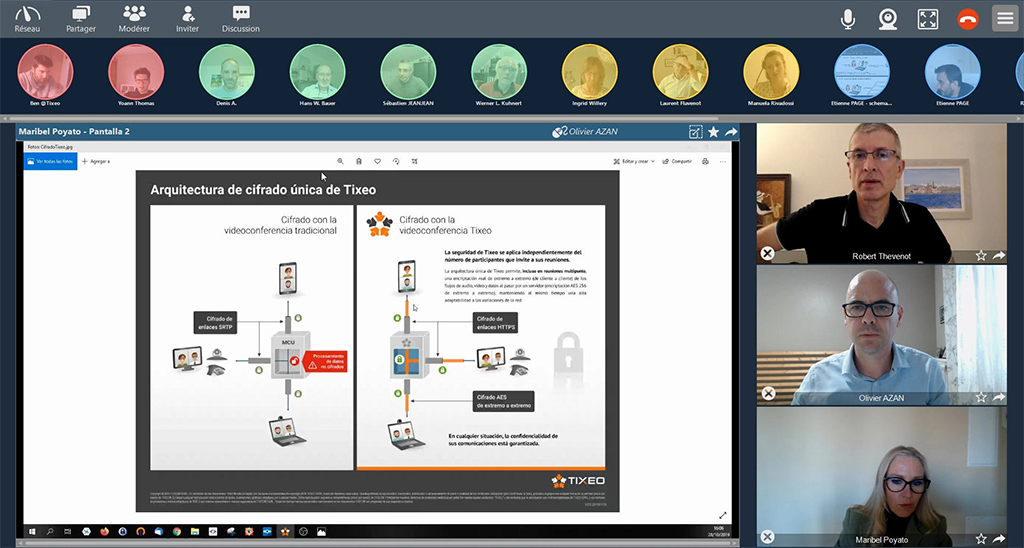
Alentados por la crisis sanitaria, el teletrabajo y el uso masivo de herramientas de colaboración digital, como la videoconferencia, han permitido a muchas empresas continuar su actividad. Esta situación sin precedentes también ha facilitado la tarea de poner de relieve las cuestiones relacionadas con la confidencialidad de la información intercambiada y ha provocado una verdadera locura por el uso del cifrado de extremo a extremo en las reuniones en línea.
In this context, acentuado por la crisis económica, la protección contra el espionaje industrial se ha vuelto esencial para las empresas. El cifrado de extremo a extremo es la única garantía contra las escuchas. But, ¿qué es este mecanismo, cuya definición, por desgracia, se distorsiona con demasiada frecuencia?
La lucha contra el espionaje industrial
El cifrado de extremo a extremo de las videoconferencias es un proceso de transmisión de datos (video, audio and data) que sólo permite al emisor y al receptor o receptores descifrar los datos sin ninguna fase de descifrado entre los corresponsales. Debe impedir toda escucha electrónica, incluso por parte de los proveedores de telecomunicaciones, los de acceso a Internet e incluso por el fabricante de soluciones de videoconferencia. Por lo tanto, nadie puede acceder a las claves de cifrado necesarias para descifrar la conversación.
Unfortunately, y especialmente desde el comienzo de la crisis sanitaria, muchos fabricantes de videoconferencias afirman que el cifrado es de extremo a extremo, pero al final sólo cifran los flujos que pasan entre el usuario y el servidor de comunicación. So, pueden acceder fácilmente a los datos desencriptados cuando pasan por sus servidores.
Besides, estos fabricantes están sujetos en su mayoría a la legislación estadounidense que les obliga a obtener las claves de cifrado si las autoridades lo solicitan. En estas condiciones, el nivel de seguridad está lejos de lo anunciado.
Fortunately, es posible acceder a soluciones fiables que ofrecen una protección eficaz contra cualquier intento de espionaje. Para ayudar a las empresas a ver las cosas con más claridad, organizaciones como el Centro Criptológico Nacional pueden orientarlas en su elección. Una organización que opte por un mecanismo de cifrado de extremo a extremo con la certificación de un organismo europeo que vela por la seguridad de los sistemas de información, tiene siempre la garantía de utilizar una solución fiable y perfectamente segura.

Independencia y soberanía digital
Más allá de la crisis sanitaria, el verdadero cifrado de extremo a extremo ayuda a garantizar la independencia de las empresas. A nivel de Europa, esta elección condiciona la soberanía digital de nuestras industrias y economías. Es vital hoy en día optar por soluciones europeas para garantizar la seguridad y privacidad.
The technology, el I+D, el apoyo y, of course, el alojamiento deben desarrollarse y consumirse localmente para evitar cualquier riesgo de dependencia de las potencias no europeas. Pero las influencias siguen siendo muy fuertes y continúan pesando… In fact, hace unos días, los organizadores de los Juegos Olímpicos de París en 2024 eligieron la solución china Ali Baba para su Nube. La batalla está lejos de ser ganada.
En lo que respecta al cifrado de extremo a extremo, sigue siendo necesaria la vigilancia: siempre es útil recordarlo en un contexto en el que ciertos poderes establecidos (gobiernos, autoridades, etc.) tratan a veces de limitar su uso para tener un control cada vez mayor de los flujos de comunicación en nombre de la seguridad y la lucha contra el terrorismo.
Algunos países, como Australia, exigen a los fabricantes que incorporen puertas traseras para ayudar a las autoridades a interceptar y leer los mensajes enviados por los sospechosos. However, es importante recordar que, aunque se prohíba el cifrado de extremo a extremo, las personas malintencionadas podrán seguir eludiendo las normas para lograr sus fines.
La prohibición de este mecanismo no resolverá los problemas asociados con el terrorismo, pero hará que la industria europea sea cada vez más vulnerable al saqueo de datos, con más que perder que ganar. En Europa, aunque algunos estarían tentados de prohibir el mecanismo, la legislación no impone ninguna limitación a los fabricantes. Este marco jurídico es claramente favorable a las tecnologías de cifrado y garantiza así su eficacia en la lucha contra el espionaje industrial.
Maribel Poyato
Country Manager Iberia/Latam en Tixeo

Did you like this article?
Subscribe to our NEWSLETTER and you won't miss anything.
Related articles
 Sharp/NEC y SpinetiX facilitan la señalización digital de extremo a extremo
 Hall Technologies Completes Line of End-to-End Audio Solutions
 Lifesize incorpora cifrado de extremo a extremo en las salas de reunión
 Crowne Plaza Muscat optimiza la experiencia del cliente con una solución extremo a extremo de Exterity
 Zoom adquiere Keybase para desarrollar su propuesta de cifrado de extremo a extremo
 La iglesia sudafricana CRC instala un sistema AV de extremo a extremo con Blackmagic
 Lifesize provides Habitat with end-to-end video conferencing solution
 MuxLab ofrece una solución de digital signage de extremo a extremo
 Tixeo VideoTouch Compact ofrece simplicidad y organización en las salas de videoconferencias
 Exterity vuelve a ISE 2017 con nuevas soluciones de distribución de vídeo 4K de extremo a extremo
 Daktronics IPTV2 centralizes functions in end-to-end digital media networks
 Extron develops TouchLink Pro touch panels 15 and 12” from end to end
 Fibernet desarrolla soluciones de monitorización y cifrado de datos para redes FO empresariales
 IndigoVision ofrece evidencia de video a prueba de manipulación de extremo a extremo