


The Humboldt Forum in Berlin installs an audio over IP infrastructure with Lawo
El histórico palacio de la ciudad alemana cuenta ahora con tres consolas de producción mc²56 de última generación y once sistemas de E/S Dallis del fabricante.
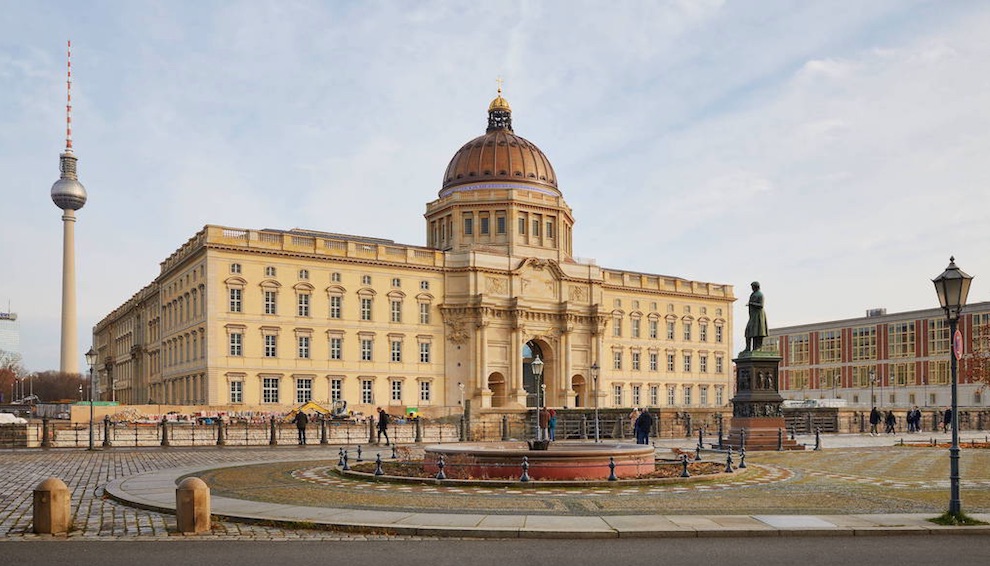
Con sede en el reconstruido Palacio Real de Berlín, ubicado en la Isla del Spree, he Foro Humboldt acoge museos, lugares para eventos, espacios para exposiciones e instalaciones para la educación cultural en esta ciudad alemana. Aunque la fachada es una réplica parcial del palacio, su interior es un edificio nuevo, diseñado por el arquitecto italiano Franco Stella, equipado con tecnología de última generación suministrada por Theirs.
The systems integrator Digitech ha sido responsable de la instalación de la infraestructura de audio basada en IP, conectada en red a través de una matriz Lawo Nova73 HD, ubicada en el centro. Diseñada para ser flexible y escalable, cuenta con tres consolas de producción mc²56 de última generación y once sistemas de E/S Dallis de este fabricante.
Todas las áreas para eventos y proyectos de arte sonoro están conectadas a través de stage boxes de Lawo, cada una de ellas equipada para dar respuesta a los requisitos de sus respectivas instalaciones. La transferencia de señales en todo el edificio se realiza a través de la matriz central.
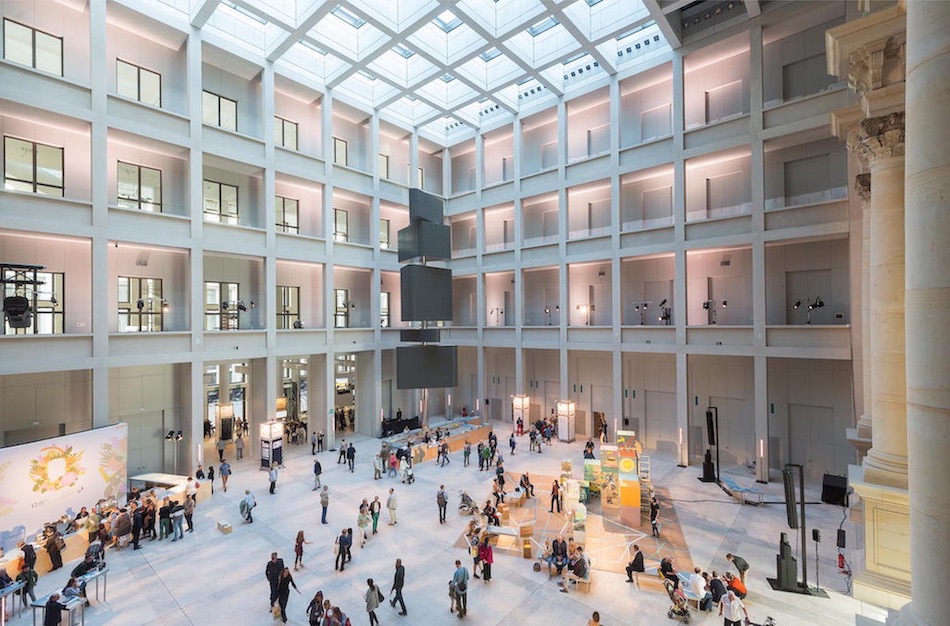
Las principales salas del Foro Humboldt están equipadas con tecnología de audio. Incluyen dos salas de eventos en vivo, of 500 m² y 461 m², un vestíbulo principal y varias salas de seminarios. El denominado patio Schlüterhof, el pasaje y otras zonas se utilizan para eventos y actividades al aire libre, que suelen alquilarse por grupos de interés, como la Stiftung Stadtmuseum (Fundación del Museo de la Ciudad); la Fundación del Foro Humboldt; los Staatliche Museen zu Berlin (Museos Estatales de Berlín), y la Universidad Humboldt de Berlín.
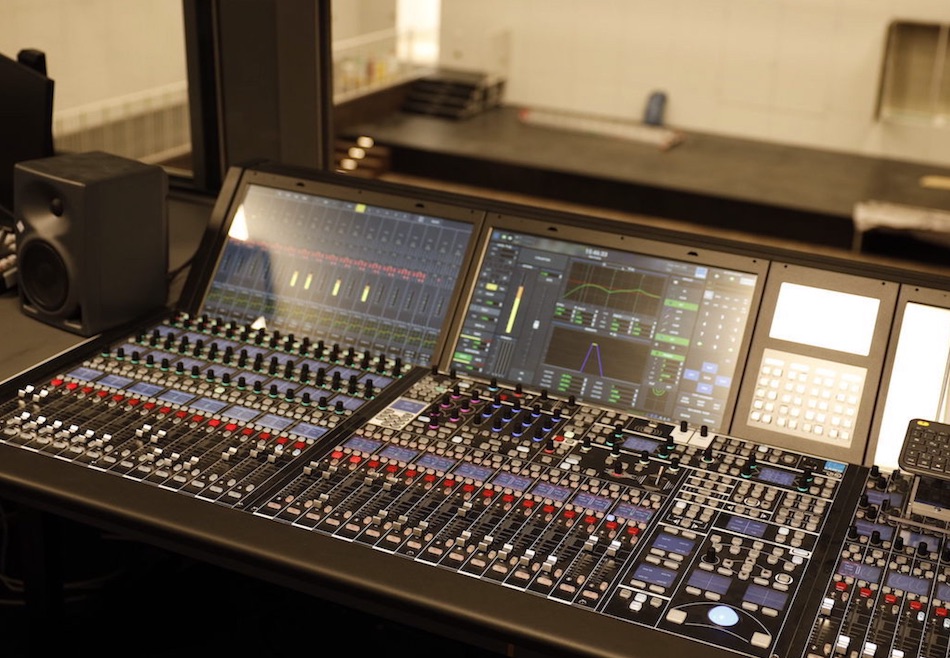
Cada una de las dos salas alberga otra de control, equipada con una consola de mezclas mc²56 (MKIII), of 32 y 48 faders, respectively, así como otro equipamiento central común, cuyo panel de conexión se conecta a las cajas de escenario que están distribuidas por las instalaciones para eventos y visitantes, todas con interfaces para audio, video, tecnología de conferencias y control.
The so-called Klangwerkstatt (Taller de sonido), gestionado por los Museos Nacionales de Berlín, se encarga de la importante labor de mantener el Lautarchiv, una colección de grabaciones sonoras históricas.
Este famoso archivo, una de las primeras instituciones de este tipo en Europa, contiene una colección de alrededor de 7.500 discos de goma laca, cilindros de cera y cintas de audio con grabaciones históricas, algunas con más de 120 años de antigüedad, que ofrecen a los visitantes y a los investigadores una visión fonética y lingüística inestimable de la época del Imperio Alemán y la República de Weimar.
Además de las instalaciones técnicas para la restauración de fuentes acústicas, el taller de sonido cuenta con un estudio de grabación, que cuenta con una tercera consola Lawo mc²56, con 48 faders, que ofrece hasta seiscientos canales DSP de emisión totalmente equipados y una capacidad de enrutamiento de hasta 5.120×5.120 canales mono.
Birger Gross, jefe de ingeniería de audio y vídeo del Foro Humboldt, explica que “la amplia gama de eventos que se esperan en el futuro, tanto en términos de espacio como de carácter artístico-técnico, y los enlaces de red entre ellos inclinaron la balanza a favor del sistema de Lawo”.
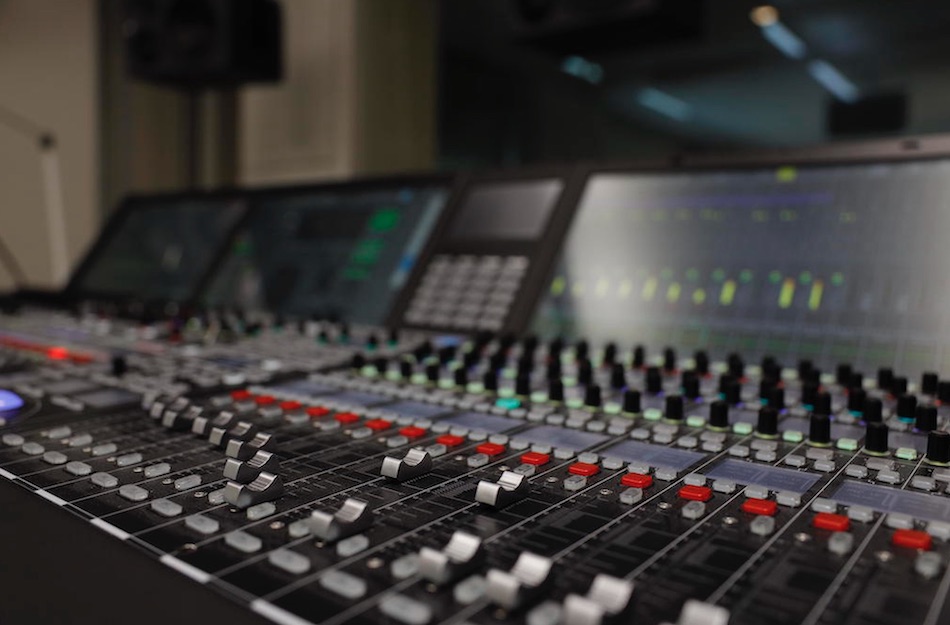
La consola de producción mc²56, reconocida principalmente en el sector del broadcast y ahora también en grandes y pequeños teatros, incluidos los de ópera, “fue fundamental en varios campos. Además de su rendimiento y flexibilidad, ofrece un trabajo intuitivo en la propia superficie, incluyendo el manejo de DSP y las funciones de medición y monitorización, así como la capacidad remota a través de la mxGUI. Su capacidad de conexión, a través del control Crestron, permite conducir y controlar eventos más sencillos prácticamente sin personal especializado”, points out.
Los once bastidores Dallis están distribuidos por todo el edificio e instalados en las respectivas sedes, por lo que los recorridos de la señal hasta las fuentes de los micrófonos se mantienen cortos.
“Como operadores técnicos -continúa Gross– nos alegramos de que las señales de las distintas sedes también estén disponibles para todas las demás consolas a través del router, y la seguridad de la emisión se mantiene mediante el sistema de derechos configurado. Este intercambio mutuo de señales entre todas las sedes, respaldado por la propia redundancia de Lawo, aumenta enormemente las posibilidades creativas”.
Además del sistema de sonido principal de Kling&Freitag, la Sala 2 está equipada con un sistema de reverberación Vivace, con 62 altavoces independientes en las paredes y el techo, y la Sala 1 cuenta con doce altavoces de pared adicionales.
Esta flexibilidad y, concretely, el gran número de altavoces adicionales que pueden ser controlados directamente por el sistema Lawo también será utilizada por Instrument, una plataforma de composición basada en inteligencia artificial.
Specifically, esta tecnología accede al archivo sonoro y lo ‘compone’ evaluando parámetros etnológicos, geográficos y teóricos de la música. A medida que se desarrolle este instrumento también incluirá grabaciones en directo del público, lo que permitirá reaccionar de forma muy espontánea para incluir eventos sonoros de ‘llamada y respuesta’ en toda la instalación.
Did you like this article?
Subscribe to our NEWSLETTER and you won't miss anything.
Related articles
 Darmstadt State Theater (Germany) create a fully IP-based audio infrastructure with Lawo
 Alabama Media instala una espectacular infraestructura Led en el LDLC Arena
 Munich's Gärtnerplatztheater dives into IP audio with Lawo mc256
 The Vienna Folk Opera installs a Lawo mc²56 console with remote control
 The European Parliament wins the AV award for 'Public Sector Project of the Year' with Lawo infrastructure
 ‘UHD Spain’ se convierte en el foro nacional permanente sobre la tecnología 4K-UHD
 The Grand Théâtre de Bordeaux controls its sound infrastructure with the Lawo mc²36 console
 Berlin's new molecular medicine center installs Optoma's first Quad FHDQ130 display
 El hospital Franciscus Gasthuis & Vlietland instala la plataforma de vídeo sobre IP de Sony
 MyM instala Showcases en su escaparate para informar sobre los inmuebles
The Mundo E shopping center installs a mapping projected on an ice rink
MyM instala Showcases en su escaparate para informar sobre los inmuebles
The Mundo E shopping center installs a mapping projected on an ice rink
 Bayer installs AV infrastructure at its London headquarters that encourages collaboration and communication
El Yankee Stadium instala un sistema de menú digital sobre una red de visualización de Sony
The Deutsche Welle TV Studio in Berlin installs a curved video wall of 2 mm
Bayer installs AV infrastructure at its London headquarters that encourages collaboration and communication
El Yankee Stadium instala un sistema de menú digital sobre una red de visualización de Sony
The Deutsche Welle TV Studio in Berlin installs a curved video wall of 2 mm