





PPDS Air quality sensor: digital solution to monitor air quality on screen
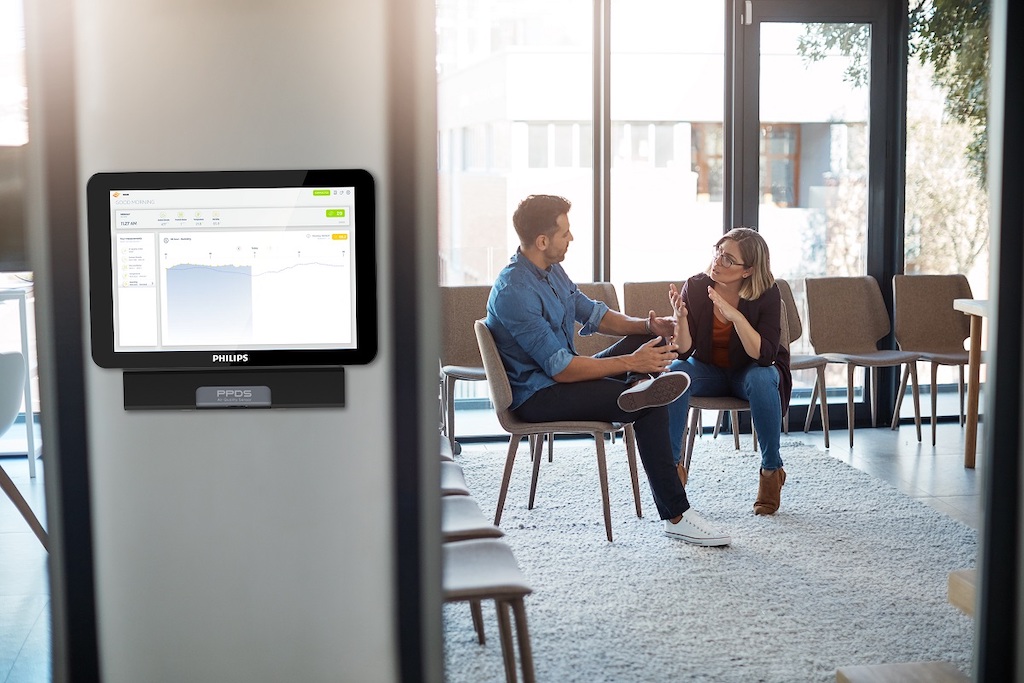
Improve health and safety in schools, companies and other environments is the objective of the new solution PPDS Air quality sensor de Philips, that is integrated into interactive screens, Professional TV and digital signage to easily monitor air quality.
As part of your strategy Total solutions of PPDS, and the commitment to quickly incorporate innovative solutions into the market that respond to customer needs. (as PeopleCount), surge Air Quality Sensor, that expands the function and benefits of your digital displays, providing extensive health and economic benefits.
Philips' new PPDS Air quality sensor solution allows you to monitor air quality on a professional screen; a solution designed exclusively to help schools and companies (including corporate environments, commercial and hospitality) create healthier and more productive work and learning environments, using professional TVs, the company's interactive displays and digital signage solutions
PPDS air quality sensor expands the function and benefits of your digital displays, helping to improve well-being, staff health and safety, students and clients, as well as reduce the spread of potentially harmful and debilitating viruses.
Connected and powered by a single cable USB-A and compatible with the latest professional televisions, Philips interactive displays and digital signage - including MediaSuite (hospitality), T-Line (education), C-Line (corporate), B-Line (food and beverages and corporate environment), y Q-Line (universal)-, the solution plug and play The PPDS air quality sensor has four devices that monitor 24/7.
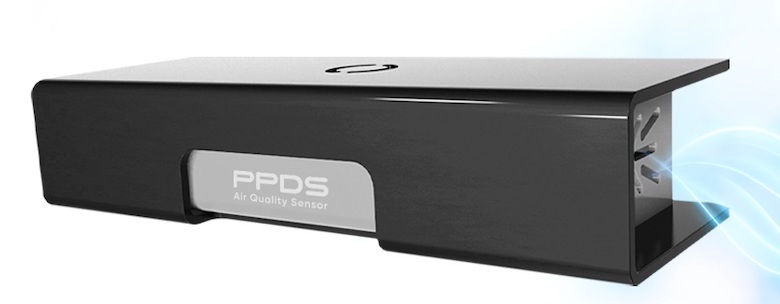
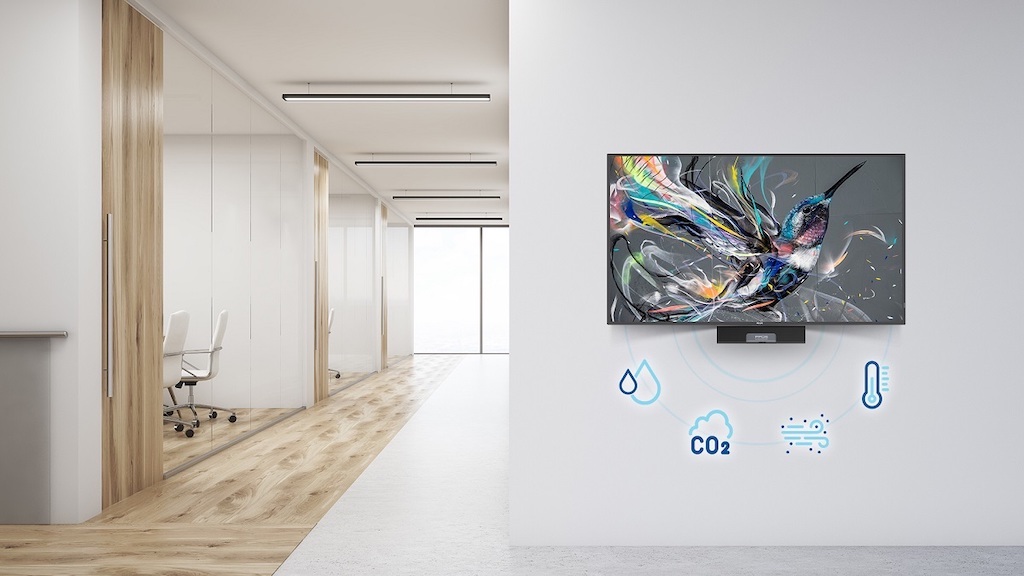
The four sensors measure the ambient temperature, humidity, carbon dioxide and particles, that can have a great impact on people's health and well-being. This is what the company specifies.:
Temperature: influences the rate of virus infection and impacts performance in the classroom or workplace.
Humidity: Virus particles can remain highly infectious at humidity levels below 30% and higher than 55%.
Carbon dioxide: CO2 is an excellent indicator of indoor air quality and the correct ventilation of a workspace, trade or class.
Particles: Higher levels of particle pollution can lead to higher risks of infections, not just COVID-19, but from other viral diseases
Real-time data – whether for a PPDS air quality sensor in a single room or building or in distributed installations –, are analyzed, are translated and displayed through a control panel and a simple application, and are available anywhere and anytime, with the ability to access an indefinite archive of historical data for reporting and analysis.
Whenever air quality is deemed to have fallen below a safe standard, the system emits, Send and display automatic alerts to make it easy to take immediate action.
The app even makes personalized recommendations to improve air quality based on your sensor readings., with something as simple as opening doors and windows, turn on air purifiers (if they are available), adjust room temperatures or even ask staff to temporarily move to other areas of the building.
small in size, The PPDS air quality sensor can be easily installed in the professional screens from Philips in any environment, using a specially designed bracket and mounting kit, supplied in the box.
Chris Colpaert, CEO of PPDS, explains that “with the spread of airborne viruses and other potentially harmful pollutants, Monitoring indoor air quality is crucial to the health and safety of classrooms and work environments. Our air quality sensor is a simple and incredibly effective solution, that combines perfectly with our advanced professional TV and digital signage solutions to provide safer, cleaner environments for people”.
Both inside a classroom, a corporate office, a hotel room, a retail store or any active indoor environment “Air quality monitoring and management has never been more important, and we have made this a simple process, fluid and affordable”, assures.
Healthy building, personal sano
Invisible a simple vista, It has been shown that the quality of the air breathed inside a space has a significant impact on a person's well-being, affecting your health in the short and long term, reducing energy levels, the concentration, productivity and the ability to process information.
Commonly referred to as sick building syndrome (SBS), poorly ventilated buildings can increase, without those responsible knowing, the risks and spread of common and highly infectious diseases and viruses, like the flu and bronchitis, while staff absence and economic losses increase.
According to the World Health Organization (OMS), the symptoms of SBS may include headaches, dizziness, nausea, skin irritation, of the eyes and nose and throat. For the most sensitive groups, Indoor air quality contributes to serious and even fatal conditions.
How do you explain Martijn van der Woude, PPDS International Business Development Director, “just like viruses that are transmitted through the air, the quality of it (unless at very extreme levels) not visible to the naked eye. This can be dangerous, as it can easily become even ignored”.
However, “The risks are there and can pose a significant danger, both immediately and, perhaps more worrying, in the long-term future - he adds -. Be aware of these risks, take preventive measures and, to reassure people, Letting you know that you take your health seriously brings incalculable benefits., even at the reputation level”.
Statistics and the impact on people's health “can't be ignored, and companies, the schools, Retailers and the hospitality sector have the opportunity to reset and understand the clear link between poor air quality, absenteeism and performance -he states-. The PPDS air quality sensor is just the beginning of this story and we continue to develop these solutions around our Philips professional displays”.
Did you like this article?
Subscribe to our NEWSLETTER and you won't miss anything.
Related articles
 PPDS will lead to ISE 2026 Philips' first digital signage range for AI
 Daktronics Live Channel: new solution to integrate and control digital media networks
 PPDS develops a corporate configurator to create the perfect customized AV solution
 NoviSign Stop & Go: digital system to control access in retail
 Omron HVC-P2: person recognition sensor for digital signage
 Android SoC: a flexible and quality solution for digital displays
 The façade of the WZ Jardins hotel in Brazil reacts to sounds and air quality
Hyundai It H325SSV: totem for outdoor digital signage
The façade of the WZ Jardins hotel in Brazil reacts to sounds and air quality
Hyundai It H325SSV: totem for outdoor digital signage
 Trilite Trixels: Autostereoscopic 3D technology for outdoor digital signage displays
Keywest develops a six-channel digital signage player with a function to control video walls
DS Tótem Air, digital signage solution for exterior and interior with extra thin 55” screen
Trilite Trixels: Autostereoscopic 3D technology for outdoor digital signage displays
Keywest develops a six-channel digital signage player with a function to control video walls
DS Tótem Air, digital signage solution for exterior and interior with extra thin 55” screen
 Inves presents its new solution for video walls with high quality screens and imperceptible frames
 Lavi launches a multimedia manager to control digital signage in the retail sector
 They develop an innovative interactive screen to manage holograms in the air