


Digital Projection creates an immersive experience to bring Japanese culture to life
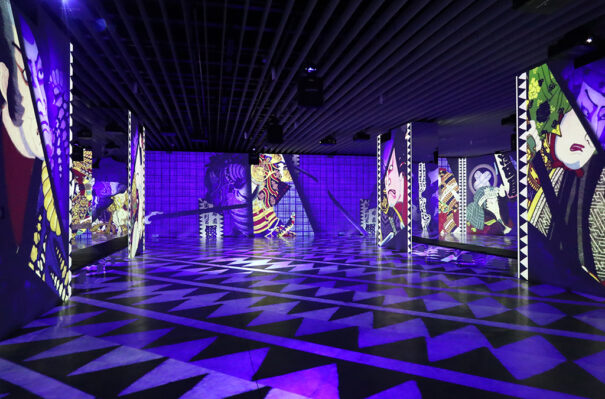
To achieve this immersive experience and offer a 360º projection along all surfaces, have been used more than 30 proyectores 10K E-Vision de Digital Projection, además del controlador de videowall VNS GeoBox y un reproductor BrightSign.
Danny Rose Studio, el colectivo en que se basa la exposición de arte El Espíritu de Japón in it Kadokawa Culture Museum, ha desplegado más de 30 laser projectors 10K E-Vision de Digital Projection para iluminar los suelos, techos y paredes de este espectacular espacio y crear una inmersiva experiencia.
El nombre original de la exposición El Espíritu de Japón es ‘Ukiyo-e Theatre’. Los ukiyo-e son pequeñas obras de arte creadas en el país asiático entre los siglos XVII y XIX, que reflejaban escenas de la vida diaria. Estas obras alcanzaron una gran popularidad en su recorrido por el mundo occidental, forjando un movimiento artístico impresionista.
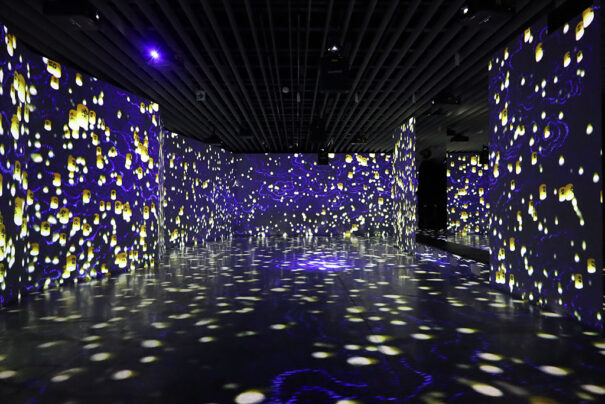
Con esta muestra, los fans del color, las linternas encendidas, las flores de cerezo ondeando en el viento reviven la nostalgia del pasado.
Danny Rose Studio organizó previamente una exposición en Francia, titled El Japón soñado: imágenes del mundo flotante, que atrajo a dos millones de visitantes. Esta se rediseñó para El Espíritu de Japón.
Empleando tecnologías de proyección en vídeo avanzadas, Danny Rose Studio ha creado entornos que resultan totalmente inmersivos y a menudo irreales. Creadores de distintas áreas, incluyendo a artistas digitales, programadores y músicos, colaboran para combinar las obras de arte históricas. En este caso el siglo XIX en Japón, con tecnologías y narrativas contemporáneas con las que se ha creado un tipo totalmente nuevo de instalación visual/espacial a gran escala.

Proyección de 360º
Para lograr algo de esta magnitud, el lugar se dividió en tres grandes áreas donde se ofrece una proyección combinada de 360 grados a lo largo de todas las superficies. Junto con la tecnología laser de Digital Projection, se optó por un controlador de videowall VNS GeoBox para gestionar la unión de los bordes de los distintos proyectores, acoplado con un reproductor BrightSign para mostrar el contenido de vídeo.
Duke Hu, de Digital Projection Japón, asegura que contar con tantos proyectores en una sola sala genera una serie de desafíos únicos. “A causa de la limitación en altura del techo de la sala de exposiciones, la proyección sobre el suelo requirió el uso de más proyectores para mostrar correctamente toda la imagen. Necesitábamos una solución creativa para lograrlo. Tradicionalmente orientaríamos los proyectores hacia el suelo, pero esta vez los hicimos hacia arriba y usamos la lente de periscopio UST, logrando una altura y una cobertura adicionales”.

El uso de demasiados proyectores sobre el suelo habría hecho que la luz se dispersase, con un efecto adverso en la calidad de la imagen de las paredes, de modo que esta solución de usar lentes UST logró un rendimiento óptimo para todos los fondos.
El láser E-Vision compacto resultó la mejor elección, ya que es capaz de lograr altos niveles de iluminación ambiental, con 11 250 lumen partiendo de una fuente de luz de estado sólido.
Para una exposición de esta envergadura, era importante elegir una tecnología flexible y fiable. Los proyectores láser E-Vision 10K de Digital Projection ofrecen una fuente de luz estable y previsible durante hasta 20 000 hours, y unas funciones de unión de los bordes que garantizan una imagen sin fisuras creada a partir de varios proyectores.
“Para una exposición de esta envergadura y complejidad, es fundamental que la tecnología esté a la altura del objetivo final. Esta exposición de arte requiere una visión integral de 360 degrees, lo que implica una enorme cantidad de uniones de bordes sin comprometer la calidad de la imagen”, explains Mark Wadsworth, de Digital Projection.

Did you like this article?
Subscribe to our NEWSLETTER and you won't miss anything.
Related articles
 Christie brings to life an immersive screening experience at OdySea Aquarium
 Immersive experience to relive a thousand years of history, faith and culture in the Basilica of Montserrat
 Digital Projection participates in the immersive Puy du Fou experience, The Mime and the Star
 Digital Projection creates a 360° canvas for 'Vincent meets Rembrandt'’
 Digital Projection brings to life the immersive Eternal Mucha exhibition
 Moment Factory creates an immersive nighttime experience for Banff Gondola
 Digital Projection creates a table mapping show for a Dubai restaurant chain
 Navidalia lives Christmas traditions in an immersive experience that comes to life with Panasonic
 Digital Projection projectors offer an immersive experience to the Huai'an Museum
 Martial arts and Japanese culture are immersed in Sony's 4K technology
 Moment Factory creates a spectacular immersive experience for the upfront 2014 the TSN
Mediapro creates an immersive audiovisual experience for the Brazilian Football Confederation museum
Digital Projection creates immersive projection to attract new investments to Guangdong's Gaolan Port area
Hastings Academy relies on digital signage to create an immersive experience for teachers and students
Moment Factory creates a spectacular immersive experience for the upfront 2014 the TSN
Mediapro creates an immersive audiovisual experience for the Brazilian Football Confederation museum
Digital Projection creates immersive projection to attract new investments to Guangdong's Gaolan Port area
Hastings Academy relies on digital signage to create an immersive experience for teachers and students