





Meyer Sound Constellation transforms former movie theater into concert hall
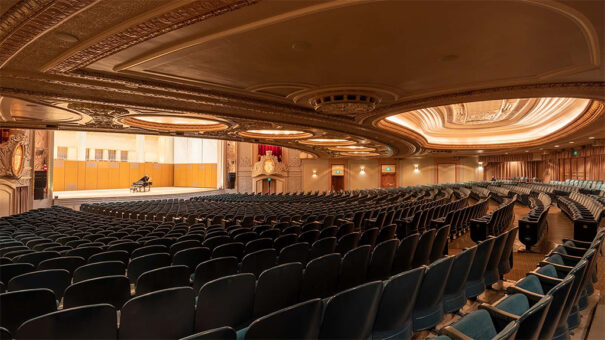
The system Meyer Sound Constellation, that has been installed in the Arlene Schnitzer Concert Hall, integra 86 ambient sound detection microphones and 294 small speakers.
 When the Arlene Schnitzer Concert Hall in Portland (Oregon – United States) reopened after a pause caused by the pandemic, attendees at the Oregon Symphony's season debut could hear a notable difference in the orchestra's sound, thanks to the solution Meyer Sound Constellation installed.
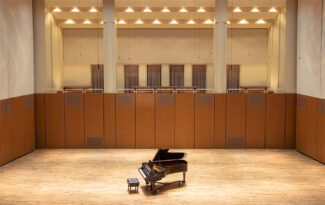
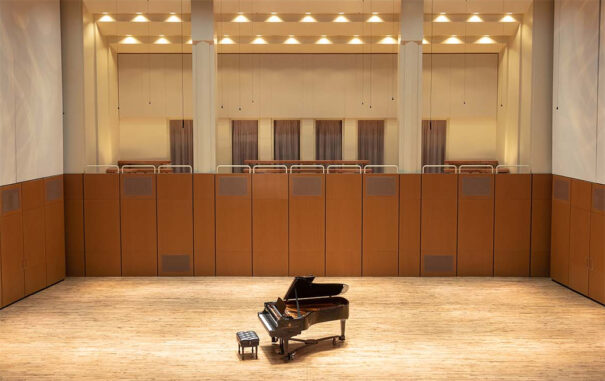
After installing this acoustic system they experienced a natural reverberation, rich and balanced, evenly distributed throughout the room. on stage, the musicians could be heard clearly despite the disappearance of the enormous physical shell of the stage.
With a capacity for 2.776 seating, The Arlene Schnitzer Concert Hall was built in 1928 like a vaudeville house, made the transition to films just two years later and eventually went out in 1982. After a renovation project, the place reopened in 1984 as a multi-purpose concert hall and the new home of the Oregon Symphony Orchestra.
 “Ours is the first restoration of an old movie theater with Constellation, And that made it a bit of a learning curve.”, explains Robyn Williams, executive director of Portland’5. “It is a sophisticated system but it is receiving very favorable reviews. The audience experience is much better. Those who don't even know it's here say the sound in the room is very good now, and those who do know say it's a game changer.".
The renewal of 1984 incorporated significant changes in architectural acoustics, including installation of a large stage truss, to make the reference reverb suitable for symphonic performances. But the problems remained.
 Seats below the deep balcony experienced noticeable imbalance and sound attenuation, and the huge stage frame failed to distribute the sound evenly throughout the room. Besides, aged casing was difficult and time consuming to move and store, and began to generate security problems.
Williams and other key decision makers had initially booked an active acoustic solution, based partly on experience, with a previous generation system from a different manufacturer in a room elsewhere in Oregon. But Williams changed his mind after testing Constellation at the venue. SoundBox from the San Francisco Symphony.
“The shell was at the end of its life, and we were reluctant to spend much more than six figures on a solution that served only one arts organization. Constellation would not only improve the symphony's acoustics on stage and in the audience, "But it would also provide flexibility for the wide variety of other musical genres we present here.", Williams clarifies.
The historic preservation specialists of the Architectural Resources Group (Architectural Resources Group) They worked with theater consultants from The Shalleck Collaborative in the overall planning and provided the framework for the technical specifications of Meyer Sound's own Constellation equipment.
“It is transcendent, “a difference between day and night”, comment Scott Showalter executive director of the Oregon Symphony. “Musicians can hear themselves better and the sound is more visceral in the audience. Regardless of where you are sitting, you hear a real balance of all the instruments”.
Once installed, The Constellation system consists of 86 ambient sound detection microphones and 294 meticulously placed small speakers, with various combinations assigned to four different acoustic zones on stage and in the hall.
Acoustic improvements are created using the patented VRAS algorithm, hosted on a digital audio platform D-Mitri. Installed by Sound Image, It is the largest Constellation system in the United States in terms of total speaker and microphone deployment.
Meyer Sound Project Manager for Constellation, John Pellowe, former classical recording engineer at Decca Records in London, supervised the process using a variety of ensembles on stage as a musical source. The system's debut came with the Oregon Symphony's first subscription concert under the direction of music director David Danzmayr.
Aware that there are dozens of other movie theaters across the country now repurposed as multi-purpose concert venues, Williams hopes Arlene Schnitzer's team becomes a mecca for her teammates.
“Constellation is something that gives new life to these great old buildings. Create new, flexible acoustics without large reflective panels or floating clouds, so it does not harm the visual aesthetics. It is discreet and respectful of the historic architecture”.
Based on a patented breakthrough in digital processing for acoustic spaces, Constellation places a multichannel reverb between arrays of microphones and speakers distributed throughout the room. The reverberator increases the apparent volume of the physical room while varying the gain in the microphones changes the apparent absorption or reflection of the room surfaces.
By complementing the first reflections or extending the reverb, the sound in the room behaves as if it were bigger, with a different shape or constructed of materials that exhibit varying degrees of absorption or reflection. Sound energy introduced into the room is continually recaptured, and reflections are decreased in level according to the preset program to create the specifically desired reverb effect.
Did you like this article?
Subscribe to our NEWSLETTER and you won't miss anything.
Related articles
 Stockholm's Nalen Concert Hall gets a modern upgrade with audio from L-Acoustics
 INFiLED transforms a former barracks into an e-sports center
 Meyer Sound Elevates Cinema and Live Performance Capabilities in One Space
 Riedel Artist transforms Daegu concert hall communication
 Martin Audio sound transforms an exclusive Dubai club into a concert hall
 Meyer Sound Constellation is installed at Cornish College in Seattle
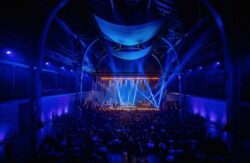 GLP transforms violinist Filip Jančík's concerts with LED lighting
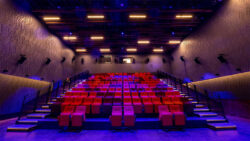 Meyer Sound Constellation Expands Sound Experience at Beverly Theater
 Prolights illuminate Dublin's National Concert Hall
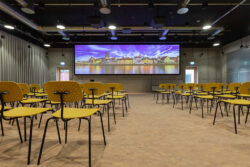 Meyer Sound Constellation enhances learning at Aarhus School of Architecture
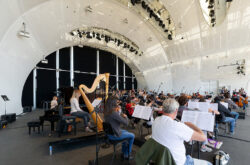 Meyer Sound Constellation provides acoustics at San Diego's Rady Shell
 The oldest newspaper in Texas installs a NanoLumens LED screen in its historic newsroom
 Yamaha CIS transforms the archive of Italy's oldest bank into a multimedia environment
 From grain warehouse to concert hall with Yamaha Pro Audio