


Leyard Europe stars in the new EMBL educational exhibition
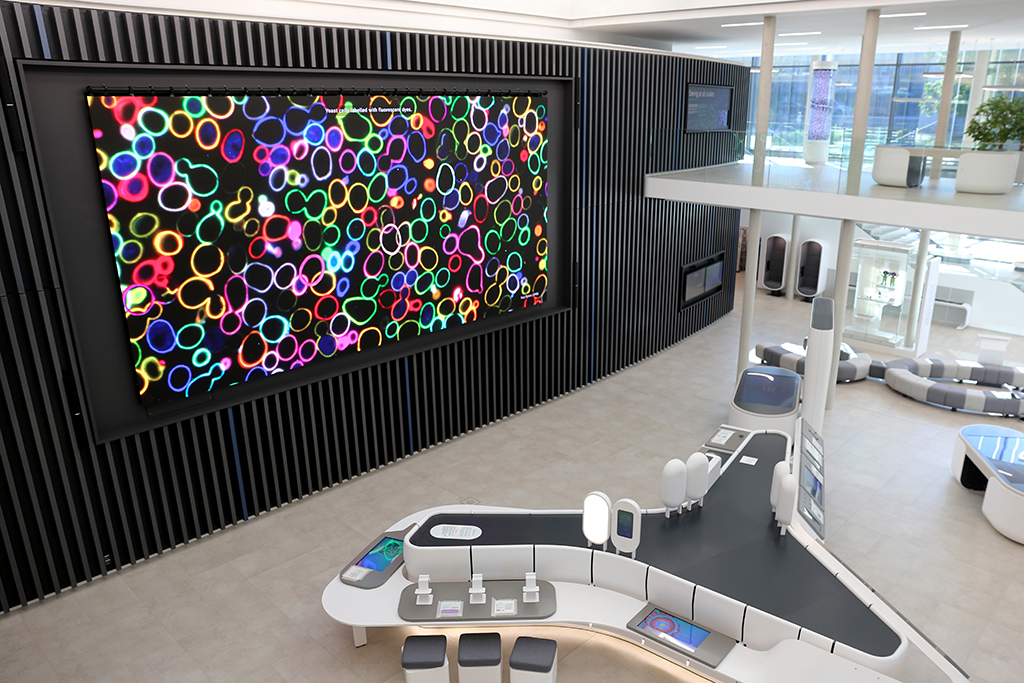
The centerpiece of the exhibition that can be seen at the headquarters of the European Molecular Biology Laboratory, el Wall of Wonders, It is a Led screen Leyard CarbonLight VX 4K de 8×4 metros, with a pixel pitch of 1,9 mm, whose content is controlled by a media server 7thSense y Pixielab Show Control Blocks.
A videowall Led CarbonLight VX 4K de Leyard Europe is the centerpiece of a new exhibition that can be seen at the headquarters of the European Molecular Biology Laboratory (EMBL), which explains and celebrates their work to better understand the building blocks of life on Earth.
The exhibition World of Molecular Biology occupies 800 square meters of the double-height atrium of the EMBL main building in Heidelberg (Germany) and tells the story of life through 45 audiovisual exhibitions which include a mix of audiovisual elements, virtual reality, interactive and tactile, grouped into three areas under the themes The Spirit of EMBL, Life is Amazing y Seeing is Understanding.
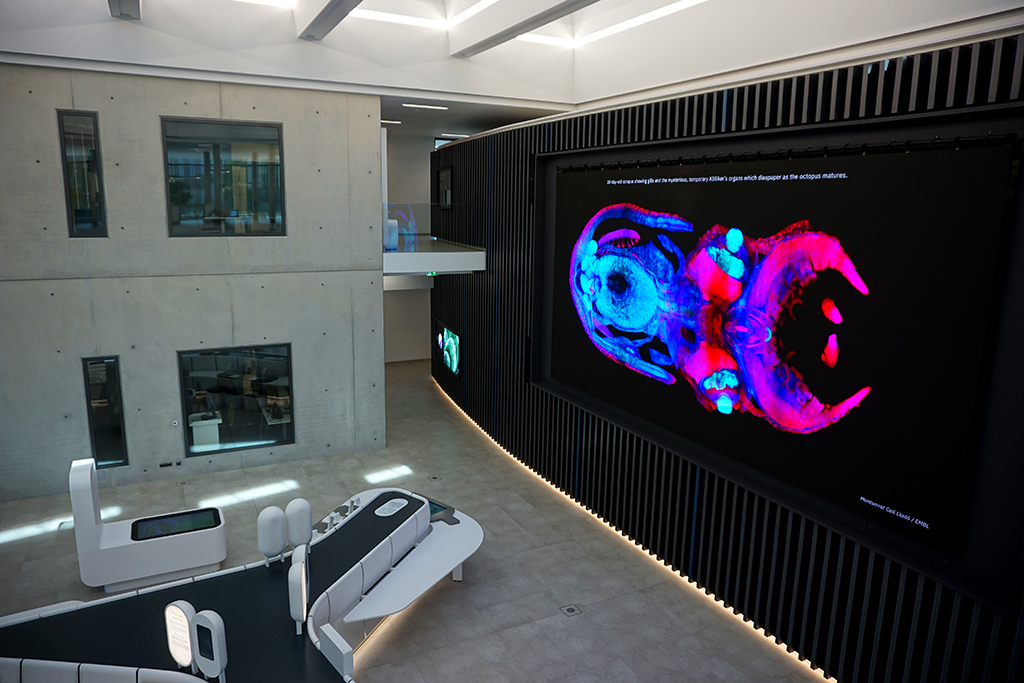
The centerpiece of the exhibition, he Wall of Wonders, It is an 8 inch Leyard CarbonLight VX 4K Led screen.×4 meters with a pixel pitch of 1,9 mm, whose content is controlled by a servidor multimedia 7thSense y Pixielab Show Control Blocks. This has been designed and installed by DJ Willrich (DJW), audiovisual systems integrator responsible for the audiovisual technology of the exhibition designed by Haley Sharpe Design.
The screen shows images from electron microscopes located in an adjacent room, showing microorganisms too small for the human eye in highly detailed images.
The goal of the exhibition is to communicate EMBL research in an easy-to-understand way., without the need for explanations from biologists and physicists. It is intended for schools and constitutes a bridge to laboratory tasks and activities..
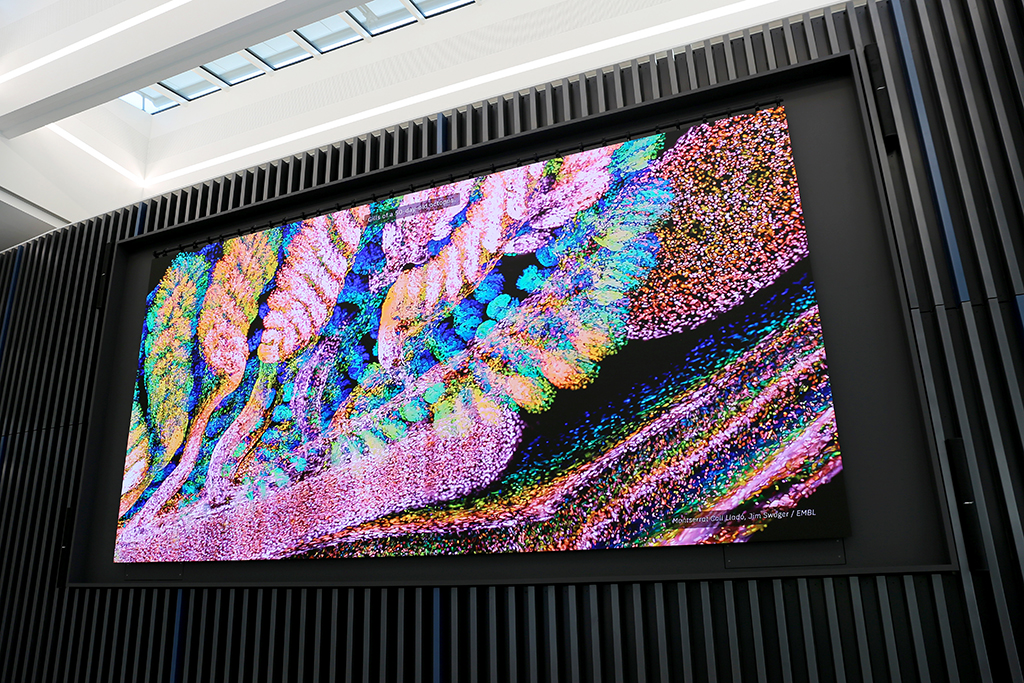
“Leyard's Led display brings microscopic images to the visible world”, explains David Willrich, owner and CEO of DJW, who acted as a consultant during the design phase before winning the competition for the planning and installation of the audiovisual system. “See a cell less than 20 microns expanded to a width of eight meters is an amazing experience that even captivated the EMBL staff, who stopped to watch the image cycle during startup”.
“Led is the perfect display technology for the high ambient light of the atrium, and the fine pixel pitch, Leyard CarbonLight's wide color gamut and high, fast refresh rates provide optimal visual performance, ensuring that even the most subtle details of the images are reproduced perfectly”, Willrich adds.
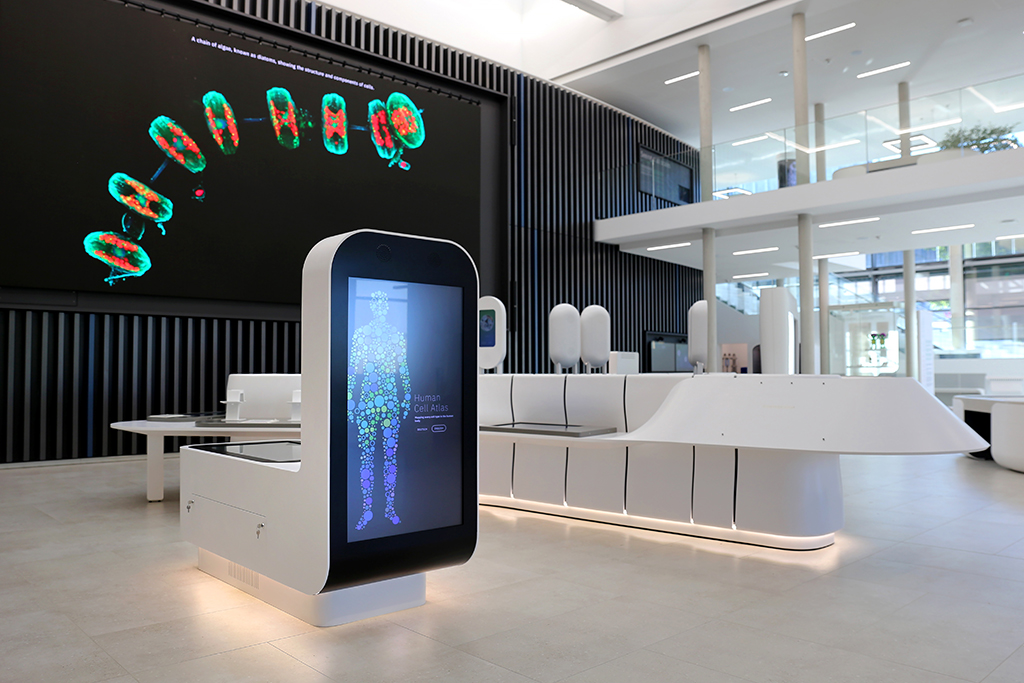
Others touch tables, vertical displays and explanatory screens They allow you to delve deeper into certain topics and offer expanded explanations and possibilities for interaction. All elements together are designed to attract, inform and inspire visitors to the building and promote a better understanding of molecular science and its importance to people and society.
Flexible space design allows for multiple uses, as meeting rooms can be closed around the exhibition or opened to it. A connection to the LED screen for a computer and another to the existing sound system allow its use for presentations and supporting speakers..
“A Compelling Story Is Based on Clear Communication”, states Luke Marler Hausen, de Leyard Europe. “DJW was able to utilize all of the advanced color capabilities of our Leyard VX series to deliver powerful, vibrant messages that captivated audiences and met visual communication briefs with style.. “DJW’s approach to integration and bespoke design allowed our LED wall to tell the EMBL story with clarity and precision.”.
The use of audiovisual technology, in particular the Leyard Led screen, in the exhibition reflects the central themes of the EMBL: seeing is understanding and life is amazing. Technology helps tell how life works, what the EMBL does to improve our knowledge and why it is important for all of us. In a captivating and impactful way that EMBL hopes will continue to inspire the next generation of researchers and bioscientists.
Did you like this article?
Subscribe to our NEWSLETTER and you won't miss anything.
Related articles
 Leyard Europe brings virtual production to Ansbach University
 Leyard offers an interactive visual journey at Hans Memling exhibition
 Panasonic Connect Europe creates a 360º educational projection sphere
 Leyard Europe serie LN: Led screens for live events
 Nova TV bets on Leyard Europe for its news studio
 Leyard Europe unites visual innovation and hybrid work at ISE 2024
 Leyard Europe dazzles on the high seas aboard the Artexplorer museum ship
 Van Marcke creates a store 100% digital with Leyard Europe Led screens
 Leyard Europe Luminate Pro equips the new 360º studio of RTL Germany
 Leyard Europe suministra a H&M one of the largest indoor Led screens in Europe
 Leyard Europe carries out a spectacular LED display at ISE 2023
 Leyard stars in the digital remodeling of the Glasgow art museum
 The new Wells Fargo headquarters in New York installs a 'Led column' with Leyard and Analog
 Electrosonic provides AV equipment for new Museum of Tolerance exhibition