


Kinetic Module equips the immersive installation of the Artexplorer museum ship
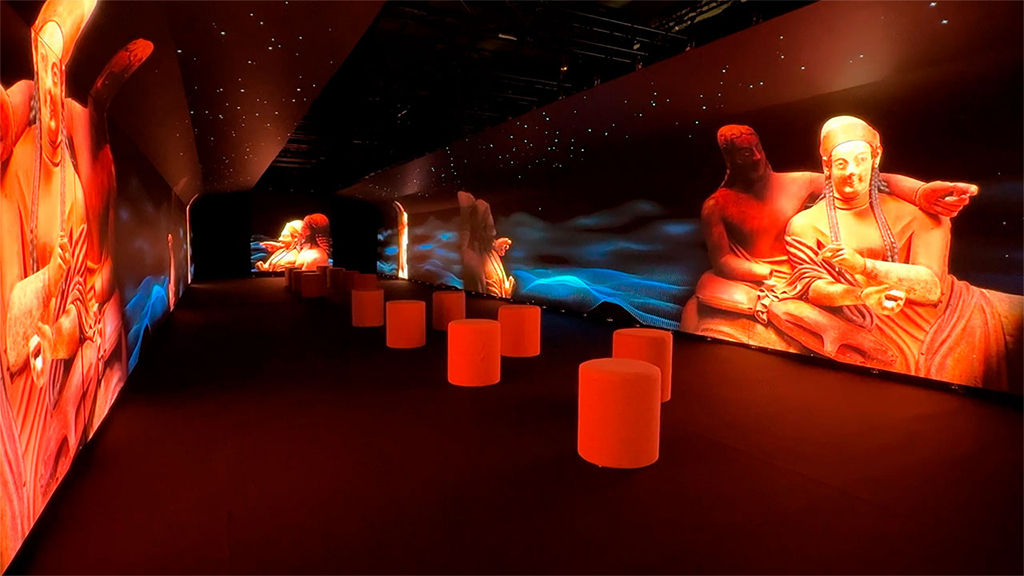
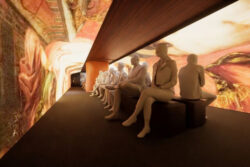
En la galería principal se ha instalado un túnel inmersivo formado por dos paredes Led de Leyard of 16×3 metros. Los módulos curvados se elevan hasta la base del mástil. La instalación se completa con dos pantallas Led de 4 square meters, situadas a la entrada y a la salida. Para alimentar los 50 millones de píxeles del túnel se ha utilizado el servidor multimedia Modulo Kinetic.
 En la primavera de 2024, the Fundación Art Explora lanzó su festival itinerante por mares y océanos con Artexplorer, el primer barco museo del mundo. Akumendo y Arscénique unieron sus fuerzas para este proyecto. Se diseñó e integró en el catamarán un sistema audiovisual latest generation, with a túnel Led inmersivo and the servidor multimedia Modulo Kinetic of Pi Module.
Creada por el empresario y filántropo francés Frédéric Jousset, la Fundación Art Explora tiene como objetivo hacer accesible el arte y la cultura a todo tipo de público, colocando la movilidad y la tecnología digital en el centro de sus actividades.
El último proyecto de la fundación es el festival itinerante Art Explora y su catamarán bautizado como Artexplorer. Iniciado hace 4 years, es el primer barco museo del mundo. El catamarán de 47 metros de largo y sus velas de 55 metros se construyeron en el astillero Perini Navi en Italia.
Desde la primavera de 2024 hasta el otoño de 2026, el festival Art Explora y su barco museo planean visitar quince países del mar Mediterráneo.
Akumendo, especialista en integración informática a bordo de yates, y Arscénique, proveedor de servicios audiovisuales, se han unido para desarrollar una respuesta conjunta a los requerimientos del proyecto.
Uno de los principales retos era crear un immersive space que pudiera acoger exposiciones digitales para unas cuarenta personas en la cubierta principal del barco. También tenía que ser desmontable para que Artexplorer pudiera utilizarse como barco de crucero fuera de los periodos de festivales.
“En el pliego de condiciones de la parte del museo, la idea era crear una gran sala inmersiva en el interior de la cubierta principal, of some 19 meters long by 6 meters wide. Los primeros diseños incluían proyectores de vídeo, pero pronto nos dimos cuenta de que iba a ser complicado”, explains Guy Butterati, cofundador de Akumendo.
Emmanuel Ducros, presidente de Arscénique, duck: “Tenemos muy poca altura de techo, por lo que incluso con modelos de proyección ultra corta, habrían sido necesarios unos treinta proyectores de vídeo en un espacio reducido, with up to 40 personas viviendo la experiencia provocando sombras proyectadas”.
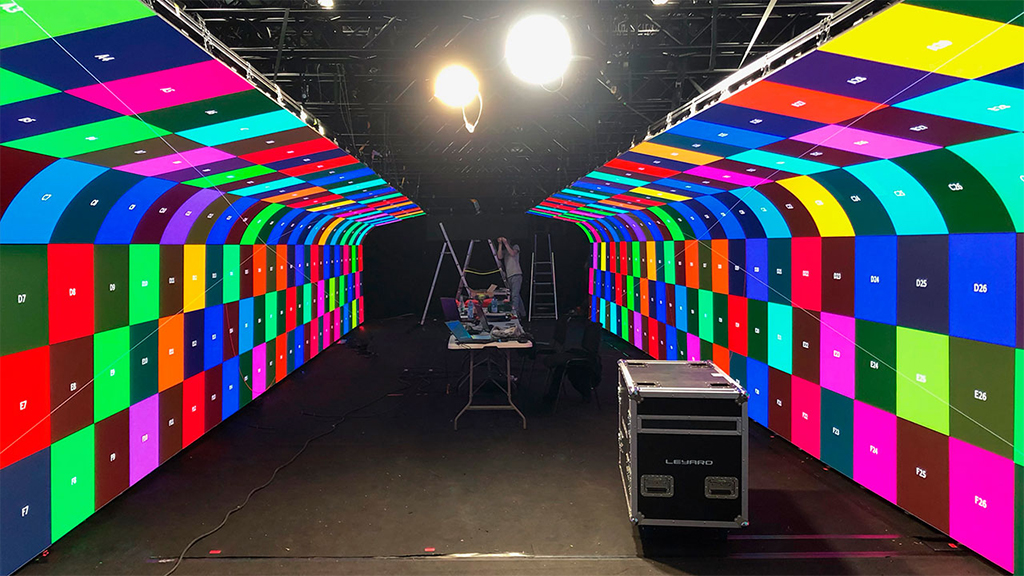
Ante la dificultad de instalar un sistema de proyección a bordo del catamarán, Akumendo y Arscénique recurrieron a la tecnología Led y al fabricante Leyard para diseñar una estructura Led a medida. “No era la petición inicial del cliente, pero además del estudio de proyección de vídeo, realizamos un estudio con un túnel Led”, explica Ducros.
Una inmersiva experiencia
La propuesta Led de Akumendo y Arscénique fue finalmente elegida para equipar el barco museo.
La experiencia de la visita se desarrolla en tres etapas. Los visitantes acceden a la cubierta superior del Artexplorer, donde se les equipa con auriculares RSF Confident con audio binaural.
Durante unos diez minutos, los visitantes viven una odisea sonora alrededor del Mediterráneo diseñada por el Ircam, el instituto francés de investigación y coordinación musical y acústica. El recorrido continúa en la cubierta de popa, donde se proyecta un documental en una pared Led de 3×2 metros.
Finally, el público entra en el corazón de la cubierta principal y accede a la galería inmersiva. Allí, experimenta la exposición digital ‘Présentes’, diseñada con la colaboración del Louvre Museum y creada por Julien Abril y su equipo de Graphics eMotion.

En la galería principal se ha instalado un túnel Led inmersivo. La estructura, hecha a medida y desmontable, es el fruto de la estrecha colaboración entre Akumendo, Arscénique y Leyard. “Tuvimos que combinar las limitaciones del entorno de la navegación con las de un sistema de tipo evento. El sistema fue diseñado como para una gira”, afirma Guy Butterati.
El túnel inmersivo está formado por dos paredes de 16 meters long and 3 meters high. Los módulos Led curvados se elevan hasta la base del mástil. La instalación se completa con dos paredes Led de 2×2 metros, situadas a la entrada y a la salida del túnel. La galería puede acoger a unos cuarenta visitantes. Con el público situado a unos 1,80 metros de las pantallas, todos los elementos Led tienen un pixel de 1,5 para garantizar la mejor experiencia visual.
Para alimentar los 50 millones de píxeles del túnel Led, Akumendo y Arscénique utilizaron el servidor multimedia Modulo Kinetic de Modulo Pi. El kit consta de una estación de trabajo Modulo Kinetic Designer y tres servidores Modulo Kinetic V-Node equipped with 4 salidas 4K y 4 TB of storage. Los bastidores que contienen los servidores multimedia están situados a babor y estribor de la instalación inmersiva para adaptarse al limitado espacio.
Los servidores se utilizan para reproducir el espectáculo de 12 minutos a 60 fps diseñado para el túnel Led, así como el documental que se muestra en la cubierta de popa del barco. El Modulo Kinetic también controla los 8 multichannel speakers Genelec distribuidos por toda la sala inmersiva.
Uno de los servidores V-Node ha sido equipado con una tarjeta de sonido virtual Dante para comunicarse con los altavoces en red, reduciendo así la cantidad de cableado a bordo del barco.
También se han utilizado las funciones de control de espectáculos del servidor multimedia del Modulo Pi. El UI Designer integrado en el Modulo Kinetic ha permitido crear paneles personalizados para controlar el lanzamiento de los espectáculos de vídeo y enviar el inicio del espectáculo de audio reproducido a través de los auriculares binaurales. Besides, se ha diseñado especialmente un panel de mantenimiento para proporcionar feedback del sistema audiovisual en tiempo real.
Thanks to the aplicación complementaria Kinetic Panel, se puede acceder a los paneles de control creados en el servidor multimedia desde una tableta. Guy Butterati habla de un panel específico para las operaciones diarias. “La información técnica, como la temperatura o el consumo eléctrico, está disponible en forma de cuadro de mandos para el responsable de operaciones, que puede acceder a ella desde su propio iPad”.
Guy Butterati comenta sobre Modulo Kinetic: “El sistema nos ha demostrado dos cosas: es muy abierto, muy versátil y también muy fiable en su fase operativa”.
Actualmente utilizado para la reproducción de medios y el control de espectáculos, el sistema podría evolucionar hacia aplicaciones más avanzadas utilizando las funciones interactivas de Modulo Kinetic. “Art Explora es una base con visión de futuro. No queríamos un simple reproductor. Con Modulo Kinetic, sabemos que estamos preparados para el futuro y que podremos responder a todas las situaciones posibles en el futuro”, concluye Guy Butterati.
El festival Art Explora y su barco-museo ya han hecho escala en La Valette (Malta), Venice (Italia) y Marsella (France). La próxima escala será Tánger, in Morocco, of the 20 al 29 September.
Did you like this article?
Subscribe to our NEWSLETTER and you won't miss anything.
Related articles
 Pi module to be revealed at ISE 2026 the capabilities of Modulo Kinetic 7
 InfoComm 2025: Modulo Pi advances Kinetic's new 3D functions 7
 Modulo Pi designs the new generation of the Modulo Kinetic media server
 Modulo Kinetic promoted the first great opera produced in Arabic
 Modulo Pi participates in the immersive Parisian experience Luminiscence
 Pi module will show at ISE 2024 an interactive Led experience with Kinetic
 Leyard Europe dazzles on the high seas aboard the Artexplorer museum ship
 Modulo Pi manages the immersive room of the Yanbu visitor center
 Modulo Pi bets on interactivity in the version 5 de Kinetic
 Kinetic promotes the immersive experience of the Polytechnic University of Morocco
 Modulo Pi will promote interactive experiences at ISE 2023 con Kinetic 5
 Modulo Pi improves the 3D engine and provides more virtual functions in Kinetic v4
 Modulo Pi adds extended reality and 3D capabilities to Kinetic to hold events
 Virtual Harmony offers an immersive musical and visual experience with Kinetic Module