


Avolites brings its media server to the heart of Rio in Las Vegas
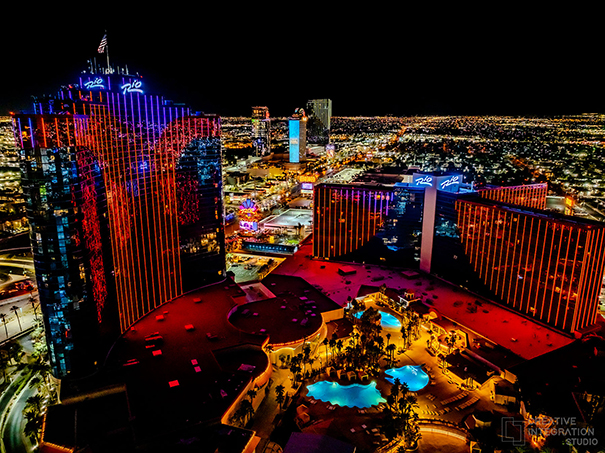
El servidor de Avolites se utiliza para mapear, control and program more than 5 kilometers and 351.032 pixels, In addition, the X-Bar solution 25 mm Clear Led es la encargada de envolver los edificios en 360 degrees.
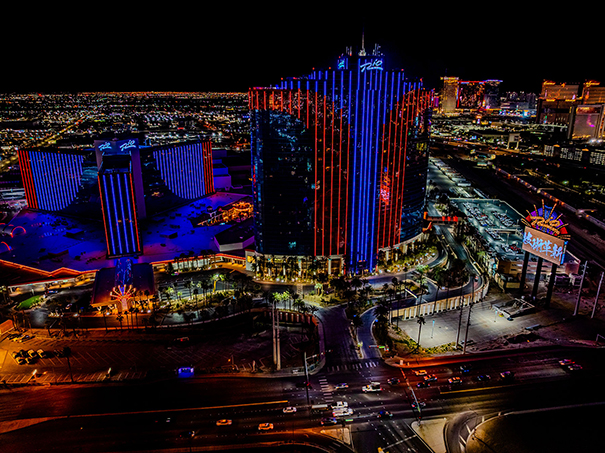
And servidor multimedia Avolites Ai se encuentra en el corazón de la espectacular instalación de iluminación que envuelve las dos torres del famoso hotel y casino Río de Las Vegas.
Este servidor se utiliza para mapear, control and program more than 5 kilometers and 351.032 píxeles de ‘posibilidades de iluminación’. Diseñado por el equipo creativo de Chris Kuroda y Andrew Gif Giffin, utilizan la solución X-Bar de 25 mm de Clear Led para envolver los edificios en 360 degrees.
Reconocidos por su trabajo como diseñadores de iluminación para música en directo y entretenimiento, Chris y Gif programaron una serie de señales, escenas y secuencias que se ejecutan automáticamente, aportando una estética de iluminación única y orgánica a la arquitectura de este icónico hotel y casino de Las Vegas.
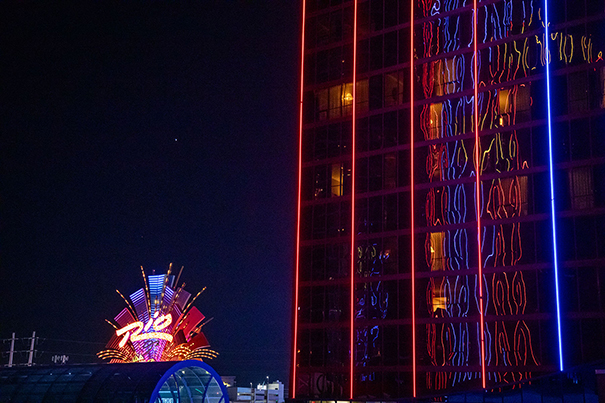
Nueva Imagen de Río
Se le encargó a Ruben Laine, jefe de Nerds, y al estudio estadounidense Creative Integration, que diseñaran una solución de control que tratara el vídeo como iluminación.
Esto implicó la iluminación en un formato centrado en el vídeo, lo que permitió acceder a niveles de detalle microgestionables para cada tira vertical de Led, algunas de las cuales superan los 4.000 píxeles de longitud.
El esquema de iluminación de Río forma parte de una remodelación multimillonaria del resort, gestionada por Dreamscape Companies. Los nuevos Led reemplazan 5,8 kilómetros de neón antiguo que se instaló en la década de los 90.
El proyecto en su conjunto es una idea original de Marty Millman, vicepresidente de Desarrollo y Construcción de Dreamscape. Específicamente, Millman no quería una iluminación nueva que se pareciera a cualquier otra instalación de edificio genérica o con mapeo de píxeles clínico y alimentada con contenido de vídeo. Quería algo único, diferente y que destacara.
Marty contactó con el equipo creativo de iluminación del artista, compuesto por Chris y Gif, para retarlos a producir la apariencia específica que él imaginaba para el edificio de Río, inspirado por sus diseños de iluminación para la banda. Su trabajo para el artista utiliza frecuentemente fuentes de luz lineales de estilo teatral/escenario, as Robe Tetra2 y TetraX, como base estructural dinámica para su ya conocido sistema de trusses automatizados, añadiendo a la vez una capa adicional de movimiento cinético.
Chris y Gif han programado cientos de miles de señales de iluminación para las diversas giras y proyectos de Phish, utilizando consolas de iluminación y motores de efectos, que otorgan a la animación una apariencia nítida y claramente definida. Esto era exactamente lo que Marty quería, y un flujo de trabajo que Chris y Gif conocen de forma natural.
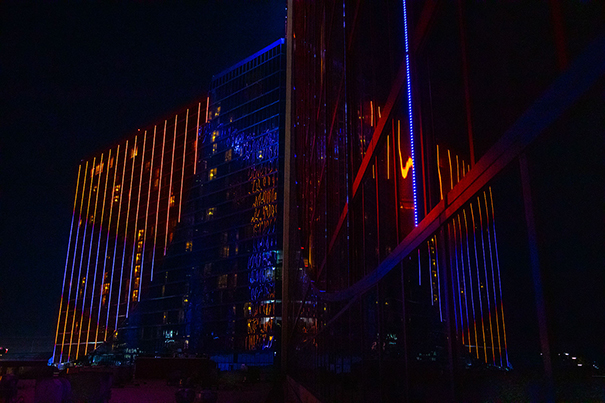
Control de vídeo para arte de iluminación
Chris y Gif estaban encantados de aceptar la misión, pero se dieron cuenta de que la enorme cantidad de píxeles involucrados significaba que el control DMX directamente desde una consola de iluminación no era una opción.
Usar el servidor multimedia Avolites y la inteligencia artificial fue una de las primeras ideas de Ruben. “Siempre me ha gustado la AI”, comment, y rápidamente adaptó este producto para esta tarea, en combinación con la potente renderización de gráficos en tiempo real de Notch.
Ruben, quien ha utilizado los servidores Avo IA Media durante más de 10 years, colaboró con el equipo de Avolites en el Reino Unido para añadir una nueva función a las acciones de seguimiento del servidor de IA que permite la ‘especificidad aleatoria’ como modo de reproducción personalizado para gestionar todos los medios, el control y la programación mediante un bloque Notch que Ruben construyó, lo que permite controlar la iluminación en toda la superficie de los edificios.
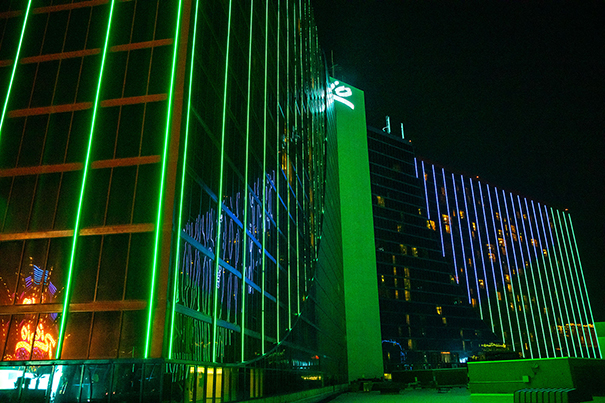
Filosofía de la aleatorización
Esta programación personalizada, que permite la aleatoriedad, permite la reproducción de un largo look base seguido de una serie de secuencias aleatorias antes de volver al look base… y repetir el proceso, lo que también significa que la misma serie de secuencias nunca se repetirá y se volverá predecible. Las escenas de iluminación programadas se dividen en dos categorías: looks base, con una animación sutil, y shows, más rápidos, más intensos y con mayor contraste.
Un look base se reproduce durante cinco minutos, seguido de un show de un minuto (todos seleccionados aleatoriamente), seguido de otro look base también seleccionado aleatoriamente y, finally, otro show de un minuto.
“Poder dictar una serie de archivos a cada clip, de los cuales elegiría aleatoriamente para el siguiente, it was amazing”, explica Chris. The programación de la iluminación en sí misma tenía una sincronización más flexible, clip a clip, sin dos clips de la misma duración, por lo que usar herramientas como Calendario o Macro Script imposibilitó el uso de otras herramientas”.
Comenzaron a programar la iluminación con los elementos lineales en Notch, tratando cada línea vertical como su propia capa o lienzo, completo con controles de intensidad dedicados y una forma para permitir sólidos, degradados o patrones, además de controles de transformación completos como posición y escala, así como diferentes controles de color y alfa.
Esto significaba que una sola capa podía manipular gradientes complejos con un solo elemento, y estas capas se apilaban.
Una segunda capa, controlada de forma independiente, permitió a Gif experimentar con la programación de iluminación, apilando controles bidimensionales y creando un conjunto de 20 supercapas para cubrir todo el conjunto de capas, renderizando debajo de las 200 capas lineales con controles y efectos similares, pero más complejos.
Finally, al incluir máscaras animables, se pudieron resaltar los segmentos arquitectónicos y las características individuales de los edificios, lo que mantuvo la identidad arquitectónica de Río.
“Queríamos lograr esto sin que el edificio se perdiera en el glamour y el brillo de su nuevo velo tecnicolor”, explica Chris, y añade que “la genialidad de esta metodología de control permitió utilizar nuestras herramientas habituales y el flujo de trabajo de programación de iluminación durante el proceso creativo”.
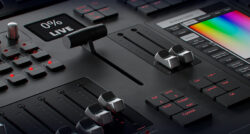
Control de Iluminación para videoarte
Las ideas se discutieron como si fueran señales de iluminación estándar, creándolas y manipulándolas sobre la marcha mediante una consola de iluminación y su lógica, recurriendo a muchos de sus trucos de iluminación para conciertos, como barridos de color por todo el lienzo, estrechas bandas blancas que introducen un nuevo color con puntas de cohete, o creando formas con el espacio negativo y animándolas en numerosas formas.
With around 50 o 60 looks de movimiento lento y otros 50 o 60 de movimiento rápido, necesitaban un servidor que los seleccionara para reproducirlos aleatoriamente a lo largo de un año, de modo que nada se repitiera con regularidad.
Esta combinación de Notch y serie Q/Ai también procesa eficazmente 2000 universos de datos de píxeles en 8 universos DMX de canales ArtNet expuestos externamente. Cada secuencia se reproduce desde la consola y ArtNet, se graba en Notch y luego se renderiza a 60 fotogramas por segundo para lograr el movimiento más fluido posible en cada píxel de la fachada del edificio de Río.
El servidor multimedia de la serie Q envía los clips renderizados a los procesadores de señal de Clear Led, que luego se transmiten a través de varios kilómetros de cable de fibra óptica.
“La serie Q/Ai fue sin duda una parte crucial de esta aventura. Desde nuestra idea original de ejecutar el espectáculo con bloques Notch en vivo, pasando por cada desafío creativo, técnico y ejecutivo, hasta la ejecución final. Usar Q/Ai nos permitió mapear eficazmente el edificio en tan solo un par de horas”, comenta Rubén.
El nuevo sistema de iluminación Río está ayudando a crear mayor energía y entusiasmo en torno a un lugar clásico de Las Vegas. Además de emocionar a los visitantes, que pueden maravillarse con su fascinante belleza, ilustra nuevas posibilidades técnicas en la escala y la imaginación del control integrado de iluminación y vídeo mediante una combinación dinámica de Avolites serie Q/Ai y Notch.
Did you like this article?
Subscribe to our NEWSLETTER and you won't miss anything.
Related articles
 7thSense serie S: ultra-compact 8K media server
 RCF boosts sound in the heart of the Las Vegas Strip
 Earpro&EES will distribute Avolites control solutions in Spain
 Toshiba takes IBC 2023 a Petabyte-scale multimedia storage solution
 Robe Lighting acquires lighting control company Avolites
 disguise introduces gx3 media server for live events
 Icon Multimedia lleva sus sistemas de info-entretenimiento a bordo a InnoTrans
 Avolites Prism Player: media player to preview, edit and encode media clips
 Samsung lleva la experiencia Smart Led al corazón de Times Square en Nueva York
 Fluge brings the Disguise VX4 video server to the world of Spanish events and shows
 YCD Multimedia creates innovative dynamic canvas at Cosmopolitan Las Vegas hotel
 Icon Multimedia brings its digital signage software to the Medellín Metro
 Modulo PI will advance in ISE 2018 the capabilities of your media server solutions
 The grandeur of the oceans in the heart of Madrid