


KL Core IP de Elation, la columna vertebral en la remodelación del Peter Kiewit Concert Hall (Nebraska)
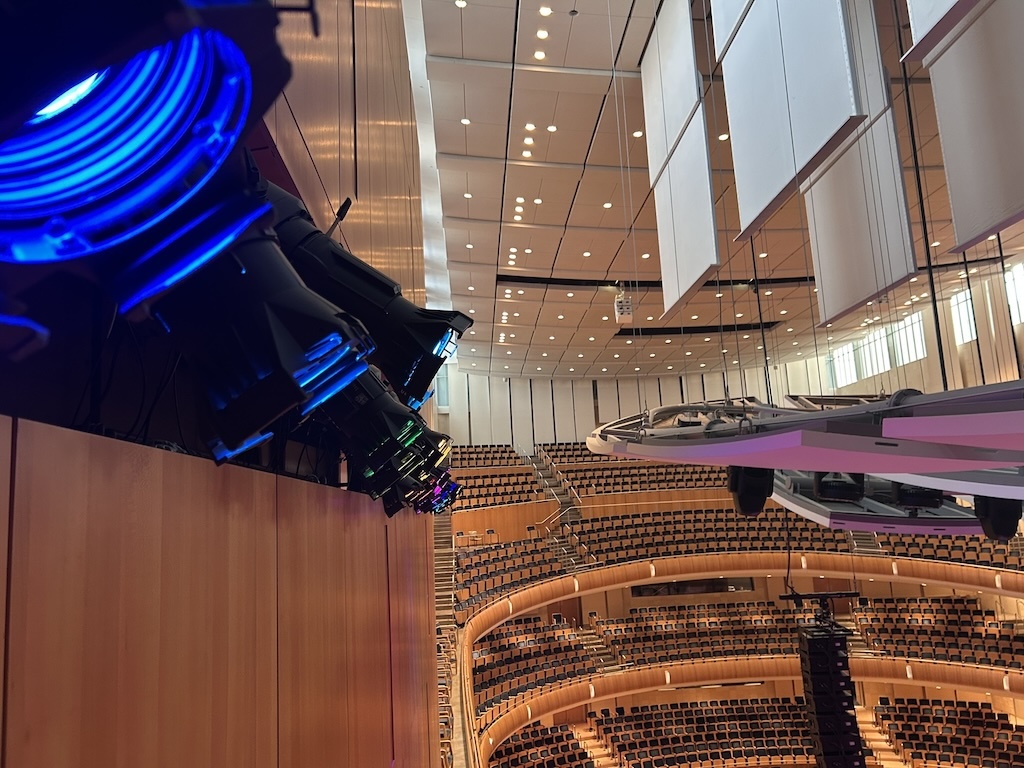
Theatrical Media Services (TMS) completa la remodelación de la iluminación del Peter Kiewit Concert Hall, en el Holland Performing Arts Center de Omaha (Nebraska, USA) empleando el motor de luz LED KL Core IP de Elation como columna vertebral de los nuevos sistemas de iluminación frontal y lateral del recinto.
El Holland Center, sede de la Orquesta Sinfónica de Omaha, es uno de los principales recintos de artes escénicas del país. La sala de estilo «caja de zapatos», con 2000 seats, diseño abierto e interior de madera de arce, fue construida hace 20 años como un espacio acústico de última generación. However, con el paso del tiempo, su sistema de iluminación original, una mezcla de elipsoidales estándar y LED de primera generación, había quedado obsoleto.
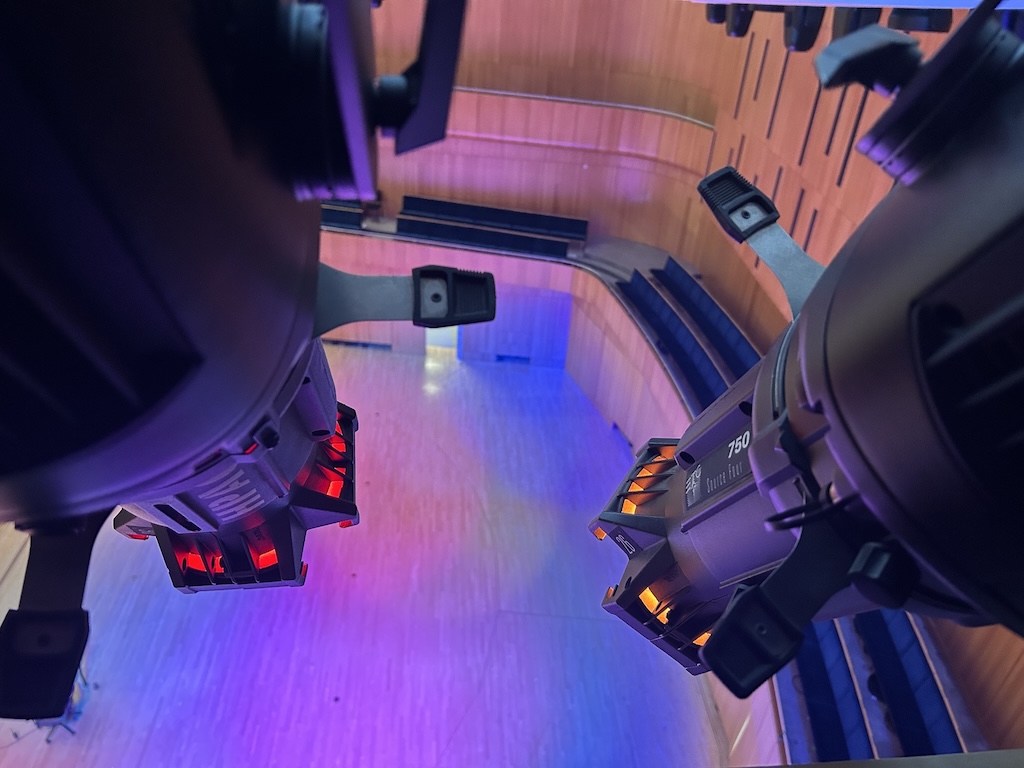
TMS diseñó y suministró el nuevo sistema de iluminación y la infraestructura de apoyo. Con la ayuda del representante regional de Elation, William Irwin, organizaron una demostración y una prueba que llevó a seleccionar el KL Core IP como la opción óptima. Esta solución cuenta con un motor LED RGBMA de 400 W y puede adaptarse como elipsoidal, Fresnel o monolight. Su compatibilidad con los sistemas de obturación de terceros permitió a TMS reutilizar los soportes de los dispositivos Source Four existentes en el recinto y acoplarlos a los KL Core.
Michael Arch, vicepresidente de producción de TMS, highlights that “esa es una de las razones por las que pudimos vender el CORE específicamente para este espacio. Les permitió la flexibilidad de utilizar su inventario existente de barriles, pero añadió la flexibilidad que se obtiene con un gran motor de color”.
Arch pasó casi cuatro años en el Holland Center como electricista y diseñador de iluminación antes de que él y sus socios compraran TMS el pasado mes de enero, por lo que conoce muy bien el recinto.
“Uno de los retos a los que nos enfrentábamos con el anterior equipo de iluminación era que utilizaba luminarias de perfil demasiado pequeñas y dependía de la iluminación convencional, lo que no siempre facilitaba el enfoque. Llevaba tiempo defendiendo la idea de incorporar luces móviles y actualizar a una nueva generación de luminarias LED en las posiciones frontales y laterales, donde finalmente instalamos todas las unidades KL CORE”, afirma Arch.
Un campo de luz uniforme
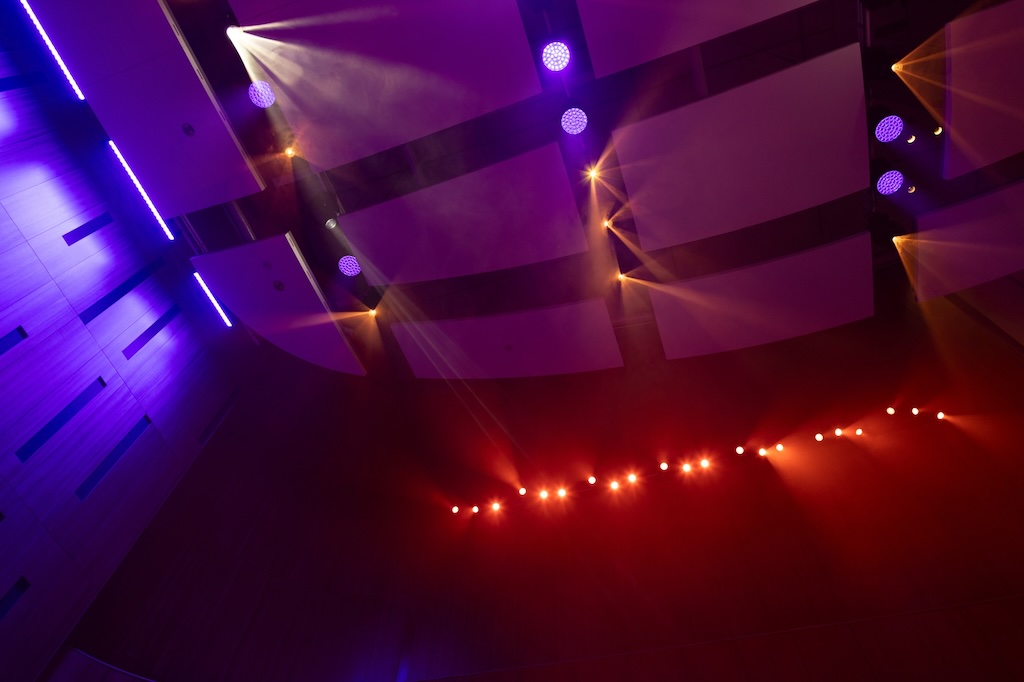
La fuente de luz de alta calidad del KL Core IP ofrece un CRY of 94,9 y un control CCT de 16 bits de 2400 K a 8500 K, lo que proporciona una consistencia de color precisa y una luz blanca sintonizable. La orquesta requiere posiciones de iluminación elevadas y, en el Holland Center, donde la posición FOH está a 24 meters away, los 15.000 lúmenes de potencia de cada luminaria garantizan una cobertura brillante y uniforme en todo el gran escenario.
“Lo fantástico de cambiar al motor LED RGBMA es que se obtiene un buen campo de luz plano”. Before, dependíamos de lo bien que se enfocaran los elipsoidales convencionales. Ahora tengo un campo uniforme en todo momento y también obtengo intensidad de esos colores, por lo que realmente podemos hacer que las cosas destaquen”, añade Michael Arch.
El nuevo sistema incluye 76 dispositivos KL Core IP (72 assets), con aperturas de 5° y 10° para la luz frontal y aperturas de 19° y 26° para las posiciones laterales. Los KL Core constituyen la columna vertebral de los sistemas de iluminación frontal y lateral, complementando los nuevos cabezales móviles LED situados en la parte superior. “Buscábamos algo lo suficientemente versátil como para aportar colores vibrantes al escenario, pero que también funcionara con los cabezales móviles LED situados en la parte superior. Tenía que competir con su brillo y, at the same time, igualarlos en color”.
Durante la pandemia de COVID, la Omaha Symphony amplió sus capacidades de vídeo para atraer al público que no podía asistir a las actuaciones en persona. Ese cambio, reconoce Arch, hizo que la iluminación con un alto índice de reproducción cromática (CRI) y apta para cámaras se convirtiera en una prioridad. Explica: “Tenía un dispositivo en el techo que funcionaba a 7200 K y dispositivos convencionales en la parte delantera a 3200 K, por lo que teníamos diferentes temperaturas de color compitiendo ante la cámara. Había una intención real de conseguir dispositivos con un CRI muy alto para garantizar que todo se viera correctamente al filmar en el espacio”.
Una sala polivalente
La sala acoge eventos cinco días a la semana durante la temporada alta, desde conciertos sinfónicos hasta giras, comedias y espectáculos de rock, por lo que los cambios son frecuentes. “Tener muchos dispositivos que necesitan geles, junto con un gran espacio abierto que ve mucha rotación, crea una situación en la que la flexibilidad en la instrumentación es importante”, afirma Arch. “Esa flexibilidad era muy limitada con los antiguos sistemas convencionales. Now, con Core, tenemos esa flexibilidad para poner el color donde queramos y cuando queramos. Realmente hacen que el espacio destaque y han supuesto una transformación completa en ese espacio”.
La sustitución de las lámparas convencionales de 750 W por LED de 400 W también ha supuesto un importante ahorro de energía y mantenimiento. “No tener que sustituir lámparas ni geles, junto con la eficiencia energética de los Cores, ha sido muy notable”, subraya Arch, señalando que también ha tenido un impacto financiero “razonable”. The IP65 rating del dispositivo también significa que el polvo y otras partículas se mantienen fuera del mismo, lo que ayuda a proteger los componentes internos y requiere un mantenimiento menos frecuente.
Did you like this article?
Subscribe to our NEWSLETTER and you won't miss anything.
Related articles
 Ponte Vedra Concert Hall entra en una nueva era de sonido con WSDG
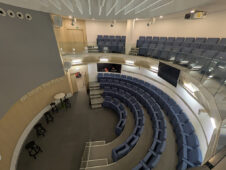 Allianz realiza con Sony una profunda remodelación AV en la sede de su auditorio
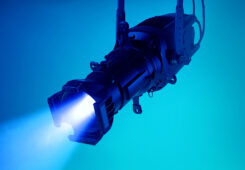 Elation KL Core IP: fuente Led adaptable y resistente a cualquier clima
 DiGiCo assists in Five Lakes sound system remodel
 Dante se convierte en la columna vertebral de la red de audio de Shanghái NYU
 Leyard stars in the digital remodeling of the Glasgow art museum
 Absen Aries MiniLED se convierte en la columna vertebral del estudio virtual Catalyst Connect
 Calgary's Jack Singer Concert Hall once again opts for Meyer Sound
 Tampere Hall illuminates its concerts with sustainable LED technology from Elation
 Riedel Technology Becomes Backbone of Prudential Center Communications
 Crestron Becomes Backbone of University of Notre Dame's AV Infrastructure
 STI carries out the audiovisual remodeling of the Lobe Construcciones headquarters
 Elation iluminó la espectacular estructura creada en el Santa Monica Pier para The Twilight Concert
DTS instala sus sistemas de iluminación móvil en el auditorio del Penza Concert Hall de Rusia
Elation iluminó la espectacular estructura creada en el Santa Monica Pier para The Twilight Concert
DTS instala sus sistemas de iluminación móvil en el auditorio del Penza Concert Hall de Rusia