


He 82% of companies already consider audiovisual key for hybrid work
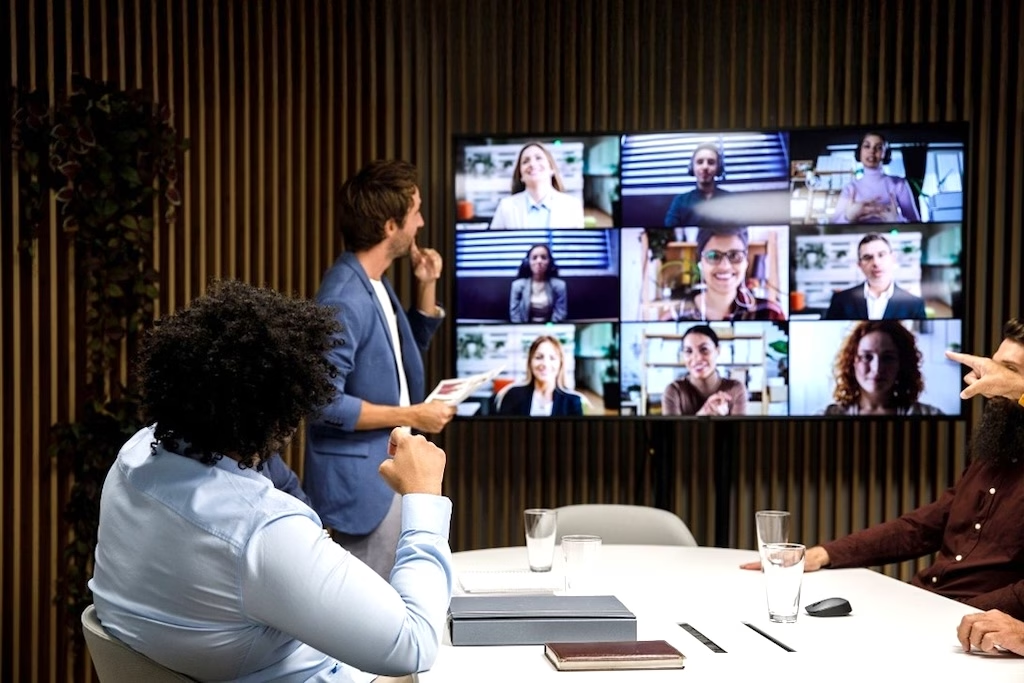
SPC For Business elabora el ‘Estudio AV Nacional 2026: from the meeting point to the connected position. This x-ray of the sector, en la que participan empresas como Trison, Ricoh, Optimal, Vitelsa, Izertis, Avanzia y Dekom, señala un punto de inflexión en el que el audiovisual ha dejado de ser un complemento técnico para convertirse en infraestructura clave que impacta directamente en la productividad, la experiencia del usuario y la imagen corporativa en un entorno híbrido permanente.
The study, elaborado por el área de negocio especializada en soluciones de comunicaciones unificadas y colaboración corporativa de la marca española de tecnología SPC, ofrece a las organizaciones una visión clara y práctica para evaluar su madurez audiovisual y trazar una hoja de ruta hacia un ecosistema conectado, estandarizado y eficiente.
José San Emeterio, director general de SPC For Business, states that “desde la situación actual de salas híbridas, espacios comunes y puestos individuales de trabajo, hasta las tendencias del sector para los años venideros y los retos que las empresas pueden encontrar en el camino, la primera edición del National AV Study 2026 ofrece un mapa completo del presente y futuro audiovisual gracias a la participación de grandes compañías que han iniciado este proceso”.
Como queda patente en el estudio, transformación audiovisual afecta a todos los niveles de la organización, desde salas inteligentes y escritorios conectados hasta espacios comunes que refuerzan cultura y comunicación interna.
La sala de reuniones ha dejado de ser un espacio funcional para reflejar la madurez digital y la profesionalidad de una empresa. Nevertheless, los datos del estudio muestran un escenario claro en el que, aunque el trabajo híbrido se ha consolidado en Europa, la mayoría de las empresas españolas todavía carecen de un ecosistema audiovisual preparado para sostenerlo y más del 78% de las salas se han configurado de manera fragmentada, acumulando equipos sin un diseño estratégico.
However, los principales problemas del trabajo híbrido no son grandes fallos técnicos, sino fricciones cotidianas. La primera es la complejidad de uso, porque si una sala no arranca en un minuto, el usuario la rechaza. A ella se suma una calidad audiovisual insuficiente, que afecta directamente a la profesionalidad percibida. Persisten también los problemas de conectividad y BYOD, con adaptadores e incompatibilidades que entorpecen el día a día. Y, como raíz común, la falta de estandarización, que hace que cada sala funcione de forma distinta y la experiencia sea imprevisible llegando a provocar que casi tres cuartas partes del tiempo inicial de las reuniones (73%) se pierdan.
“La sala híbrida ideal no es la que reúne más tecnología, sino la que permite trabajar sin pensar en ella. Velocidad, calidad audiovisual, conectividad sin fricciones y una experiencia idéntica en todas las sedes son ya requisitos estratégicos”, concluye San Emeterio.
Más allá de las salas, el estudio confirma la creciente relevancia del puesto individual de trabajo. Currently, el escritorio se ha convertido en el espacio audiovisual más utilizado de la organización. Aunque es donde se realizan las reuniones comerciales iniciales, in a 71% of the cases, y la mayoría de las interacciones internas híbridas, more than 80% de los empleados no dispone de periféricos profesionales. Como escenario principal de comerciales, directivos y otros equipos que representan a la compañía, debe evolucionar hacia un puesto audiovisual. According to the study, la profesionalización pasa por el uso de cámaras certificadas que garanticen buen encuadre, enfoque estable y colores naturales; professional audio, headsets o speakerphones, iluminación adecuada y conectividad estable.
El estudio también analiza los espacios comunes que se han convertido en espacios narrativos que proyectan quién es la empresa, su cultura, sus valores, su capacidad de innovación, su nivel de profesionalidad y hasta su estilo visual. In fact, he 72% de las grandes compañías utiliza tecnología audiovisual en sus espacios comunes para reforzar la cultura corporativa y la comunicación interna. In this sense, he 63% de la percepción de profesionalidad en un visitante depende de la primera impresión audiovisual del espacio. Pese a esto, he 52% de los especialistas entrevistados considera que muchas recepciones están todavía infrautilizadas desde el punto de vista audiovisual.
El AV, parte esencial de la infraestructura IT
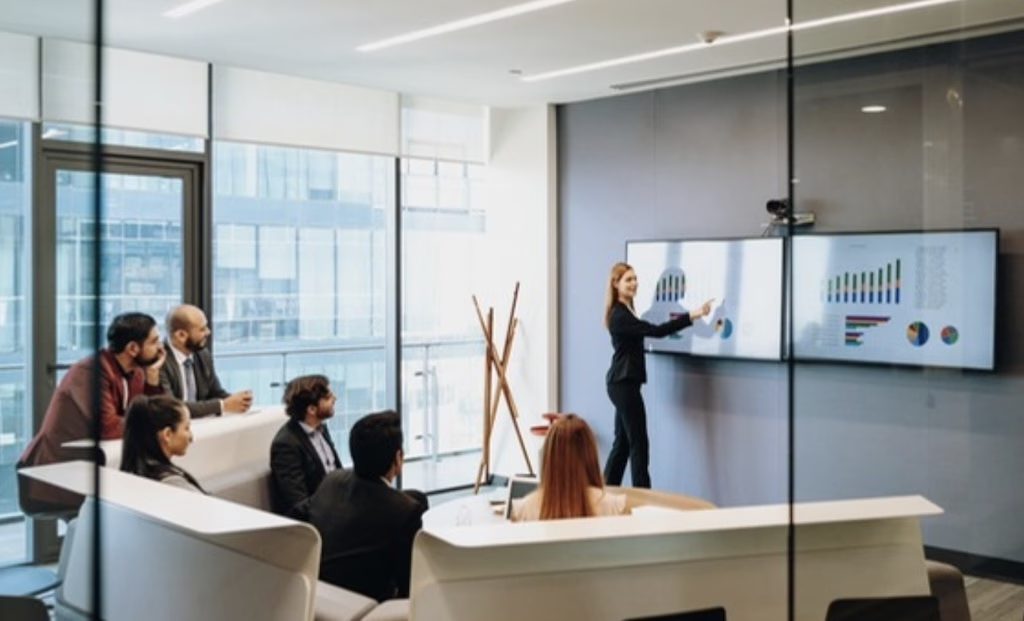
He National AV Study 2026 confirma que el audiovisual corporativo ha dejado de ser un conjunto de dispositivos dispersos para convertirse en un ecosistema estratégico integrado. Según los expertos entrevistados, he 82% de las organizaciones ya considera el AV parte esencial de su infraestructura IT y más del 68% trabaja con estándares replicables en todas sus sedes. Este cambio marca un punto de inflexión en el que las empresas líderes han pasado de instalar equipos a diseñar experiencias completas, coherentes y homogéneas en todos los espacios.
Esta realidad se traduce en cuatro entornos conectados: the sala híbrida como centro operativo, he workstation, los espacios comunes para transmitir identidad y valores, and the auditorios híbridos plataformas vivas para formación, comunicación y comunidad. Lo relevante no es cada espacio por separado, sino la conexión entre ellos. Una empresa madura en equipamiento audiovisual no tiene “muchos dispositivos funcionando”, sino un ecosistema unificado, intuitivo y gobernable.
El estudio revela que las pymes persiguen la misma reliability, profesionalidad y experiencias sin fricción que las grandes corporaciones, pero enfrentan limitaciones de recursos y carecen de equipos técnicos dedicados. Para alcanzar estos estándares, necesitan soluciones replicables, accesibles y fáciles de usar, que les permitan ofrecer experiencias audiovisuales de alto nivel sin recurrir a procesos complejos ni grandes inversiones. SPC For Business identifica en este escenario una oportunidad clara para democratizar el acceso al audiovisual profesional y facilitar su adopción en todo tipo de empresas españolas.
On the other hand, apunta a un cambio estructural que marcará la próxima década del audiovisual corporativo en España. Los estándares AV emergen como la base que permitirá a las empresas transformar el caos actual en coherencia, profesionalidad y eficiencia, redefiniendo la manera en que se conciben salas, puestos de trabajo y espacios comunes.
Este cambio se articula en cinco direcciones estratégicas:
- Las salas dejarán de ser meros entornos técnicos para convertirse en espacios autónomos e inteligentes, capaces de configurarse automáticamente y de reducir la fricción al inicio de cada reunión. La tecnología deja de ser un soporte y se convierte en un facilitador de experiencias fluidas y consistentes.
- The IA se consolidará como el pilar estructural de la experiencia audiovisual. No será un añadido, sino la base que sustente el audio, el vídeo, la colaboración remota y la generación automática de resúmenes y transcripciones de reuniones. La IA permitirá automatizar encuadres de cámara, filtrar ruido y optimizar la participación sin intervención manual.La evolución es la
- The gestión remota proactiva. Monitorizar, actualizar y anticipar incidencias se convertirá en un requisito tan básico como tener red o WiFi corporativa. La proactividad permitirá reducir fallos, aumentar la productividad y liberar tiempo a los empleados.
- He escritorio se consolida como el nuevo pilar del ecosistema AV. Hoy, las primeras reuniones comerciales y la mayoría de las interacciones híbridas internas ocurren desde el puesto individual de trabajo. Este hallazgo marca un giro estratégico: para garantizar coherencia y eficacia, las empresas deberán invertir en puestos estandarizados, cámaras y micrófonos certificados, políticas formativas y experiencias audiovisuales de alto nivel para cada empleado. El “Desktop AV” se convierte así en una categoría central del mercado, especialmente relevante para pymes.
Acceso al Estudio AV Nacional 2026, here.
Did you like this article?
Subscribe to our NEWSLETTER and you won't miss anything.
Related articles
 Philips expands its E1 monitor range with three models for hybrid work
 Philips introduces a new line of monitors for a hybrid work environment
 Jabra expands the Evolve2 range with headphones designed for hybrid work
 Jabra Speak2: professional speakers to encourage hybrid work
 Epos Expand Vision 1: imágenes y sonido de calidad para el trabajo híbrido
 Cisco develops new Webex devices for hybrid workspaces
 Jabra strengthens at ISE 2022 its innovation in audio and video for hybrid work
 Webex by Cisco adds new features to encourage hybrid work
 AV and companies: remote and hybrid work drives digital transformation
 Jabra invites companies and professionals to its virtual event on hybrid work
 ViewSonic ViewBoard IFP4320: interactive whiteboard for hybrid work collaboration
 Maverick AV Solutions completa su oferta para trabajo híbrido con Logitech
 ClearOne Unite 10 y 50 4K AF: collaboration for hybrid work environments
 Casio apuesta por la ecoproyección para educación y empresas con el sistema híbrido XJ-V1