


i2CAT coordinates the first European project on RINA, the network architecture of the future
RINA, una teoría general sobre la arquitectura de redes desarrollada por el pionero de Internet John Day, proporcionaría la infraestructura necesaria para soportar la computación distribuida.

The Foundation i2CAT coordinará el proyecto europeo IRATI, del 7º Programa Marco, que durante dos años trabajará en el desarrollo de una implementación eficiente de RINA, una teoría general sobre la arquitectura de redes desarrollada por el pionero de Internet John Day. La Fundación se pone al frente de este proyecto gracias a los resultados obtenidos tras dos años de investigación con la Universidad de Boston (de donde es profesor John Day), el centro de investigación irlandés TSSG y la start-up americana TRIA Network Systems, conformando la Pouzin Society (PSOC), un foro de desarrollo de soluciones alternativas viables a la actual arquitectura de red.
La arquitectura RINA ofrece una teoría sólida con los elementos suficientes para proporcionar la infraestructura necesaria que permita soportar la computación distribuida. Esta nueva infraestructura, desarrollada por el PSOC y puesta en práctica con éxito en dos prototipos, permitirá crear una red de computadores mucho más sencilla que la actual y, therefore, más económica de construir y de operar, proporcionando al mismo tiempo multi-homing, mobility, multicast y calidad de servicio en los usuarios, así como una mayor fiabilidad y seguridad de las comunicaciones. In fact, una de las consecuencias del uso de RINA es que el número de protocolos necesario para replicar la funcionalidad de TCP/IP es mucho menor y, solo en el área de seguridad, se estima una reducción en un factor 10 (para más información de los principales obstáculos de la arquitectura TCP/IP y de las diferencias con RINA, ver documento adjunto).
El proyecto IRATI proporciona un paso adelante en la evolución de esta tecnología, ya que permite prescindir de la arquitectura TCP/IP y librarse de todas las limitaciones que ofrecen soluciones desarrolladas encima de este gran número de protocolos. El proyecto implementará esta teoría de John Day sobre Ethernet para los sistemas operativos Linux y FreeBSD. El código desarrollado será abierto para que sea utilizado con finalidades docentes, para investigación académica pero también como base para desarrollar futuros productos basados en RINA.
Casos de uso de Interoute
With a budget of 1.126.000 euros (of which 870.000 están subvencionados por los fondos europeos), el proyecto europeo IRATI contará con la participación, además de i2CAT como coordinador del proyecto y director técnico, de la pyme italiana Nextworks, del grupo belga iMinds and of Interoute, cuya colaboración permitirá dar soluciones a casos de uso realistas proporcionados por esta multinacional de las telecomunicaciones.
Como socio del proyecto, Interoute proporcionará información sobre los problemas que experimentan en su día a día en el momento de prestar sus servicios de operador de red y de servicios cloud debido a las limitaciones que proporciona la tecnología actual basada en protocolos TCP/IP. Esta información servirá al resto de integrantes del proyecto para decidir qué componentes de RINA son los más relevantes y prioritarios para desarrollar.
Para llevar a cabo la experimentación y validación de los prototipos, IRATI utilizará los servicios de la plataforma experimental OFELIA, proyecto también financiado por la Comisión Europea y en el que también participa i2CAT, en la cual es posible unir distintos testbeds en varios lugares de Europa (Barcelona, Ghent, Bristol, Berlin, Trento y Zurich, inter alia).
Para Eduard Grasa, responsable de la línea de investigación de RINA de la Fundación i2CAT y responsable técnico del proyecto IRATI, “aunque está funcionando a una escala impresionante, el éxito y la adopción de TCP/IP no se debe a que es una maravilla tecnológica sino que tiene que ver más con la gran cantidad de dinero que el gobierno de los EE.UU. aportó en los años 80 and principles of 90 para desarrollar esta tecnología y subvencionar sus costes de operación, facilitando su uso”.
“El problema del IPV6 es que arrastra los mismos errores que su predecesor, es un parche sobre un parche, pero se podrían optimizar muchísimo mejor los recursos con otro tipo de arquitectura de red, como la que propone John Day”, asegura Grasa y añade: “utilizando un símil con la construcción, el proyecto que iniciamos ahora supone un nuevo modo de hacer las cosas; that is to say, no estamos construyendo un edificio nuevo sino que se trata de un cambio de la tecnología, las herramientas y el estilo de la construcción, mediante las cuales se podrán realizar nuevos edificios mucho más eficientes, sostenibles y con muchísimas más posibilidades de añadir nuevas funcionalidades”.
Access al paper completo de John Day sobre RINA.
Did you like this article?
Subscribe to our NEWSLETTER and you won't miss anything.
Related articles
 Zoom opens its first European experience center in London
 MaxHub opens its first European showroom in Amsterdam
 Brainstorm promotes AI and machine learning in the European Emerald project
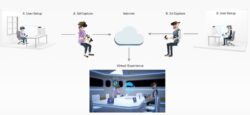 Brainstorm participates in the European 6G Bricks project
 Brainstorm completes the European mixed reality project AdMiRe
 Mediapro, Telefónica and TMB: first augmented reality project on 5G on a tourist bus
 The European Parliament wins the AV award for 'Public Sector Project of the Year' with Lawo infrastructure
 First 360º videomapping on trees to raise awareness about hunger in the world
 Audiovisual Architecture carries out the audio and video project for the Hard Rock of Valencia
 Contex: the European monitor market grows by 11% in the 2Q of 2014, especially in large format
NEC Display joins the European CCL project to bring technological innovation closer to the educational environment
Contex: the European monitor market grows by 11% in the 2Q of 2014, especially in large format
NEC Display joins the European CCL project to bring technological innovation closer to the educational environment
 Indra coordinates the first test of the European R&D project Perseus for maritime control and video surveillance
 The DGT, Renfe and Ikusi participate in the European security project SAVASA
 The e·Market presents the first augmented reality work on the architecture of Valencia