


Philips Luminous Ceiling crea un ambiente tranquilizante para los pacientes críticos de la UCI
El techo luminoso, based on LED technology, desarrollado por Philips está pensado para su aplicación en las zonas de cuidados intensivos con objeto de crea un ambiente que reduzca el estrés de los pacientes críticos.
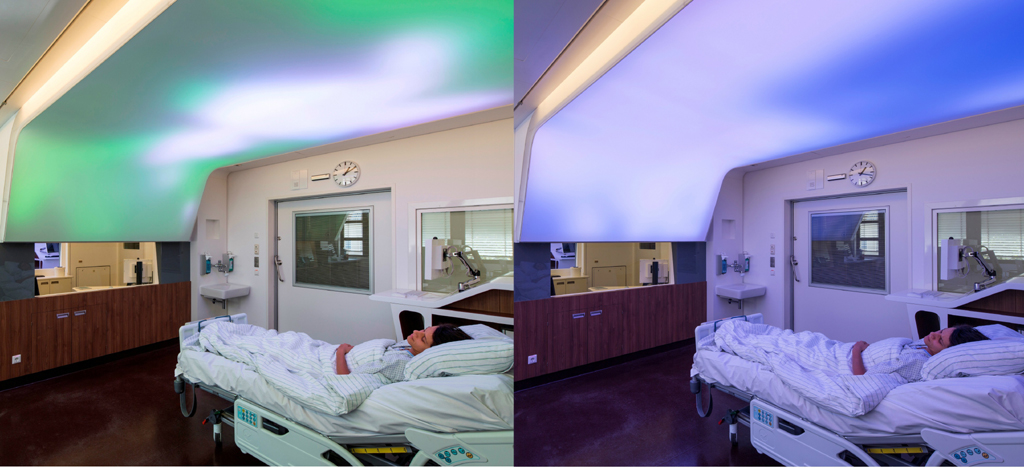
Philips ha desarrollado un techo luminoso (Luminous Ceiling) con tecnología LED que simula la luz del día y ofrece un ambiente tranquilizante a los pacientes que se encuentran en estado crítico en el hospital.
El techo basado en luminarias LED se ha introducido en el uso clínico de la Charité Campus Virchow Clinic en Berlín como parte de un concepto de reducción de estrés único denominado ‘Diseño Paramétrico Espacial'(Parametric Spatial Design). El personal del hospital puede introducir los parámetros deseados y el área luminosa crea imágenes y estados de ánimo de luz adaptadas a la situación de cada paciente, gracias al software de Art+Com. La Clínica ha puesto en marcha el concepto en dos de las habitaciones de cuidados intensivos con objeto de mejorar el ambiente de curación de los pacientes que están gravemente enfermos.
De acuerdo a investigaciones realizadas, la mayoría de la gente pasa, al menos una vez en su vida, por la unidad de cuidados intensivos y, in many cases, la vida de los pacientes están en riesgo, ya que esperan una operación o comienzan a recuperarse después de una cirugía. En esta fase crítica que, a menudo encuentran su entorno irritante y hostil, se ha demostrado que factores como el ruido, las condiciones de luz inadecuadas o el aislamiento social pueden aumentar el riesgo de los pacientes críticos de caer en un estado de shock.
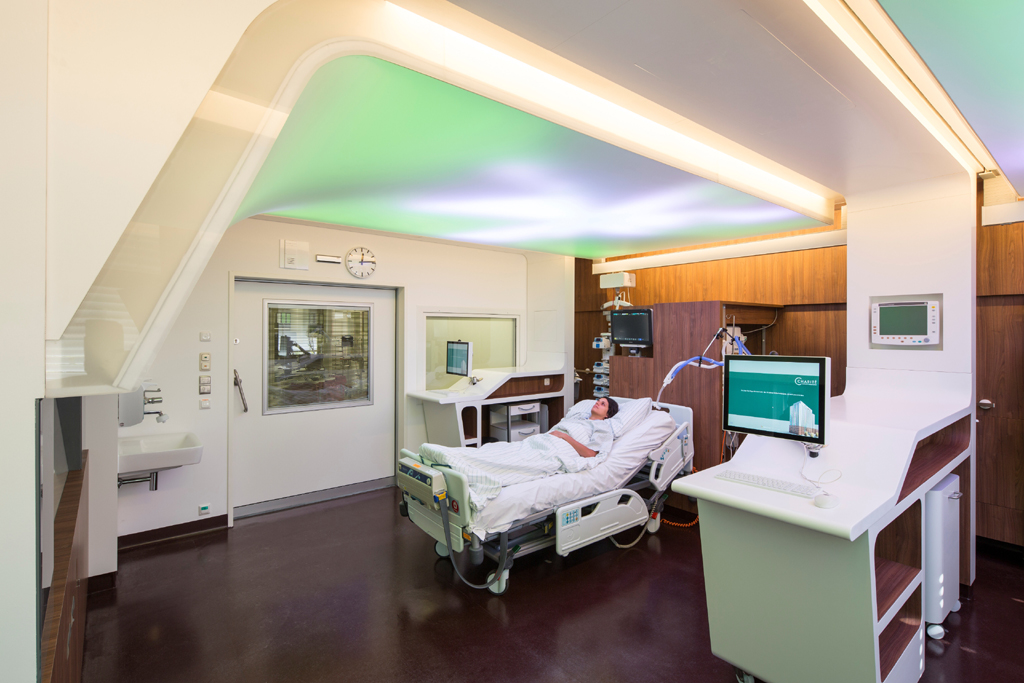
Hasta ahora ha habido muy poca información sobre los efectos relacionados con la salud de las salas de hospital con un ambiente controlable. For this reason, los médicos de cuidados intensivos, psicólogos e investigadores del sueño de la Clínica Charité de Berlín investigan, junto con sus socios de Graft y la agencia de diseño Art+Com sobre como utilizan el concepto espacial integrado en la investigación que se desarrollará en los próximos doce meses.
Philips ha jugado un papel importante en la creación de este innovador concepto, gracias a su experiencia en el diseño y la tecnología de iluminación.
El concepto de Diseño Paramétrico Espacial fue desarrollado por arquitectos de Graft, la agencia de diseño Art+Com y la Clínica Charité en Berlín, en el marco de una joint venture financiada por el Ministerio Federal Alemán de Economía y Tecnología (AIF).
“Encontramos que, especialmente en áreas críticas como la unidad de cuidados intensivos, el diseño de iluminación es cada vez más importante en el entorno del paciente”, explica Roger Karner, director general de Philips Lighting en Alemania.
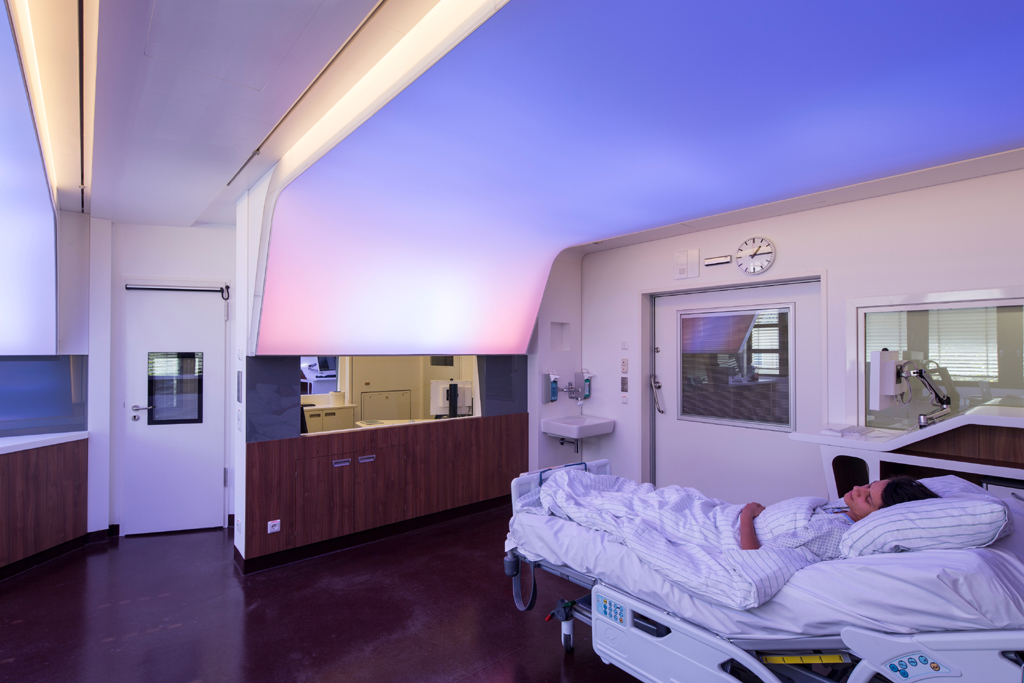 Primer prototipo
El concepto Luminous Ceiling (techo luminoso) de Philips combina el ritmo dinámico natural de la luz del día con los efectos de luz de colores suaves y el contenido visual. Este techo incorpora 15.400 LED y se extiende desde el techo hasta la pared que se encuentra frente a la cama del paciente, llenando todo su campo de visión.
Además de los LED RGB (color), también se han integrado LED de alto rendimiento con una temperatura de color blanco cálido y blanco frío. Ellos son capaces de producir la salida de luz que es comparable a la luz de un cielo despejado en verano. Este es el alto nivel de salida de luz que ofrece el efecto biológico de la luz en la sala de cuidados intensivos. Acompaña el ritmos natural del paciente día/noche y ayuda a promover patrones de sueño saludables.
El primer prototipo del sistema Luminous Ceiling se encuentra en uso clínico, en las habitaciones de cuidados intensivos de la Clínica Charité. Este techo luminoso de Philips se adapta a las necesidades del paciente, configuración que es introducida por el facultativo a través de una tablet y que puede ser personalizada de acuerdo a las características del enfermo gracias a un programa que ha sido diseñado por Art+Com. In this way, es posible crear el entorno más adecuado para cada situación.
Antecedentes
For many years, Philips ha estado investigando y desarrollando sistemas de iluminación suya aplicación estaba especialmente pensada para el entorno hospitalario. La tecnología de iluminación LED permite un alto nivel de control de la temperatura de color y la intensidad de la luz.
Philips ha instalado recientemente su sistema de iluminación HealWell, que simula el ritmo dinámico y natural de la luz del día, en el German Heart Center de Berlín y en otros hospitales de Alemania, el Reino Unido, los Países Bajos, Europa Central, Oriente Medio y el Sudeste Asiático.
Un estudio piloto llevado a cabo en conjunto con la University Clinic de Maastricht ha investigado los efectos de este sistema y ha revelado que el sistema c mejoró la calidad del sueño de los pacientes y su estado de ánimo, además de incrementar la satisfacción entre los pacientes y los trabajadores sanitarios.
Did you like this article?
Subscribe to our NEWSLETTER and you won't miss anything.
Related articles
 Optimal Audio creates ambient sound for Bear coffee shops
 Hard Rock Café creates a vibrant sound environment in its new Verona center
 Biamp creates immersive audio environment for BattleBots show
 Robe creates lighting ambiance for South African restaurant Zioux
 Harman creates a luxurious atmosphere at the Capella Bangkok hotel with its AV solutions
 PPDS y Glamox ofrecen visualización personalizada para los pacientes
 Anolis Eminere creates the ambient lighting for the ECC rooms in Berlin
 Philips PDS brings comfort and leisure to patients in Belgian hospitals
 Sennheiser TeamConnect Ceiling 2 y Bose ES1 Ceiling: Zoom compatible
 AG Neovo expands its RX displays with two models for critical environments
 Elation ACL 360 Bar creates futuristic lighting atmosphere on New Politics tour
 AG Neovo introduces HX-22 monitor for broadcast and critical environments
 Mobotix D25, M25 y Q25: IP video surveillance for critical environments
 Moment Factory creates an immersive multimedia environment in the new Los Angeles airport terminal