





i2CAT shows at MWC apps for smart cities and data transmission through a Led light
i2CAT's presence at the MWC is marked by demonstrations that reflect its advances in the area of industrial applications for smart glasses, smart cities and data transmission to a mobile phone through an LED light.

The i2CAT Foundation has been present for another year at the Mobile World Congress, that today Thursday closes its doors, and it has done so to show its latest developments in the environment of smart cities and data transmission through light and smart glasses..
At the fair it showed the possibilities for ICT developers and companies to participate in the Moverio Competence Center, you just launched with Epson in Catalonia for smart glasses applications. Through a virtual agent it is possible to take a tour of the stand, thanks to an application developed for Epson's Moverio smart glasses.
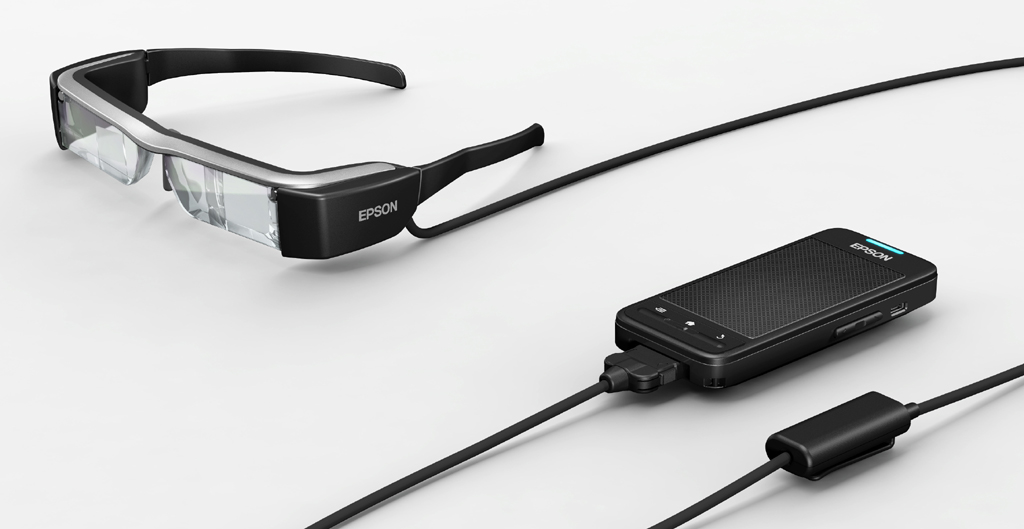 This is proof of the possibilities that i2CAT and Epson make available to the national and international business community in augmented reality and virtual reality applications. (Mixed Reality) for smart glasses in the industrial field.
On the other hand, the i2CAT Foundation, in collaboration with the strategic consulting firm based in the United States and Singapore, Room, and the Catalan entities Barkeno and Outsight, is promoting the creation of a technological hub in Barcelona (Barcelona Validation Lab) that allows testing and validation of new solutions and start-up products within the environment of the Urban Lab project of Barcelona City Council, following a model based on the experience of Silicon Valley.
At its i2CAT stand it performs a demo, together with Network 42, a start-up located in San Francisco, which consists of a management system that allows analyzing quality and service levels (SLA’s) of a smart city infrastructure. The prototype shown uses information obtained from the sensor platform of the city of Barcelona, called Sentilo.
Visual Light Communication

The third demonstration that the i2CAT Foundation is carrying out in Barcelona is one of the future technologies that universities around the world are beginning to value as an alternative to WiFi, especially in interior locations, and that i2CAT has been researching for years together with the Polytechnic University of Catalonia.
This is the VLC system (visual light communication) or wireless communications through light, with a radio spectrum tens of times larger than that of radio frequency (used for WiFi and 3G/4G/5G), that with the advance of the Internet of things it can become saturated.
This system does not represent any danger to health, can be isolated to avoid interference and can be easily deployed, since Led lights can be converted into transmitters and smartphones themselves into receivers.
This has been demonstrated at the MWC 2015 with a commercial Led luminaire and a Raspberry Pi computer, that turns the LED light on and off at a speed that is unnoticeable to the human eye., a message is sent, captured by the camera of an Android Nexus smartphone 5, that decodes the message and displays it on the mobile screen.
This technology has applications such as navigation assistance for the blind in buildings, where the light informs about the obstacles in a room that will be captured by the mobile phone through voice messages; or assisted navigation in museums. A light next to the box emits information about it and allows exact location of the user..
Another of the Foundation's projects, T-Nova, that allows the virtualization of network resources and that the user can access on demand, has also been present at the congress, both at the i2CAT stand and at the European Commission stand as one of the examples of innovative projects financed by this organization within the theme of 5G networks.
Did you like this article?
Subscribe to our NEWSLETTER and you won't miss anything.
Related articles
 Christie Terra 4K Data Streaming Successfully Debuts at Zurich Opera House
 Technology aligned with the development of smart cities
Panasonic completes its LinkRay offer with ID modulators that allow data to be transmitted through light
Technology aligned with the development of smart cities
Panasonic completes its LinkRay offer with ID modulators that allow data to be transmitted through light
 Spain will chair the United for Smart Sustainable Cities initiative
 Eizo FlexScan EV2780 features USB Type-C connectivity for fast data transmission
SMART shows its solutions for education and business in a conference organized in Madrid
Eizo FlexScan EV2780 features USB Type-C connectivity for fast data transmission
SMART shows its solutions for education and business in a conference organized in Madrid
 IoT lighting for smart cities, the bet of networking and lighting manufacturers
Cisco and Toshiba join their technologies to create IoE developments for Smart Cities
IoT lighting for smart cities, the bet of networking and lighting manufacturers
Cisco and Toshiba join their technologies to create IoE developments for Smart Cities
 JCDecaux and Alcatel-Lucent will develop connected urban furniture for smart cities
 Urban Platform for Smart Cities Management and Safety, Indra's comprehensive proposal for smart cities
 eShow Madrid 2013: playthe.net shows off its 80's digital marquee″ and two faces for smart cities
 Indra integrates its global emergency management solution for Smart Cities into iSafety
 Schneider Electric updates its PelcoFiber fiber optic transmission system
 Opticomm makes DVI transmission over fiber optics possible, audio and data from a single mini extender