


The Canadian Museum of Human Rights breaks the mold with its avant-garde AV installation
La arquitectura del edificio que alberga el museo canadiense para los Derechos Humanos de Winnipeg ha planteado a Electrosonic importantes retos a la hora de implementar la compleja infraestructura AV de sus 11 galleries.
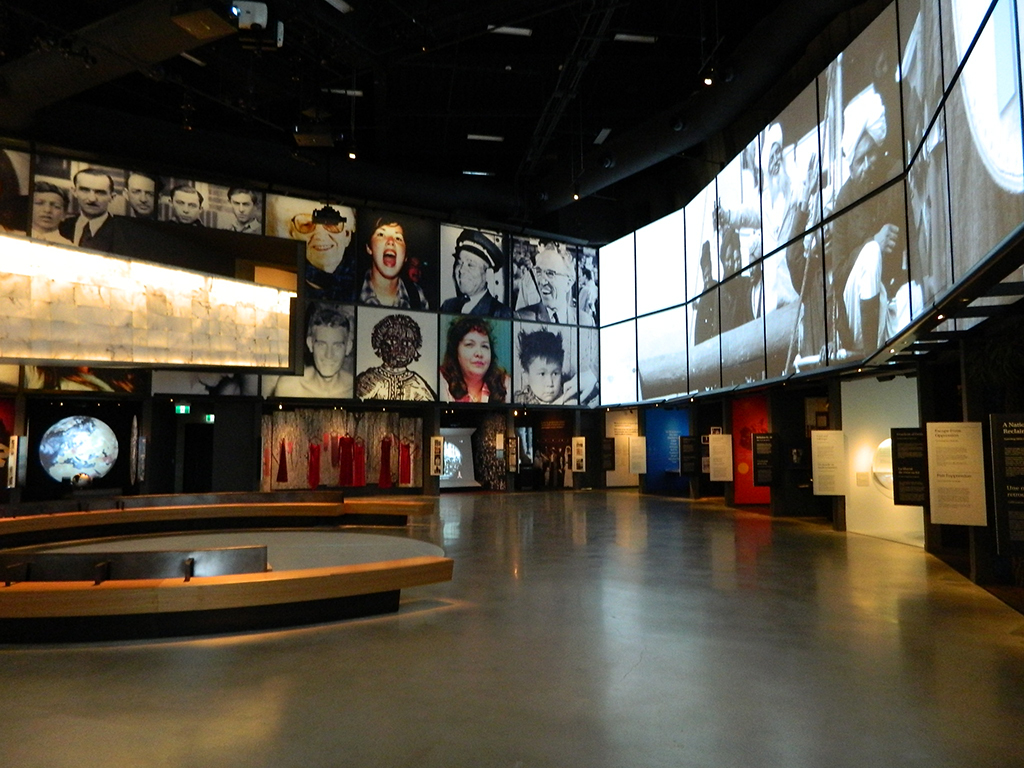
El nuevo Museo canadiense para los Derechos Humanos (Canadian Museum for Human Rights) de Winnipeg (Manitoba) presenta un innovador diseño arquitectónico, realizado por el estadounidense Antoine Predock, en el que se ha utilizado piedra acero, vidrio y hormigón para su construcción y al que se ha dotado de rampas de alabastro y puentes revestidos de piedra, entrecruzando un atrio de 51,8 metros.
Un diseño que ha planteado importantes retos a Electrosonic a la hora de integrar la compleja instalación AV con que se ha dotado el edificio.
Electrosonic ha sido la responsable, junto a Advance Pro, de la instalación del diseño audiovisual de las once galerías que integran el museo y donde se han instalado un gran número de pantallas táctiles interactivas y equipos de proyección, así como una infraestructura de audio que ha tenido que adaptarse a la acústica de del edificio. Un proyecto en el que han participado también las empresas SH Acoustics, LLC de Milford y Connecticut para proporcionar la estructura de sonido.
“Este no es un museo con las típicas galerías ya que no hay una sola pared en ángulo recto, algunas son triangulares con menos de medio metro de espacio en su punto más amplio. Está diseñado para que se puedan ver desde el primer piso las exhibiciones realizadas en la quinta planta, aspectos que hubo que tener cuenta a la hora de realizar la infraestructura de audio”, explica Steve Haas, presidente y consultor de SH Acoustics.
In addition, por todo el museo se encuentran dispuestas diferentes teatros, incluso hay uno al aire libre en el que se han instalado en el techo tres proyectores Barco HDX-W20 Flex que son gestionados con el sistema Dataton Watchout para poder realizar las proyecciones.
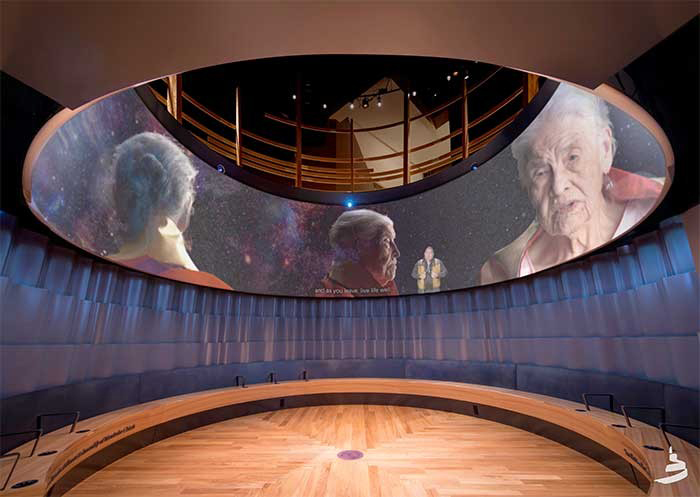
La galería Indigenous Perspectives es uno de los espacio más espectaculares del museo que focaliza la atención un teatro donde se ha instalado una una pantalla curvada de 360º donde los visitantes pueden ver un vídeo donde se comparten historias de los derechos y responsabilidades indígenas, contada a través de cuatro generaciones diferentes. La sala también cuenta con seis proyectores Barco CNWU-61B y un séptimo disponible para presentaciones especiales. Una infraestructura que también es gestionada por el software Watchout.

La sala Canadian Journeys, la más grande del museo, explora decenas de historias canadienses, de los derechos democráticos a los derechos lingüísticos y de la libertad de conciencia a la no discriminación. Dispone de un teatro con un único proyector Barco CNWU-61B, y un lienzo digital que transmite historias a través de una pantalla de 29 metros. También dispone de cuatro proyectores Panasonic PT-DS20KU.
Otra galería, la Examining the Holocaust, presenta una única pantalla y un proyector Barco CNWU-61B. En sus paredes se muestran fragmentos que simbolizan el ‘Infamous Kristallnacht’ de los nazis. Un segundo teatro, visualiza una película con el Holocausto ucraniano (Ukrainian Holodomor), presentando una configuración similar. Una combinación de cuatro proyectores alimentan la proyección de 24,3 metros.
Finally, en la galería Rights Today se han instalado tres equipos Barco CNWU-61Bs que visualizan los contenidos, sobre la superficie de una pared interactiva, que se realizan mediante un sistema de TVOne. También dispone de un pequeño teatro que busca que el visitante piense críticamente acerca de lo que se ve y se lee.
Infraestructura AV interactiva
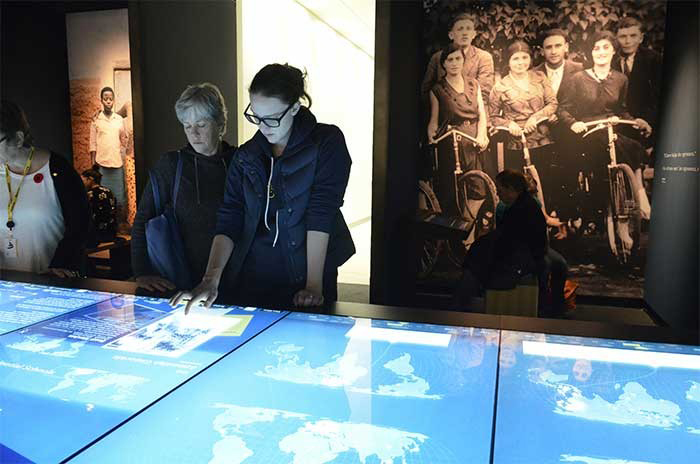
Los visitantes también disponen, a los largo de su visita al museo canadiense para los Derechos Humanos, de numerosas pantallas interactivas, entre las que se pueden ver modelos táctiles Link Touch of 27 inches. Para asegurar que todos puedan acceder a los servicios interactivos, Electrosonic colaboró estrechamente con el equipo del museo para diseñar Key Pads que permiten que las personas con discapacidad también puedan disfrutar de esta tecnología.
El museo cuenta con una infraestructura audiovisual que incluye equipos de diferentes fabricantes, así en el Canadian Journeys hay dispuestos diferentes equipos de Samsumg, NEC y Viewsonic; mientras que la galería Protecting Rights in Canada dispone de 15 puntos de información que integran pantallas táctiles de Elo y monitores Samsung of 65 inches.
En la galería de la exploración de la Declaración Universal de los Derechos Humanos se han instalado cuatro estaciones interactivas, cada uno de ellas integrada por dos monitores Samsung de 55 pulgadas montadas en formato retrato y dotadas de la tecnología de reconocimiento de gestos Microsoft Kinect. También puede verse una mesa de estudio digital compuesta por 12 pantallas MultiTouch táctiles de 55 pulgadas montadas boca arriba, de lado a lado. Un Media Literacy Theater incorpora dos monitores Samsung 75 inches, el cual está colgado en modo vertical, uno encima de la otra.
Actions Count, una galería dirigida a los jóvenes visitantes, presenta una solución visual compuesta por tres mesas interactivas que ofrece un juego de reconocimiento de gestos con el que se pretende que los visitantes reflexionen sobre cómo las decisiones que se toman en la vida cotidiana afectan a los demás. Para completar la experiencia la sala dispone de tres proyectores Barco CNWU-61B.
Sonido y audio
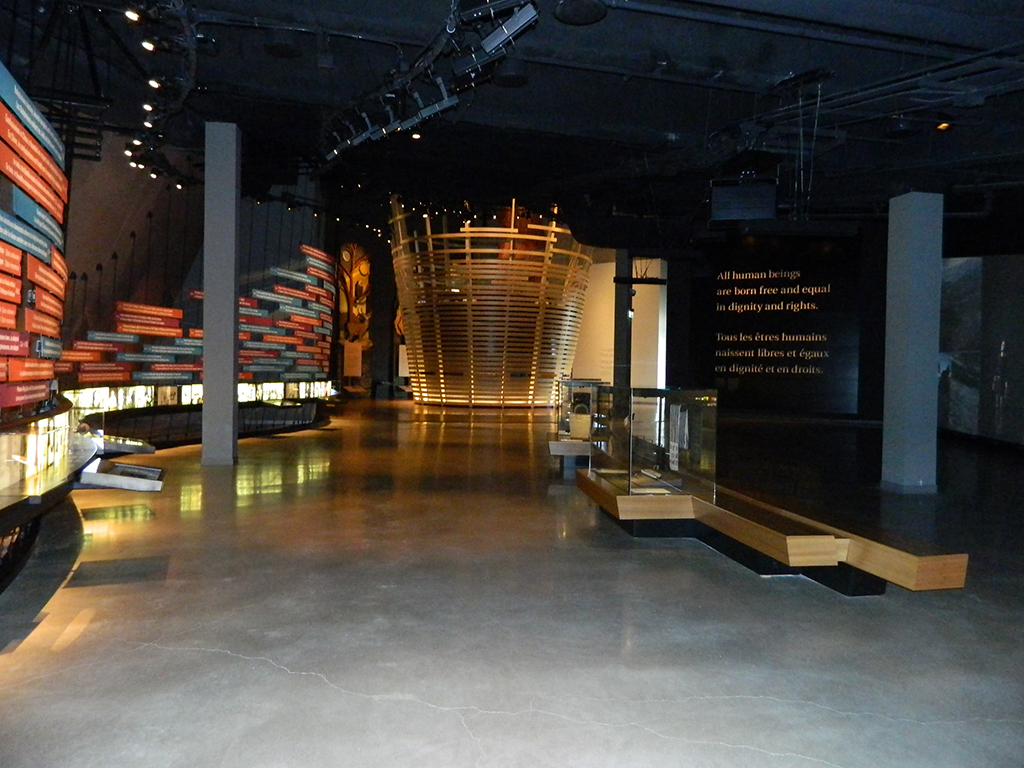
En este museo de arquitectura desafiante se han desplegado conjuntos de altavoces lineales compactas y arrays de techo de Brown Innovations, Renkus Heinz y equipos de estantería Tannoy 2-D para mejorar la sensación de inmersión en los teatros. En las galerías Examining the Holocaust y Breaking the Silence se han utilizado altavoces de Innovox, incrustadas en los bancos.
El Indigenous Perspectives, que cuenta con bancos localizados por toda la estancia para facilitar la visualización de la gran pantalla panorámica y el acceso visual al área central donde intervienen artistas invitados planteó a los técnicos un gran reto. En lugar de dirigir el sonido a través del cuarto, los altavoces Tannoy se colocaron detrás de las pantallas.
Asimismo se ha dispuesto una pared de madera en forma ondulada que crea la difusión perfecta en esta sala circular y ofrece otro elemento de diseño ‘visualmente único’ con compactos subwoofers de James Loudspeaker colocados bajo los bancos.
Biamp AudiaFLEX CMs fueron los principales procesadores de audio utilizados en el museo, mientras que Medialon Manager proporciona la supervisión y control de la mayoría de los equipos en el museo.

Did you like this article?
Subscribe to our NEWSLETTER and you won't miss anything.
Related articles
 TPV Technology reinforces its social commitment to sustainability and human rights
 Leyard's Led technology breaks the limits of scenography
 The avant-garde Led court of ASB GlassFloor hosted the Beats N Buckets
 Kinetic Module equips the immersive installation of the Artexplorer museum ship
 d&b audio relies on Brompton processing for the cutting-edge ITEC
 Audico designs a cutting-edge demonstration room with Barco technology
 Philips Professional Display es reconocida por la instalación digital del Museo del Banco Nacional de Bélgica
 Barco sells Canadian company X20 Media to Stratacache
 Elation Architectural Led Lighting at the Canadian Town Hall of Rouyn-Noranda
 Samsung exhibits the most avant-garde vision in display technology in Amsterdam RAI
 AV installation brings new Turkish Science Center gallery to life
 AV Technology Helps Understand Immigration History at Ellis Island Museum
 Christie breaks the mold in 4K projection and 3 true 120HZ chips with Mirage systems
 Innovation in Canadian TV: a contest uses a 3D mapping as a scenario