


IoT lighting for smart cities, the bet of networking and lighting manufacturers
Muchas han sido las soluciones de alumbrado público inteligente IoT presentadas en los últimos meses por fabricantes de networking y telecomunicaciones junto a empresas de iluminación para fomentar el ahorro energético con avanzados sistemas de control y conectividad para las farolas en proyectos de smart city.
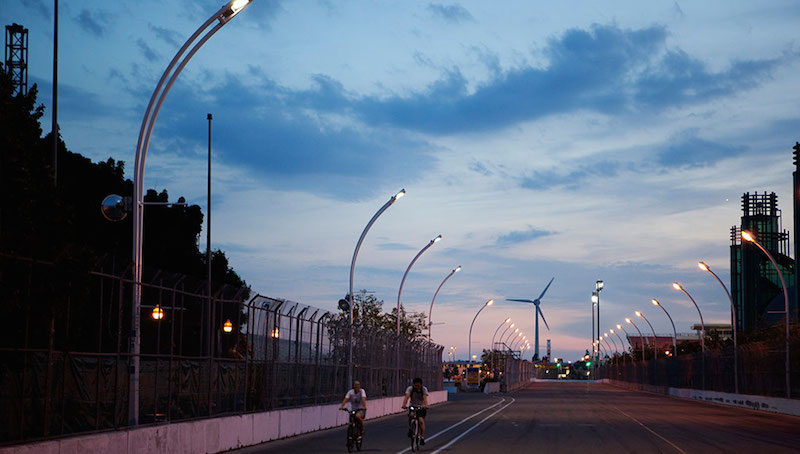
La reciente celebración de importantes ferias de integración de sistemas, edificios inteligentes e iluminación han sido el marco para presentar soluciones avanzadas de iluminación inteligente para las smart cities basadas en el Internet de las Cosas (Internet of Things – IoT), resultado de los desarrollos conjuntos entre operadores de telecomunicaciones y networking y de iluminación.
Los siguientes ejemplos de soluciones de alumbrado IoT ponen de manifiesto la importancia de estos desarrollos no sólo para mejorar la eficiencia energética en ciudades cada vez más pobladas, sino como oportunidad de negocio para estas industrias, tal y como se analiza a continuación.
Una de las primeras soluciones en el mercado español, as he advanced Digital AV Magazine, es Zero Site, un prototipo de farola urbana conectada de Ericsson instalada en Santander que combina prestaciones avanzadas TIC con alumbrado Led de última generación y ofrece cobertura macro para la tecnología 4G en 2.600 Mhz.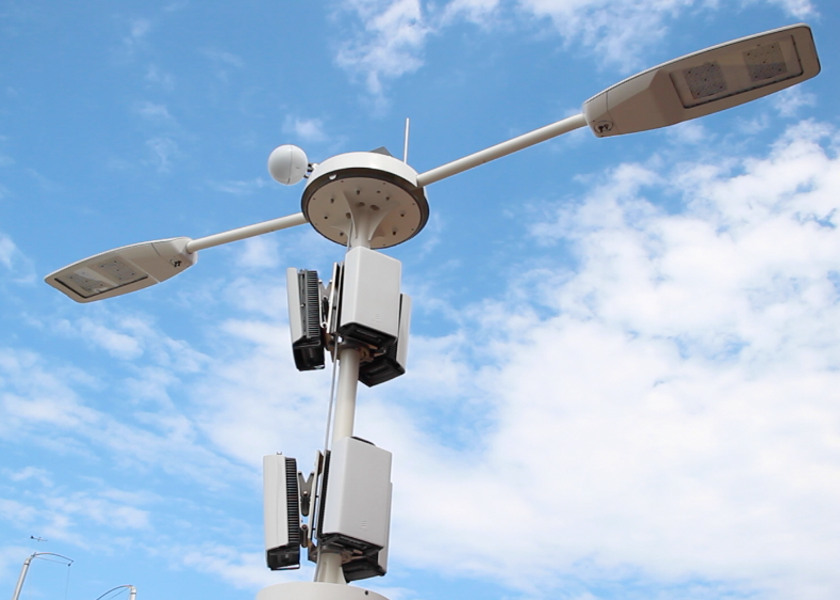
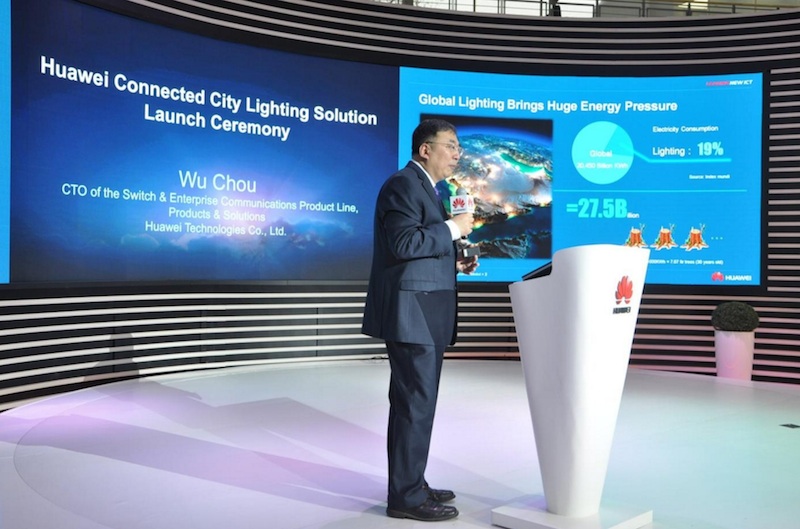
Huawei Connected City Lighting Solution
La multinacional china presentó durante el reciente certamen CeBIT 2016 su primera solución de iluminación IoT con control inteligente multinivel que, according to the data provided, permitirá ahorrar un 80% de energía en el alumbrado urbano municipal.
Connected City Lighting Solution de Huawei conecta las farolas a IoT y adopta un sistema de gestión basado en GIS que permite a las ciudades mejorar el control y rendimiento de cada una. La solución ofrece a los gestores municipales información sobre el estado de cada farola, en cada calle y permite el control preciso de conmutadores de encendido y apagado y brillo individual, con una iluminación bajo demanda.
Según datos The Climate Group existen aproximadamente 304 millones de farolas en todo el mundo, y esta cifra alcanzará los 352 millones para 2025, con un significativo consumo de energía y de costes de gestión y mantenimiento para los ayuntamientos.
En la solución de Huawei, cada farola está equipada con un controlador de potencia y brillo. A diferencia de los métodos de acceso estándares de la industria, como el Wi-Fi, Connected City Lighting Solution adopta la tecnología 6LoWPAN, que tiene bajo consumo energético, función de diagnóstico automático para resolver problemas de red, además de una mejor interacción entre las farolas y otros dispositivos inteligentes, como sensores.
Para mejorar el control y rendimiento de las farolas, la solución integra una serie de políticas de iluminación inteligente preestablecidas para calcular automáticamente la duración de la iluminación basándose en la longitud y latitud locales, y ajustar dinámicamente la dirección de la iluminación según la temporada, mes y día específicos.
También es posible ajustar de manera inteligente el brillo conectando sensores integrados con tráfico de terceros y de flujo de personas, o basados en el clima y otras condiciones medioambientales. Esta solución adopta un sistema de gestión basado en GIS, que muestra información completa sobre las farolas, incluyendo el número de farolas en cada calle, su actual estado, así como su posición y hora de instalación para gestionar miles de unidades ubicadas en diferentes viales.
Huawei Connected City Lighting Solution aporta controles inteligentes multinivel. Las puertas de enlace IoT ágiles y los controladores de farolas están equipados con componentes de peso ligero para ejecutar las políticas de iluminación y ofrecer un mecanismo de toma de decisiones localizadas a dos niveles, con una arquitectura abierta en todas sus capas.
ZTE BluePillar
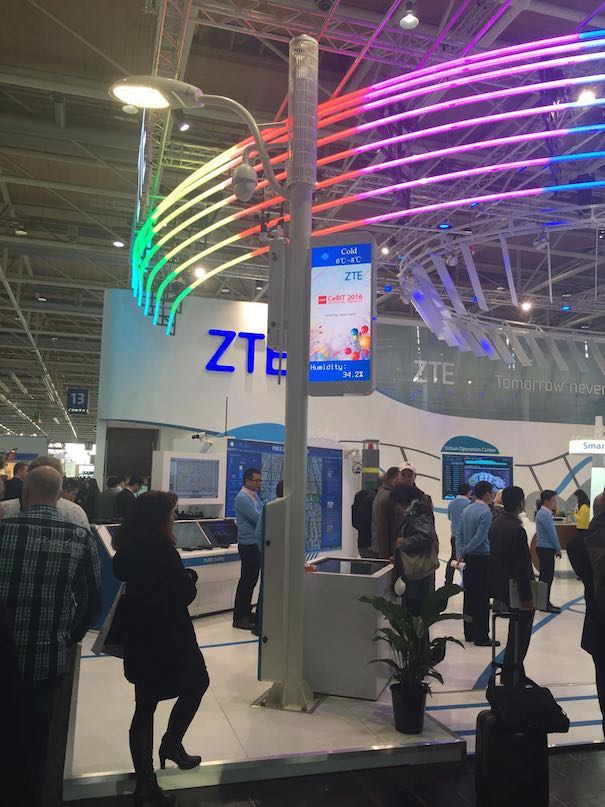
Este proveedor de telecomunicaciones y soluciones tecnológicas de Internet móvil ha presentado la solución BluePillar, una farola integrada con pilar de carga BlueBox de ZTE, estación base (BTS) 4G iMacro y controlador inteligente que permite al pilar tradicional de farolas funcionar como repetidor de la señal de 4G/5G BTS o servir como un punto de recarga para vehículos eléctricos.
BluePillar no sólo resuelve la dificultad en emplazamientos de redes 4G, sino también asegura la construcción de red Wi-Fi, vigilancia del entorno, seguridad y gestión de la recogida de datos en los hotspots (climate, medio ambiente, transport, etc.), mientras que su gran pantalla exterior de Led se puede utilizar para mostrar información y publicidad.

Philips CityTouch y Vodafone M2M
Otra reciente asociación global para ofrecer servicios de conectividad e iluminación IoT la protagonizan Philips Lighting y Vodafone, con el objetivo de facilitar a las ciudades de todo el mundo el despliegue de sistemas de iluminación pública conectados con gestión en remoto para ofrecer ahorro energético y un mantenimiento eficiente.
For this, Philips CityTouch utilizará la red mundial M2M de Vodafone para conectar los puntos de luz individualmente, de manera que cada farola integrará una SIM M2M de este operador para que los ayuntamientos controlen y gestionen el sistema en remoto de todos los parámetros (rendimiento de cada punto de luz, luminosidad, configuración automática, detección de fallos, etc.).
Esta solución ofrece un ahorro energético del 30-40%, according to the data provided, así como del coste de mantenimiento de cada farola, y su arquitectura escalable también podrá incorporar otras aplicaciones y servicios IoT.
Did you like this article?
Subscribe to our NEWSLETTER and you won't miss anything.
Related articles
 The Carnival Cruise opts for Robe to migrate to LED lighting
 The Royal Opera of Versailles relies on Robe for its lighting
 La iluminación de Robe se combina con la tradición en el club OT Cities
 La Universidad Hamdan Bin Mohammed Smart apuesta por la iluminación Led conectada
 Depeche Mode relies on Elation Led stage lighting for its tour
Technology aligned with the development of smart cities
Depeche Mode relies on Elation Led stage lighting for its tour
Technology aligned with the development of smart cities
 Clay Paky focuses its commitment to spectacular lighting on the Mythos projector
Ishoj bets on scenic lighting to renew urban areas
Clay Paky focuses its commitment to spectacular lighting on the Mythos projector
Ishoj bets on scenic lighting to renew urban areas
 i2CAT muestra en MWC apps para smart cities y transmisión de datos a través de una luz Led
Cisco y Toshiba unen sus tecnologías para crear desarrollos IoE para las Smart Cities
i2CAT muestra en MWC apps para smart cities y transmisión de datos a través de una luz Led
Cisco y Toshiba unen sus tecnologías para crear desarrollos IoE para las Smart Cities
 JCDecaux and Alcatel-Lucent will develop connected urban furniture for smart cities
 Urban Platform for Smart Cities Management and Safety, Indra's comprehensive proposal for smart cities
 eShow Madrid 2013: playthe.net muestra su marquesina digital de 80″ y dos caras para smart cities
 Indra integra en iSafety su solución global de gestión de emergencias para Smart Cities