


Artificial intelligence and virtual reality are two of Intel's big bets for 2017
Throughout this year it will present three products aimed at its Nervana platform created to increase speed and ease of use, enabling more data professionals to solve the world's most important challenges related to standard technology.
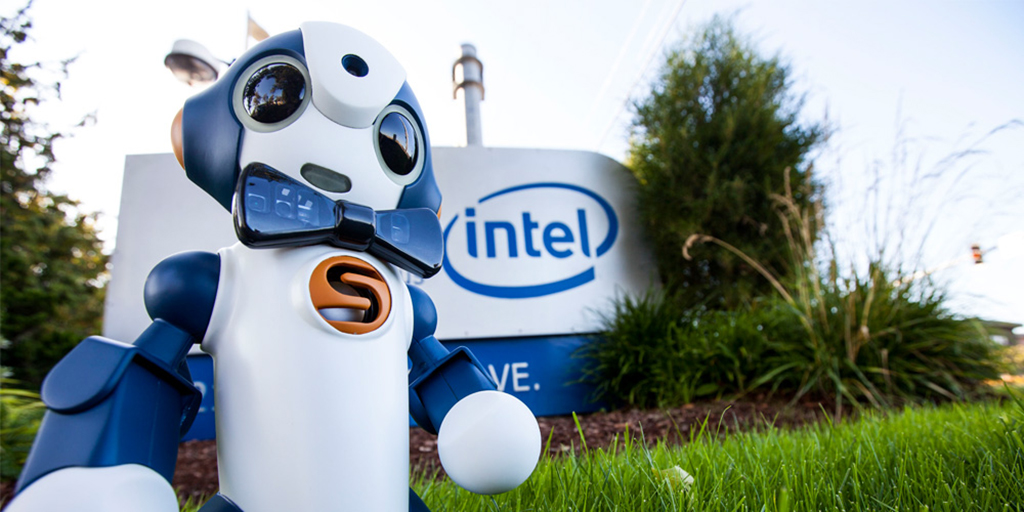
Artificial intelligence and virtual/blended reality are two areas for which Intel is betting heavily on promoting innovation and allowing faster transformation to access new and greater opportunities, for both industry and consumers.
Analysts expect that in 2020 more than 50.000 millions of devices (wearables, inventory sensors in establishments, autonomous driving vehicles, medical equipment, urban infrastructure, etc.) connect to the Internet and to each other.
Networks are evolving to adapt to the large demands on bandwidth created by the increasing number of devices connected to access, analyze and share data in real time.
Artificial intelligence
artificial intelligence (IA) it is already a reality, from the most common (speech recognition to transform speech into text, photo tagging and fraud detection) to the most innovative (precision medicine, injury prediction and self-driving vehicles). AI will allow machines to increase human capacity, automate tedious or dangerous tasks, promote scientific discoveries and address social problems.
The global robotics and AI market is estimated to grow by 153.000 millions of dollars in 2020, including 83.000 million for robotics and 70.000 million for AI-based analytics.
According to Intel, During this year, technology is going to become more profitable and widespread, with new applications that are going to emerge in a wide range of sectors, creating great efficiencies for businesses and consumers. Technology will be greatly improved to support new applications for AI such as, For example, natural language processing and bots, paving the way for more widespread adoption of this technology. Machine and deep learning to be more closely integrated into connected devices for IoT, facilitating access to a deeper level of knowledge.
The company plans to present three products this year (Lake Crest, Knights Crest y Knights Mill) for your Nervana platform created to increase speed and ease of use, Enabling more data professionals to solve the world's biggest challenges related to industry-standard technology.
In the first half of the year it will unveil an innovative Nervana Systems technology tested in processors (codenamed Lake Crest), which will later be offered to customers for neural networks to provide high performance in deep learning and which offers high computing density with high bandwidth interconnects.
The second product, codenamed Knights Crest, integrates Intel Xeon processors with Nervana Systems technology. Y, the third, is the next generation of Intel Xeon Phi processors (codenamed Knights Mill), that will provide up to four times the performance of the previous generation for deep learning.
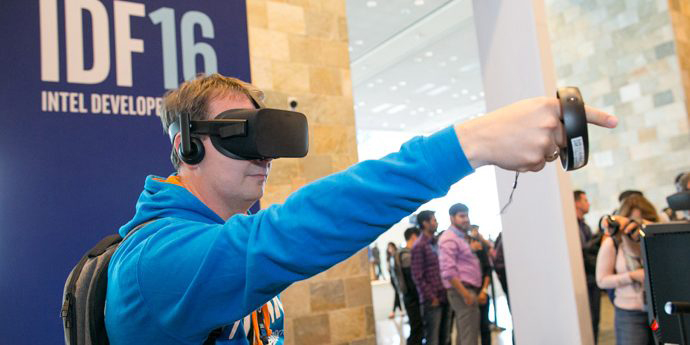
Virtual/fused reality
Current experiences are based on user interaction with a screen, but, in the future, Users will be able to enjoy total immersion in the images, sound and tactile experiences.
The next frontier of computing will allow people to create, resolver, develop and play in a world where the barriers between physical and virtual environments are going to be less and less perceptible. Virtual technologies have enormous potential for the future, and sectors have just begun to discover what is possible in this field.
In 2016, Intel unveiled Project Alloy, an all-in-one solution for virtual reality. In November it announced the acquisition of Voke, company that offers immersive sports experiences to athletes, fans and content producers. Y, in December he announced, together with Microsoft, Windows Holographic technology specifications.
For this year, Intel predicts that virtual reality experiences will go beyond the initial phases in sectors such as healthcare, education and travel, integrating into fully immersive environments.
The merged reality, a new way of enjoying physical and virtual environments and interactions, will have a prominent role, with five technological advances (6 degrees of mobility, integrated tracking, more natural handling, offline technologies and digitized real-world content) and it is expected to be available on the market throughout this year.
Did you like this article?
Subscribe to our NEWSLETTER and you won't miss anything.
Related articles
 Cisco explains its artificial intelligence strategy for Webex
 Pervasive integrates into Secartys to promote Artificial Intelligence
 Artificial intelligence to carry out the first MIR online mega drill in Spain
 ONCE, ONCE Foundation and Microsoft expand their collaboration in Artificial Intelligence for people with disabilities
 MSC Cruises uses Artificial Intelligence for its new voice-activated virtual assistant
 Beabloo Halo y Minerva: solutions based on artificial intelligence for retail at ISE 2018
Intel Unveils Smallest Virtual Reality-Capable Mini PC
Beabloo Halo y Minerva: solutions based on artificial intelligence for retail at ISE 2018
Intel Unveils Smallest Virtual Reality-Capable Mini PC
 Artificial intelligence and virtual reality will focus the debate at Samsung Dev Spain 2017
 Open School: artificial intelligence for personalized and digital learning
 Artificial intelligence and virtual reality two of Intel's big bets in its “Christmas Showroom” 2017
 LG bets on artificial intelligence and the Super UHD range with Nano Cell at CES 2017
 With Project Alloy, Intel takes another step in the development of wireless virtual reality
Artificial intelligence serves as the basis for controlling grass production
With Project Alloy, Intel takes another step in the development of wireless virtual reality
Artificial intelligence serves as the basis for controlling grass production
 Intel bets on artificial intelligence and virtual assistants after acquiring the Spanish Indisys