


The Pan American Games Lima 2019 will be illuminated with Schréder technology
The Belgian company Schréder will supply and install the lighting towers and LED reflectors for several venues where the Pan American Games will be held.. The assembly will include a total of 912 OMNIblast luminaires 1 y 164 OMNIflood 3.
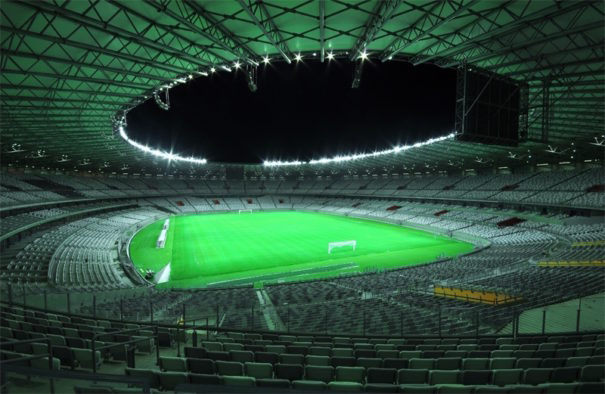
The Pan American Games are the second most important sporting event on the Olympic circuit and the third most important worldwide., after the World Cup, attracting an audience of approximately one billion viewers. Hence the importance and care that the organizers of Lima 2019 They are giving every detail in terms of infrastructure and, especially, to lighting, which on this occasion will allow an experience never seen before in Peru, both in sports venues, as well as for those who witness this event on HD television.
This event, which will take place between 26 of July and 11 of August, will bring together about 6.700 elite athletes, who will compete in 39 sports and 62 disciplines, day and night.
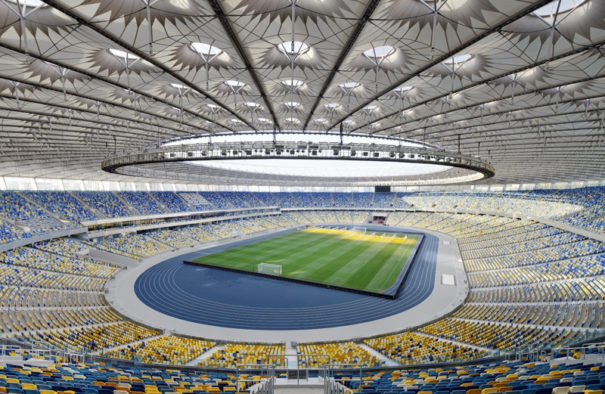
The organization has just awarded the tender for 'Design, Supply and Installation of Sports Lighting System in the Andrés Avelino Cáceres Sports Complex in the Villa María del Triunfo district – Lima – Peru, to the Belgian multinational Schréder. Company that has already illuminated several stadiums for the World Cup in South Africa 2010 and Brazil 2014, the Poland-Ukraine Euro 2012 and the Olympic Games 2016, like the Moses Mabhida stadium in Durban, Maracana, Kiev Olympic, Warsaw National, Mineirao and Arena das Dunas in Natal, inter alia.
Schréder will supply and install lighting towers and LED reflectors for different sports fields. Work will begin in December and will include the assembly of a total 912 OMNIblast luminaires 1 y 164 OMNIflood 3.
These luminaires have a color rendering index (CRI) of 90, measure of the ability of a light source to faithfully reproduce the colors of various objects compared to a natural or ideal light source. This is a range that guarantees the high level of color reproduction for optimal HD television broadcasting., and ideal lighting for high-competition sports.. The highest CRI is equal to 100.
Besides, These luminaires have a TLCI index (Television Lighting Consistency Index) superior a 80 and are free from the flicker effect, that could be seen when viewing images in slow motion or slow motion.
Both in the stadium and on television, The level of detail of each movement or object improves significantly, with which the viewer will live an optimal experience, better understanding what happens in each sporting instance.
This technology also complies with the strictest international standards and allows energy savings of more than 50%, improving lighting levels, safety for athletes and taking care of the environment.
Goodbye to blackouts
Besides, Led technology avoids long waits in the event of a blackout. “The traditional technology that many stadiums have today, known as discharge or HID, has electric gas discharge or metal halide lamps., generating light by passing electric current through a gas. In a metal halide lamp, the compact tube where the arc is formed contains a mixture of argon, mercury and a variety of metal halides. The heat generated by the electric arc vaporizes these elements, producing light as temperature and pressure increase. Therefore, “It is a process in which the lamps intensify the illumination flow as the minutes pass.”, comments Diego Royo, general director of Schréder Peru.
This professional explains that on the contrary, “the Led, or electro luminescent diode, It is capable of emitting light when receiving an electric current almost instantaneously.. And what is better, controlled from a panel or mobile device, being much more flexible in its control. Therefore, LED technology puts an end to waiting for blackouts, as we suffered in the past".
Schréder will also be responsible for supplying and installing lighting towers on various sports fields.: baseball (7 towers of 32 meters and one of 40 metros), softball for competition (6 towers of 28 metros ); softball for training (6 towers of 21 metros); rugby for competition and training (6 towers of 30 metros); hockey for competition and training (6 towers of 30 metros), Basque ball for competition (2 towers of 16 metros), Basque warm-up ball (2 towers of 14 metros), pediment for competition and training (4 towers of 10 metros), futsal (26 towers of 10 metros), and tennis (6 towers of 10 metros).
Did you like this article?
Subscribe to our NEWSLETTER and you won't miss anything.
Related articles
 LEA Professional brings its audio technology to BJ's Bingo Hall gaming center
 Panasonic makes history at the Olympic Games with its innovative AV technology
 IBC 2019: Brainstorm will combine its augmented reality technology with Panasonic cameras
 Yamaha deploys its sound technology, design and quality at InfoComm 2019
 Digital Projection will present at InfoComm 2019 Satellite MLS technology
 Wireless technology from Sennheiser and Neumann was put at the service of the Grammys 2019
 Sharp encourages ISE visitors 2019 to experience the future with its technology
 Digital Projection invites ISE visitors 2019 to 'experience the power' with your technology
 Samsung advances at CES 2019 the visual future with its innovative modular Micro Led technology
 The Crystal Ice Arena prepares for the Winter Universiade 2019 with Absen Led technology
 The XVIII Mediterranean Games have Mondo Led technology for their celebration
 Cisco and its IoE technology inaugurate the interactive clock for the Toronto Pan American Games 2015
 Shure's Axient wireless technology proved its worth at the London Olympics 2012
 London's Tower Bridge will be illuminated with LED technology for the Olympic Games