


Covid-19: the hygiene factor to keep AV equipment free of contagion
Touch screens of all types, AV equipment, remote controls,… They have to comply with precise hygienic standards, bacteria-free to mitigate the threat of germs as much as possible and reduce the spread of Covid-19. Philips Professional Display Solutions specialist offers advice on how to do it.
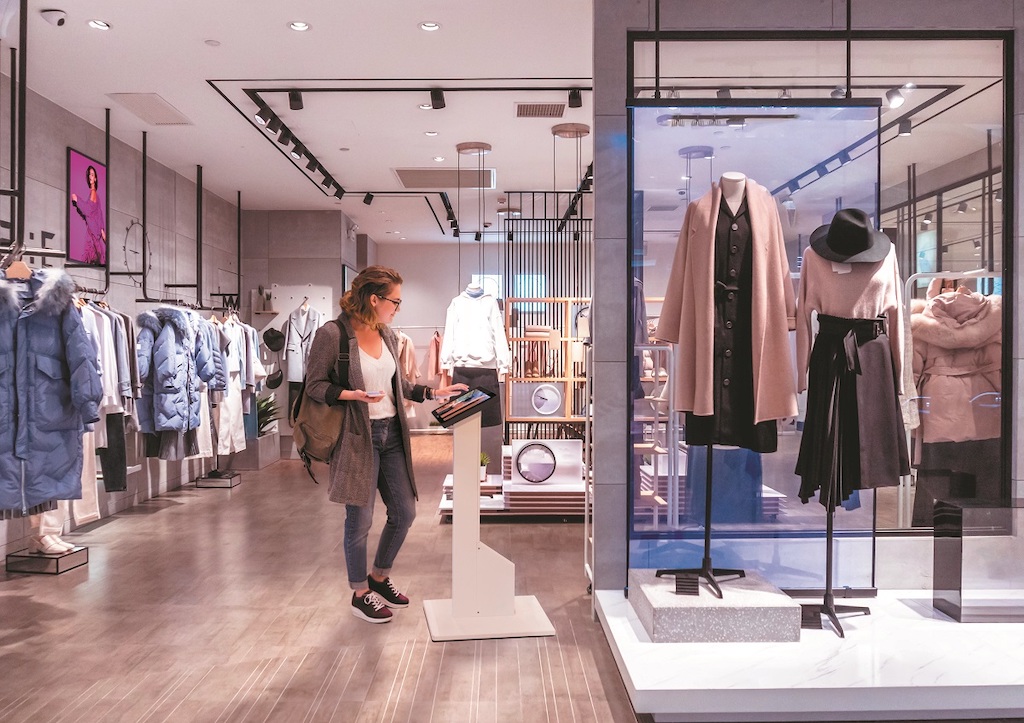
The data is compelling, with an average of picking up the mobile phone more than 58 times and touch them a few 2.617, every day. For most users, make a call, read an email, sending a message or publishing a tweet is an everyday occurrence. But, Do you know that the average is that the mobile phone takes up to 9.000 times more germs than those found in a toilet?
There is more. If you use a computer or laptop, the keyboard could be up 20.000 times dirtier compared to the cited example. Similar statistics are common when it comes to other elements., especially when it comes to touch screens used in QSR to order food and drinks, transport hubs for ticket sales and point of sale displays, to name just a few.
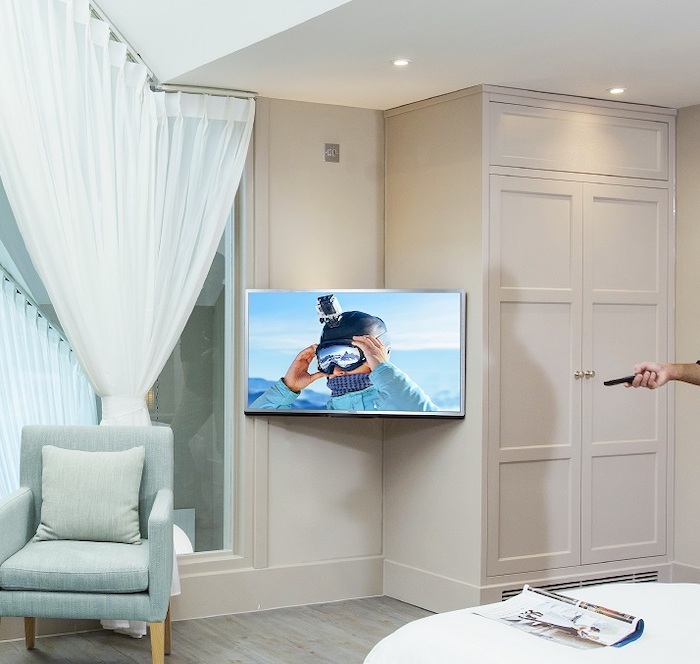
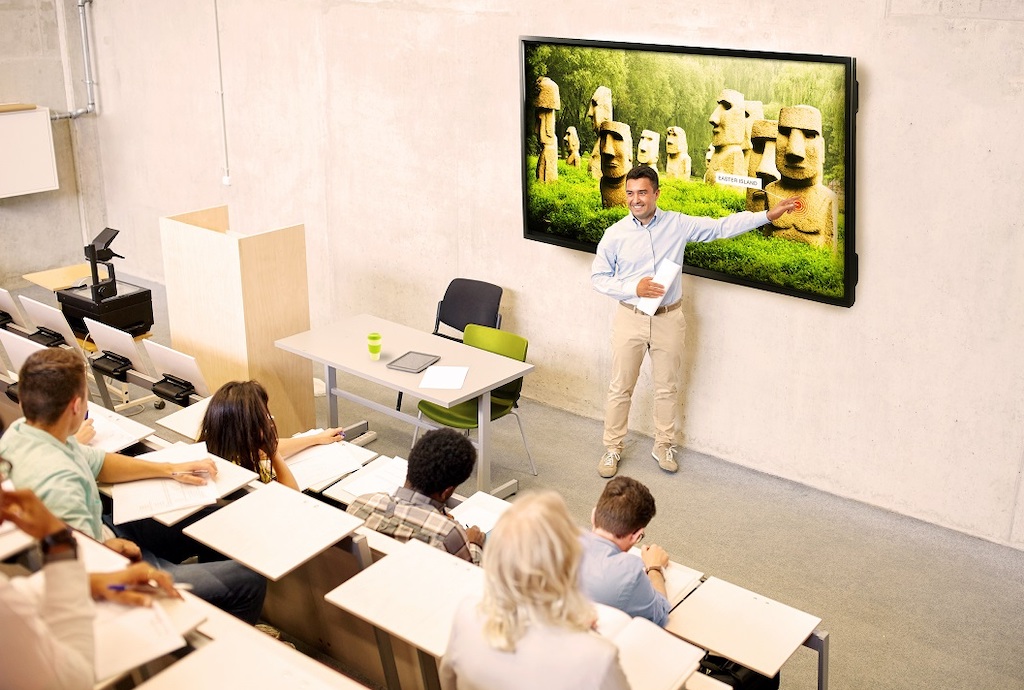
La industria AV es, therefore, a potential breeding ground for the spread of Covid-19. From professional televisions, whether used in commercial environments or in the most 15,5 millions of hotel rooms around the world, passing through interactive screens in schools and companies, Led and LCD digital signage displays in retail stores and other environments, monitors, even remote controls… in an almost endless list, and they all require some type of human contact.
Touch interactive hygiene
 Before the potential for contagion of the coronavirus and its risk was even minimally known., The hygiene of interactive screens has long been a major concern for the audiovisual sector..
In fact, a report of Kiosk Marketplace corresponding to 2019 gathered that more than 70% of users were already concerned about using public touch screens. The online survey highlighted that the 80% of bacterial infections come from what people touch, and therefore it was requested in the sample to be indicated in a selected list, What situations were most worrying?.
Cashiers came first in the survey (with a 72%) as those at highest risk, without health guarantee. Check-in screens located in hospitals and health centers appeared in second place (with a 70% of the sample), followed by QSR touch screens, supermarket self-service kiosks (58%), and airport and hotel check-in kiosks (40%).
Audiovisual industry and Covid-19
 Focus on issues such as prevention and safety in the face of the enormous spread of the coronavirus, and the importance of keeping electronic items clean, helping to reduce the risk of potentially harmful germs and bacteria, has never been more important.
The World Health Organization (OMS) states that Covid-19 can spread from person to person through small droplets from the nose or mouth when someone infected coughs or exhales. These drops can, if not captured, landing on objects and surfaces around the person, in turn infecting those who touch these objects or surfaces and touching their face.
Despite the great information and data that is being collected, Little is known about the amount of time Covid-19 can remain active on hard surfaces., but studies have suggested that other coronaviruses, like SARS and MERS, They can remain alive for up to three hours in air and up to two or three days in metal, glass and plastic surfaces.
Reducing the risk of infection has always been a primary factor in the health sector, which is why televisions Philips Professional Display Solutions (PDS) Next to a hospital bed they incorporate hydrophobic glass, antimicrobial casing, but when it comes to hygiene, other products, including interactive displays such as the Philips T-Line range, need additional monitoring.
Take action against dirty screens
 In the current pandemic situation due to Covid-19, Philips PDS offers some basic tips on how to help keep audiovisual equipment clean, reducing the potential risk of spread and contagion. Some of these tips may seem obvious, and they are already common practice, while others will be very useful.
For companies that offer the use of touch screens to customers in their facilities, continuous cleaning is essential. In the same way, for those who use this type of visual systems as part of their business – installers, integrators and resellers – there are a number of methods and products that can help:
Antibacterial wipes: The most practical method to safely clean an electrical item is to use antibacterial products. There are many to choose from, although with a very high demand.
For the screens (of all types), The most effective and accessible way to fight unwanted germs is by using a simple screen wipe. It is important to select a specific one to eliminate germs (keywords: alcohol, anti-bacterial), instead of just water based (baby wipes).
Foam: while antibacterial wipes are perfect for cleaning flat surfaces, not always sufficient for equipment with multiple small parts, inaccessible areas or even high sensitivity to humidity.
a computer keyboard, if it is not treated, It is a source of dirt, both above and below. Many microbiologists recommend that we clean desks and keyboards at least once a week., while some go even further, suggesting at least once a day. With the current climate, we recommend the latter, at least.
For examples like these, the use of a non-abrasive antibacterial foam is most appropriate. For those small areas that are difficult to access, additional cleaning accessories are required, like cleaning swabs.
Needle: for those who regularly use an interactive touch screen (including tablets), using a personal pen will help cut off direct interaction, further reducing the risk.
Gloves: It is also possible to go a step further and adopt a strict practice of wearing touch screen gloves, virtually eliminating any direct skin contact. Of course, It is vital that these gloves are cleaned and removed regularly and that you do not touch your face with them.
Receive a delivery: many people are also concerned about the packages they receive and the possibility that they are infected. In the AV industry, a large number of deliveries are received and sent to and from abroad.
However, the likelihood of an infected person contaminating commercial products is marked by the WHO as low and the risk of contracting Covid-19 from a package that has been moved, traveled and exposed to different conditions and temperature remains low. The WHO offers all kinds of information on the matter on its website..
Did you like this article?
Subscribe to our NEWSLETTER and you won't miss anything.
Related articles
 Bosch Wireless Speakers: flexibility and audio quality to maintain distance in meetings
 Visual Display unites dnp and Epson technology to offer a post-COVID solution
 The Murcia Assembly chooses Shure to adapt its facilities to the post-COVID-19 era
 Tripleplay stands in solidarity with Hotel Football to fight against Covid-19
 Beabloo Interaction Care: minimizes the risk of contagion of Covid-19 in physical spaces
 Technological solutions for the new post-Covid-19 retail
 RoboAds develops a new line of robots to combat Covid-19
 ACE empowers and unites the DooH ecosystem to raise awareness and fight against Covid-19
 MCR implements a global work plan to maintain its activity during Covid-19
 Shure expands its SM range with two 'hands-free' microphones for live events and presentations
 Sennheiser Speakerphone SP 10 y SP 20: hands-free speakers for professional conferences
 MMD and AOC present their differential technology to maintain their leadership in the monitor market
Icon Multimedia implements its Deneva application at the Lebrija station to keep travelers informed
MMD and AOC present their differential technology to maintain their leadership in the monitor market
Icon Multimedia implements its Deneva application at the Lebrija station to keep travelers informed
 New Panasonic LF50 series, ideal for customers looking for a digital signage solution with the 'wow' factor’