


Yamaha presents its Rivage PM5 and PM3 digital mixing systems to the market
Estas dos nuevas superficies de control, junto con dos motores DSP son las últimas incorporaciones a la gama de productos de audio profesional.
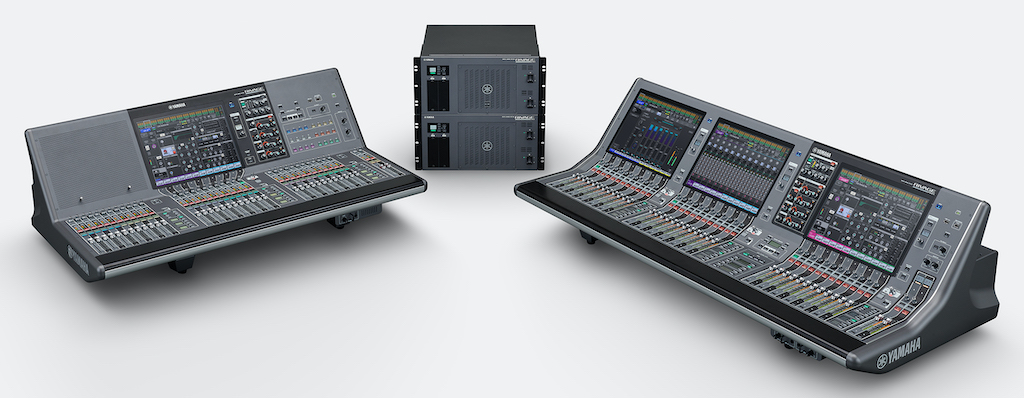
Los sistemas de mezclas digitales Rivage PM5 y Rivage PM3 que Yamaha acaba de presentar al mercado proporcionan a los ingenieros de audio más opciones y flexibilidad para producir sonido óptimo en más aplicaciones, which, as stated by the manufacturer, democratiza más que nunca el audio de gama alta.
Yamaha Rivage PM está muy bien considerada entre los ingenieros profesionales por su óptima calidad de sonido y flexible control flexible. Los modelos Rivage PM10 y PM7 se han establecido ya como los sistemas de mezclas digitales de referencia del mercado que ahora, con los nuevos PM5 y PM3, de tamaño más compacto, aportan nuevos niveles de flexibilidad y escalabilidad, además de incluir toda la funcionalidad de Rivage PM.
La opción de dos motores DSP con diferentes capacidades de mezcla, a la que se añade estos nuevos modelos, aporta a los ingenieros de sonido una notable flexibilidad para crear sistemas a la medida de una gama de aplicaciones mucho más amplia.
Los componentes fundamentales de los nuevos sistemas Rivabe PM5 y Rivage PM3 son las superficies de control CS-R5 y CS-R3, que presentan la misma configuración de faders que el resto de la serie Rivage PM, con tres compartimentos de doce faders cada uno.
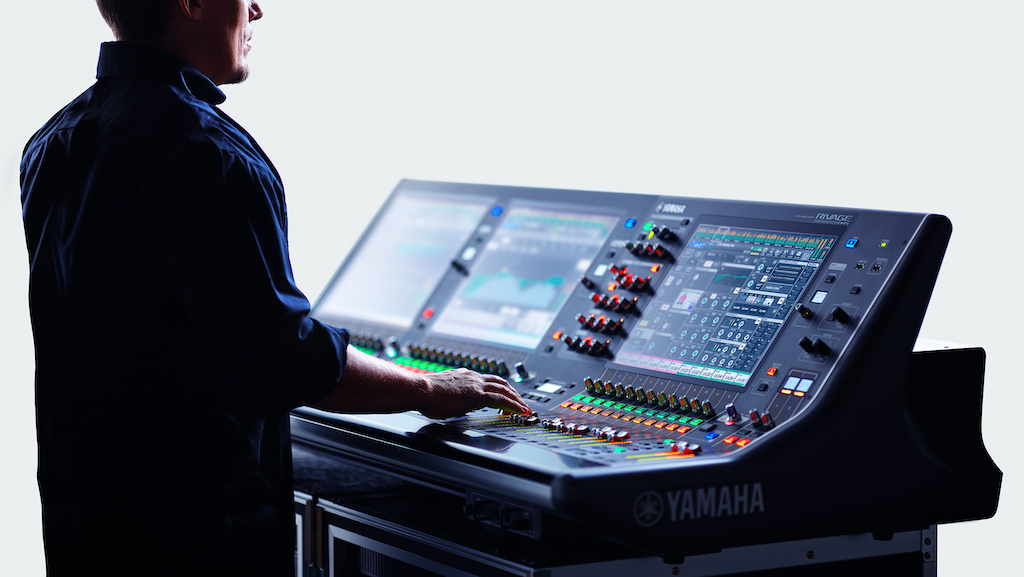
La combinación de pantallas táctiles y controles de canal aporta funciones intuitivas que resultarán familiares a los usuarios de la serie Rivage PM, al tiempo que facilita el acceso a quienes conozcan las consolas de las series CL y QL de Yamaha.
La superficie de control CS-R5 para sistemas Rivage PM5 incorpora tres pantallas táctiles de 15” de tipo capacitivo, con visualización de alto brillo adecuada para su uso con luz diurna y una sección de canal seleccionado condensada que permite utilizarla de manera fácil e intuitiva. Para maximizar el tamaño de las pantallas se ha reducido la profundidad de la superficie de control, facilitando el acceso tanto a estas como a los controles.
Los indicadores que se encuentran junto a cada fader permiten un seguimiento preciso y ofrecen una excelente visibilidad para facilitar los ajustes de nivel. with just 42 Kg. of weight, la superficie de control CS-R5 también es bastante más ligera, lo que facilita su transporte y manipulación por solo dos personas.
For your part, la superficie de control CS-R3 para sistemas Rivage PM3 incluye toda la funcionalidad y el rendimiento de la serie Rivage PM en una consola que mide solo 1,14 meters wide, lo que la convierte en la consola más compacta de la gama; idónea para recintos en los que el espacio sea reducido.
Rivage CS-R3 tiene una pantalla con un único panel táctil, del mismo tipo que en la CS-R5, y una sección de canal seleccionado condensada que, on the whole, ofrecen un control sencillo e intuitivo. Besides, una completa gama de controladores físicos convierten este modelo en una opción idónea para aplicaciones de monitor.
Nuevos motores DSP
El ‘cerebro’ de cualquier sistema Rivage PM es el motor DSP. Las dos nuevas unidades incorporan el motor DSP-RX, that provides 120 entries, 48 buses de mezcla y 24 matrices, así como el motor DSP-RX-EX, con 288 entries, 72 buses de mezcla y 36 matrices.
Si es necesario más capacidad para DSP-RX, el usuario puede añadir una placa de expansión DEK-DSP-RX para actualizarlo a las especificaciones completas de la DSP-RX-EX. Los nuevos motores DSP también permiten la duplicación de DSP: es posible usar dos motores DSP-RX o dos DSP-RX-EX en configuración duplicada en aplicaciones en las que se requiera redundancia a prueba de fallos.

El ecosistema Rivage PM
Todos los sistemas Rivage PM utilizan los mismos motores DSP, bastidores de E/S y firmware. This means that, sea cual sea la superficie de control utilizada, el sonido, las características y el funcionamiento básico resultan coherentes.
La función de doble consola del sistema permite que se utilice una segunda superficie de control como equipo secundario, por ejemplo para una mezcla de sala, como consola de monitorización o como equipo secundario, dependiendo de los requisitos del usuario.
Todos los modelos presentan la misma configuración de faders básica, con tres bancos de doce faders, de modo que es posible mantener la misma disposición de faders cuando se utilizan diferentes superficies de control en distintos días de una gira, For example.
Al igual que los modelos Rivage PM10 y PM7, los nuevos PM5 y PM3 ofrecen compatibilidad directa con la red de audio Yamaha TwinLANe, con capacidad para cuatrocientos canales de audio simultáneos con latencia extremadamente baja, y la red Dante de Audinate, que se utiliza de manera estándar en las consolas digitales CL y QL y en otros productos de audio profesional de este fabricante.
Los modelos Rivage PM5 y PM3 heredan plenamente la filosofía Yamaha Rivage PM subyacente, que permite utilizar cualquier bastidor E/S compatible para capturar con fidelidad el sonido del escenario, sin coloración, así como añadir toques creativos si es necesario.
Versión del firmware 4.0
La presentación de Rivage PM5 y PM3 coincide también con la de la versión 4.0 del firmware para toda la serie Rivage PM, que actualiza funciones importantes y la interfaz de usuario, con la adición del complemento especial de reverberación SP2016 de Eventide, que aporta una gran selección de ajustes predefinidos de alta calidad y la edición de ingenieros que deseen personalizar su sonido.
Para Ray Maxwell, vp. de ventas y marketing de Eventide, “las inconfundibles reverberaciones del SP2016 original se han utilizado en innumerables éxitos durante casi cuarenta años y puede escucharse en álbumes de Adele, Mariah Carey y Eminem, inter alia. Nos honra colaborar con Yamaha para llevar las reverberaciones del SP2016 (Room, Stereo Room y Hi-Density Plate) a la serie Rivage PM con el software 4.0”.
Yoshi Tsugawa, director general senior de Yamaha Audio Business Division, ha señalado que “la disponibilidad de los dos motores DSP con diferentes capacidades de mezcla, más las dos nuevas superficies de control, ofrece una flexibilidad mucho mayor para crear sistemas a la medida de aplicaciones de casi cualquier escala”.
Con la incorporación además de los sistemas Rivage PM10 y PM7, “Yamaha dispone ahora de un ecosistema de mezcla capaz de ofrecer los niveles máximos de flexibilidad, rendimiento y capacidad de ampliación necesarios para eventos del máximo nivel y en cualquier espacio, desde los mayores estadios y festivales hasta pequeñas salas y teatros, sin renunciar a la máxima calidad de sonido”, asegura Tsugawa.
Did you like this article?
Subscribe to our NEWSLETTER and you won't miss anything.
Related articles
 Yamaha and Bricasti Design develop Reverb Premium Y7 for Rivage PM digital mixing systems
 Yamaha expands its online training offering for Rivage PM digital mixing systems
 Yamaha organizes Audioversity courses on Rivage PM digital consoles
 Yamaha EMX5 y EMX7: Integrated mixing consoles with power amplifiers
 Allen Digital Mixing Systems & Heath on Rick Wakeman and 'Local Natives' tours
 Yamaha expands its EMX series with two new portable integrated mixing consoles
 Yamaha integra sus mezcladores CL y QL con los sistemas inalámbricos digitales Shure ULX-D
 Yamaha previews the future of large format digital consoles with Rivage PM10
 Yamaha opens a new era in digital live sound consoles with Rivage PM10
 Yamaha presents its new MG series of digital tables to the European market
 Yamaha introduces new Stagepas 400i and 600i portable PA systems
 Yamaha launches the new CL Series digital consoles on the market
 ISE will mark the European debut of Yamaha's new DXR loudspeakers and MGP mixing equipment
 Yamaha launches new range of MGP mixing consoles and DXR and DXS digital speakers