


Toshiba takes a decisive step towards the autostereoscopic 3D display
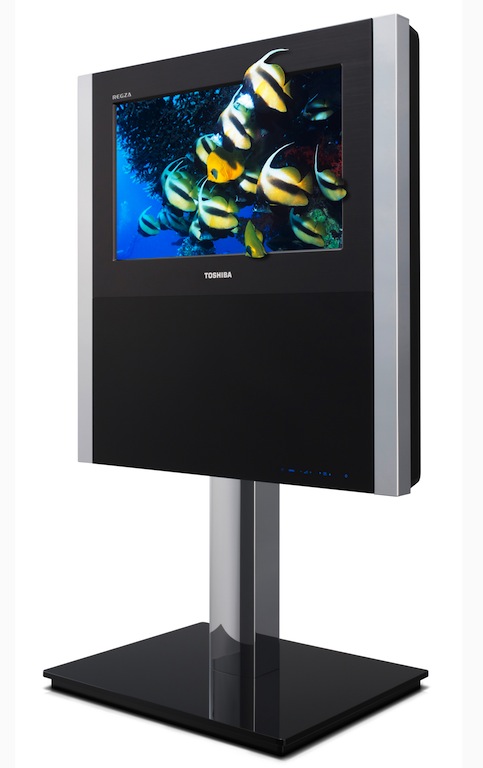
Toshiba has presented at IFA the largest autostereoscopic screen on the market with a new technology. With a resolution four times Full HD (3840×2160 pixels), This system incorporates a lenticular mesh that filters the light coming from each pixel (at a rate of one lens for every nine pixels) and allows light to be reflected (with signal for right and left eye) in up to nine different angles ensuring perfect viewing in any position.
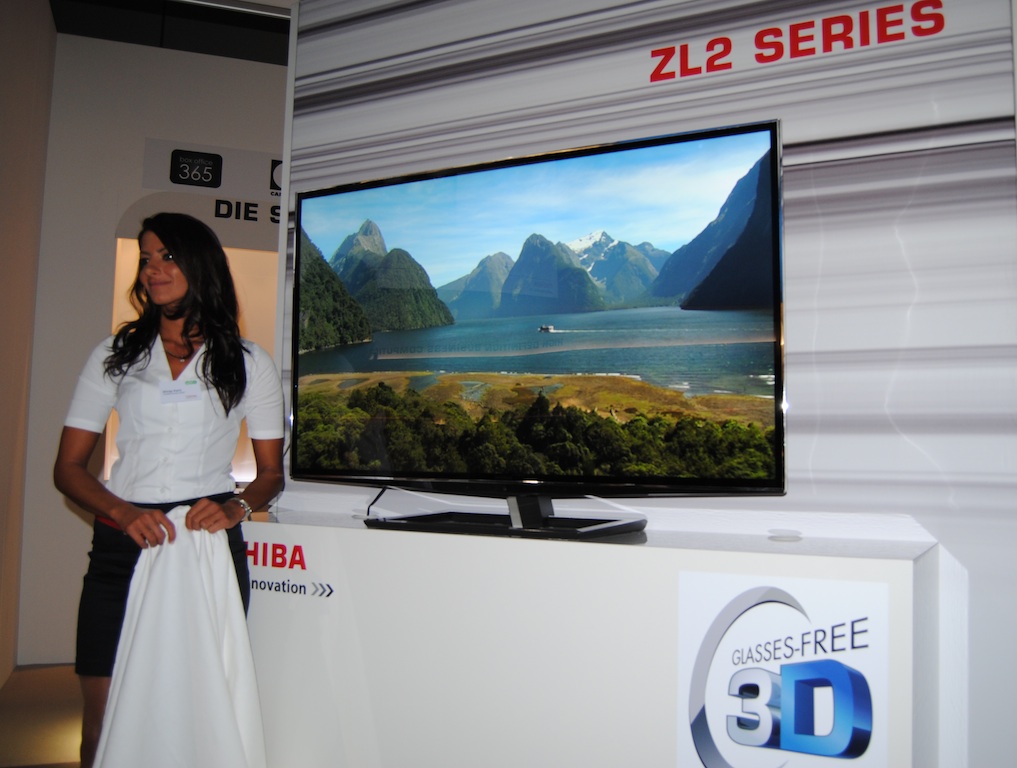 Toshiba revealed this Thursday at IFA 2011, which takes place in Berlin until 7 September, your new stereoscopic screen. The new ZL2 model, which will initially be launched commercially next Christmas in a format of 55 inches, Take a firm step on the path to getting rid of uncomfortable glasses. Although Toshiba has opted from the beginning for autostereoscopy in laptops, The small dimensions of its screens made it easy to keep the user's viewing radius of the device under control., ensuring a fairly comfortable 3D experience. However, on the big screens, before which the viewer moves freely around the living room of his house, this technology fell short.
 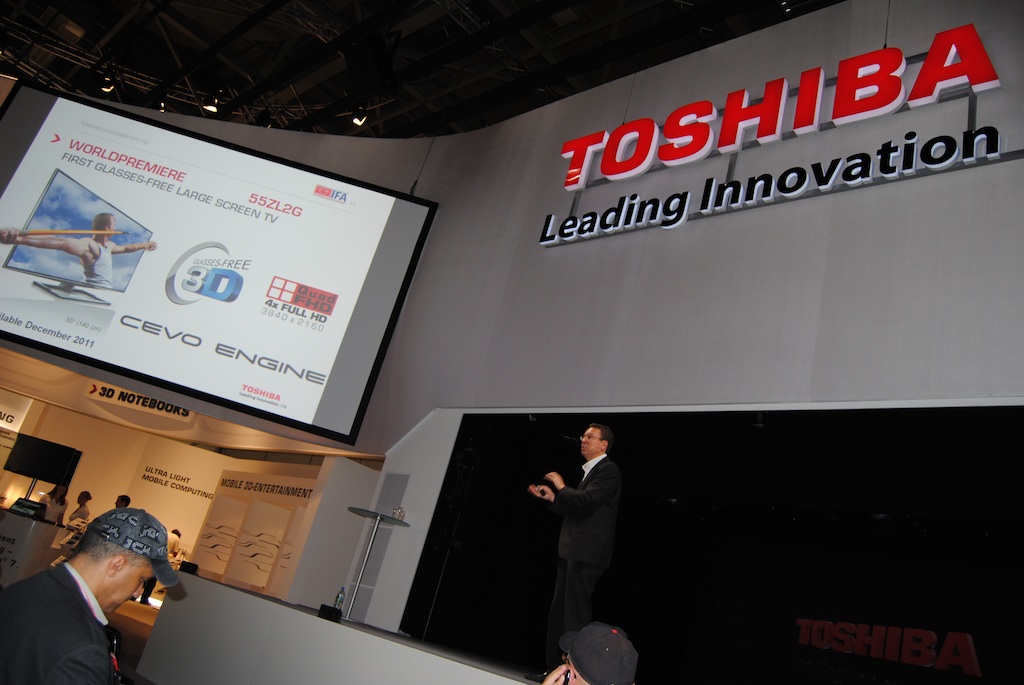 To solve this challenge, Toshiba has opted for a resolution four times Full HD (3840×2160 pixels), and incorporate a novel system based on a mesh of lenses that filters the light coming from each pixel. (at a rate of one lens for every nine pixels) and allows light to be reflected (with signal for right and left eye) in up to nine different angles. Thanks to an integrated mini-camera that carries out face tracking, locates the spectators present in the room by varying the pixel formation so that the light falls directly on their eyes through the mesh of tiny lenses that covers the screen. Along with the new model “Glasses Free 3D”, Toshiba has launched new models in different sizes for stereoscopy with active and passive glasses, as well as several options for connected television.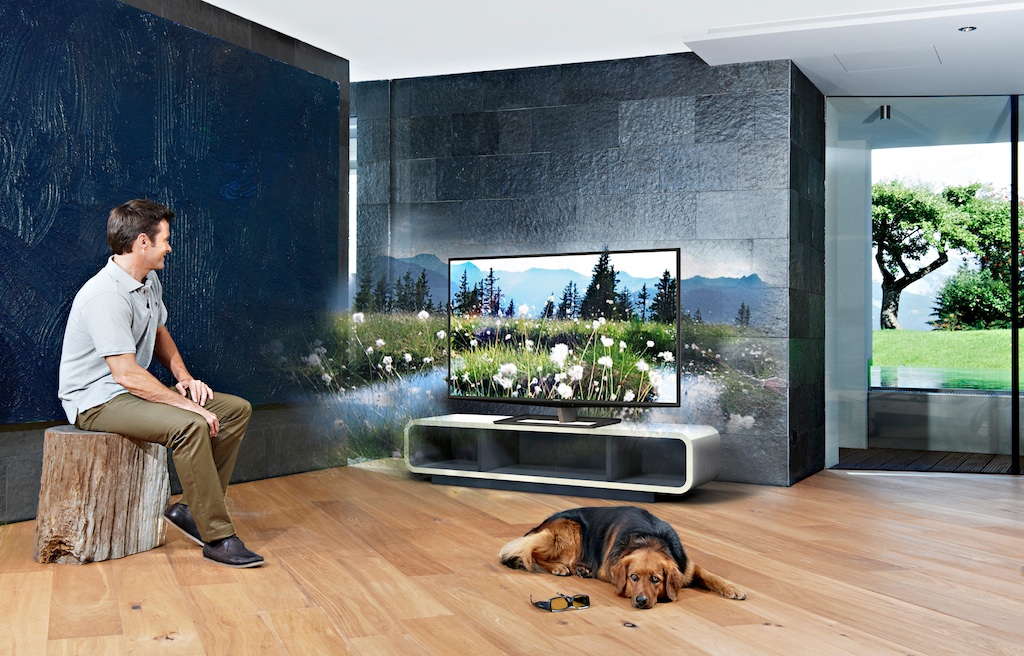
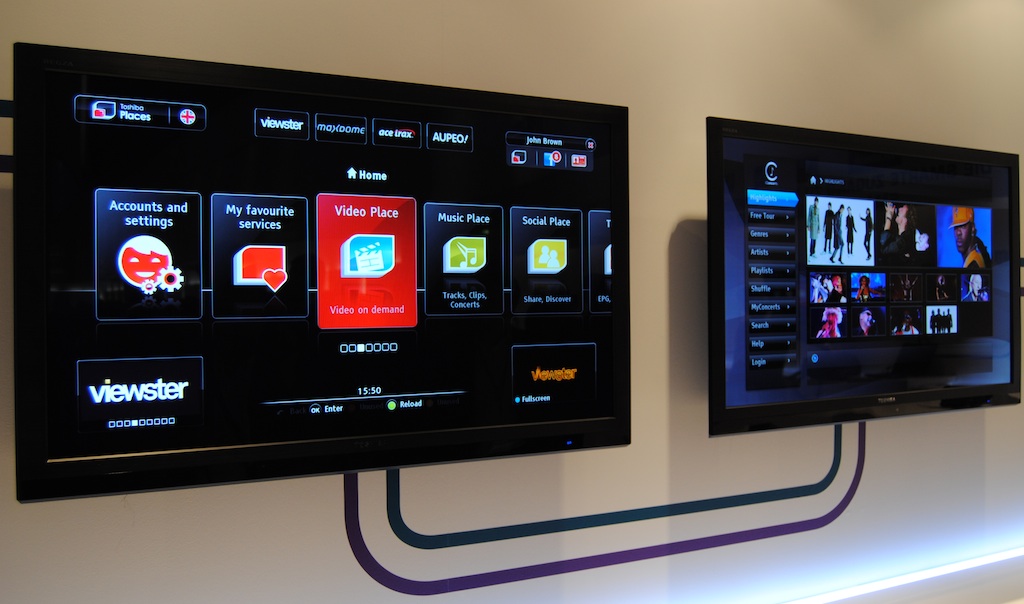 On the other hand, Toshiba Places rich content service has been reinforced with many more options, intelligent access to online services, a much more logical user interface and greater integration with social networks.
 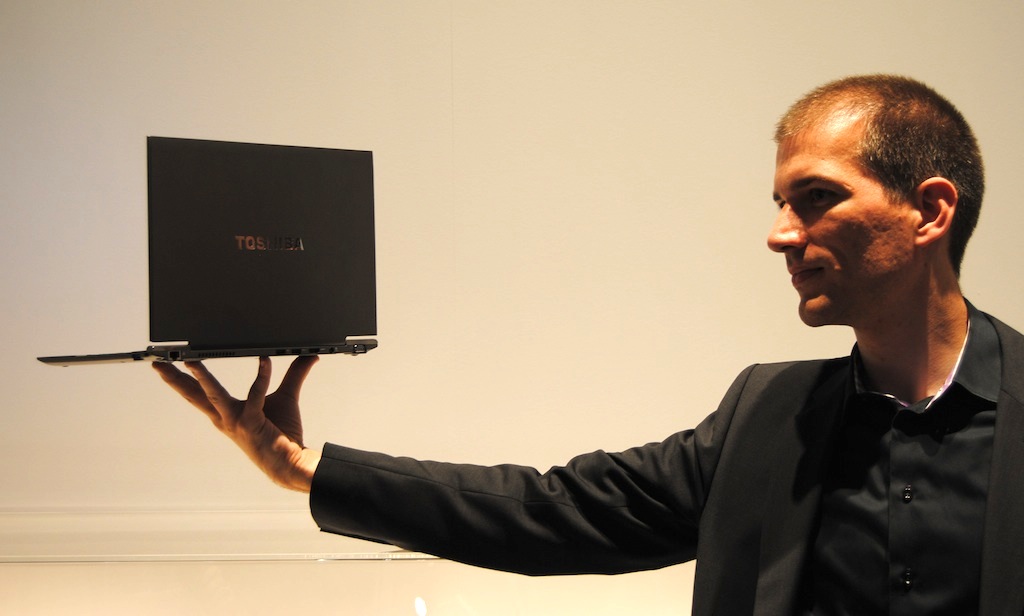 Avalanche of devices The Japanese company has also unveiled some hybrid devices that combine the functions of a tablet, a smartphone and a laptop. One of the newest proposals is the Slate PC tablet, with touch screen 11,6 inches (12 millimeters thick and 860 grams of weight). It has also announced the new AT200 ultra-thin tablet from 10,1 inches and only 558 grams. This tablet that will run with Android Hoenycomb 3.2 weighs itself 558 grams vs. 600 iPad grams. Its LCD screen 10.1 inches offers a resolution of 1280×800 that together with its processor 1.2 GHz and a RAM memory of 1 GB, They position it in an excellent position in the race for the tablet market. And laptops, the new Z830 Ultrabook stands out, an ultralight equipment of 13.3” little more than a kilo (8.3mm/15.9 mm) and all this without compromising all connectivity possibilities.
Did you like this article?
Subscribe to our NEWSLETTER and you won't miss anything.
Related articles
 Broadsign Takes Decisive Step into Programmatic OOH with Purchase of Place Exchange
 Where is digital signage headed?
 Google takes another step in virtual reality with the development of an 18MP OLED VR screen
 Lifesize Cloud: a new step towards cloud video conferencing
 Toshiba P32LC12: ultra-panoramic screen for digital signage and limited spaces at ISE 2014
 The Toshiba Vision display receives 2014 in New York's Times Square before a million people
 Cisco takes an important step towards unified and secure network management
 The video conference, safe path to the future
 The media market continues its reconversion towards an increasingly digital future
 Stream TV takes another step in 3D technology without glasses
 Sony moves towards 3D in home environments
 Wututu Scr3end: autostereoscopic immersion
 Microsoft develops a prototype of an autostereoscopic display
 Toshiba will launch the first glasses-free 3D screen in December