


Participate in the advantages of augmented reality… but with smart contact lenses
A rebufo de la revolución de las gafas de realidad aumentada, liderada por las Google Glass, ha surgido otra posibilidad, en fase prototipo, para ver al detalle y en 3D objetos programados por códigos QR: las lentillas de realidad aumentada.
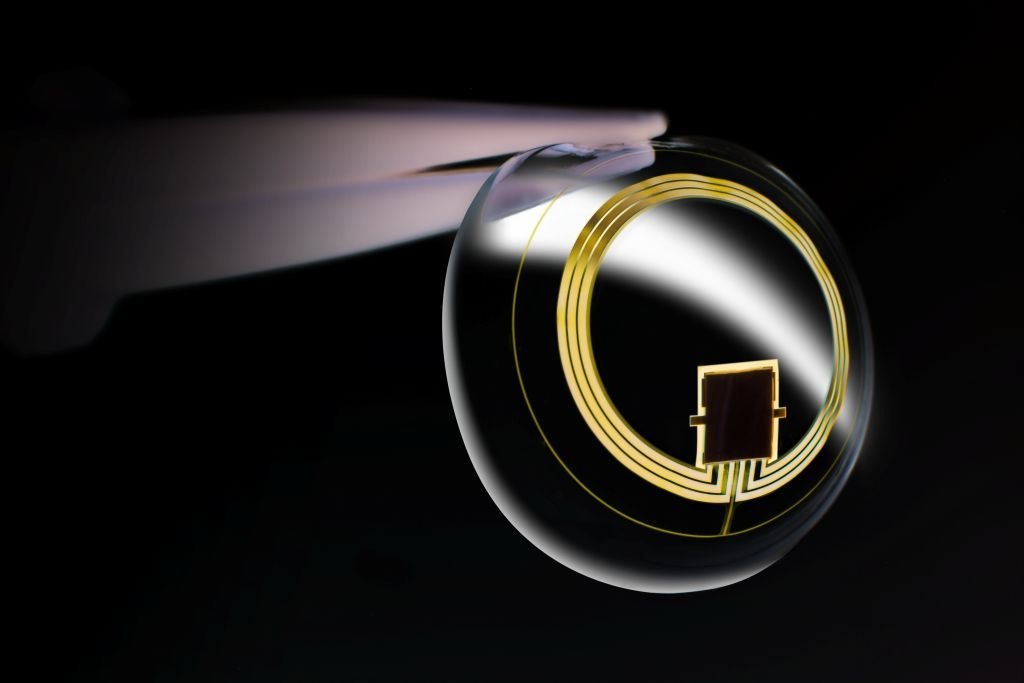
Entre los últimos desarrollos en torno a las gafas que utilizan la tecnología de realidad aumentada (AR), un nuevo mercado que hasta la fecha lideran las Google Glass, algunos equipos de investigación han ido más allá con prototipos de lentes o lentillas de realidad aumentada, un campo experimental pero con continuos avances.
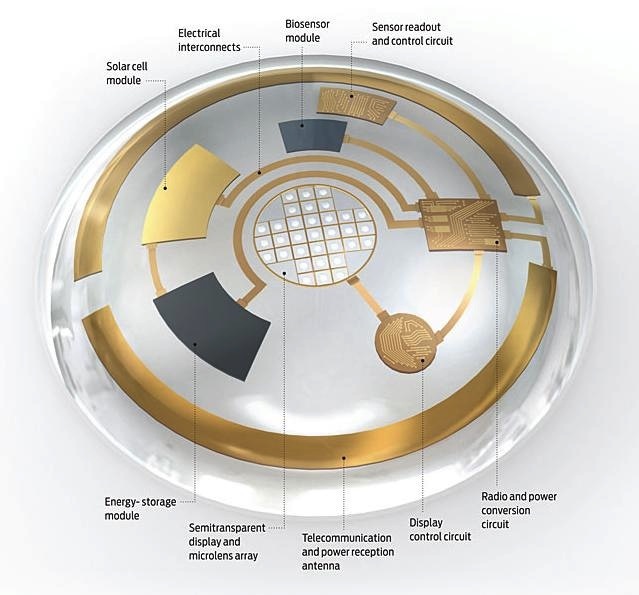 Uno de estos desarrollos de lentillas de AR es Imageware, un prototipo japonés que convierte el campo de visión ocular de un usuario en una pantalla para ver al detalle y tridimensionalmente objetos e información programada con códigos QR, que incorpora un sensor dentro de las lentes que permite la visión desde cualquier ángulo y en tiempo real.
Las lentillas de AR Imageware surgen de la colaboración e investigación de un grupo de investigadores de universidades japonesas, coreanas y americanas respaldados por empresas tecnológicas como Canon y Samsung, en los primeros casos.
El prototipo incorpora un Led (diodo emisor de luz) en cada lente, si bien el principal reto es el material empleado, debido al contacto permanente con el ojo, por lo que para su diseño utilizan un material conductor blando, elástico y, of course, transparente formado por microcables que se colocan entre capas de grafeno.
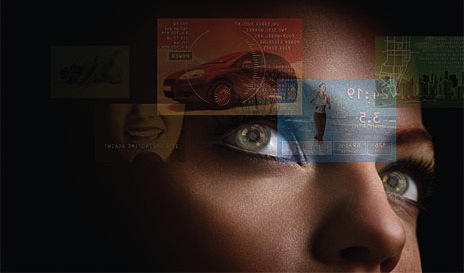 Los resultados de las pruebas realizadas por este equipo multidisciplinar de investigadores es que este tipo de lentes se pueden utilizar durante unas cinco horas sin molestias para el ojo, probado hasta ahora sólo en conejos.
Otro de los desarrollos punteros en lentes inteligentes es el de la compañía suiza de biotecnología Sensimed, en cuyo grupo de investigación se encuentra Babak Parviz, uno de los referentes del proyecto Google Glass. Estas lentes incorporan sistemas microelectromecánicos (Mems) con sensores, processors, fuentes de alimentación, antena inalámbrica, etc.
 Also, el principal desafío de este prototipo es eliminar la rigidez de las lentes y descubrir componentes biocompatibles y transparentes, capaces de esterilizarse y con bajo coste para su futura comercialización. Este desarrollo, cuyos avances se han publicado en la publicación científica Journal of Micromechanics and Microengineering, se basa en el diseño de un circuito a partir de una lámina (primero de metal y después de plástico) de apenas unos nanómetros de grosor, sobre la que se insertan diodos emisores de luz de un tercio de milímetro de anchura y un circuito electrónico.
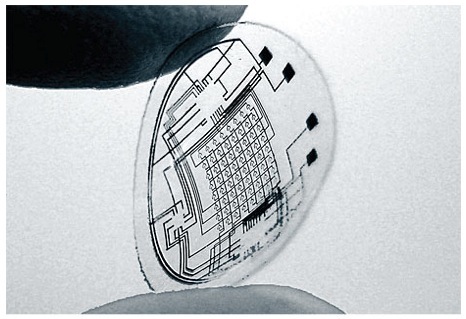 El sistema multicapa integrado en la lentilla de este prototipo, denominado Contact Lens Display (CLD), compone de una capa de cristal líquido, filtros polarizadores para formar los píxeles y un microchip que transforma estos píxeles en letras o signos, si bien otro de los obstáculos es que no han logrado utilizar toda la superficie de la lentilla como pantalla y controlar de forma individual los píxeles proyectados.
Todos estos prototipos continúan en evolución para, mainly, lograr un sistema apto para que el ojo humano no sufra y tenga una visión completa de la imagen inteligente a tan mínima distancia de la córnea.
Did you like this article?
Subscribe to our NEWSLETTER and you won't miss anything.
Related articles
 Tech Data responds to the growing demand for augmented reality solutions
 TeamViewer and Google Cloud develop augmented reality solutions
 Las oficinas inteligentes: ¿mito o realidad?
 InfinitySet 3 mostrará las ventajas de la realidad aumentada hiperrealista en 4K en NAB 2018
 Samsung mostrará en el 4YFN cuatro proyectos de realidad aumentada y virtual
 Augmented reality allows you to see in 360º what happens at the Tommy Hilfiger shows
 Metaio shows the advantages of augmented reality in industrial processes
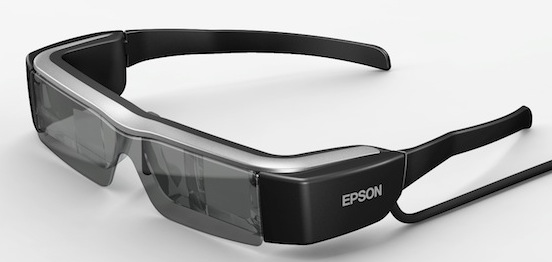 Epson discovers at CES 2014 your smart glasses with augmented reality Moverio BT-200
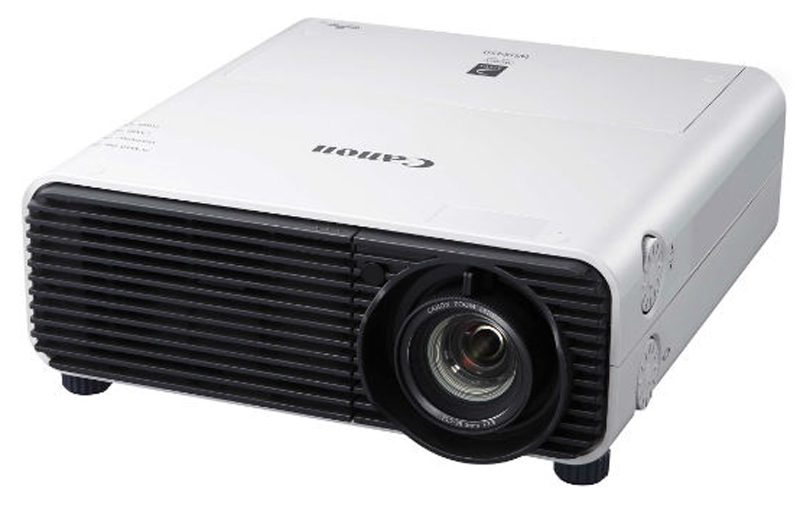 El mercado de proyectores LCOS tendrá un gran crecimiento gracias a las aplicaciones de realidad aumentada
 Motorcyclists sign up for augmented reality in their helmets with the LiveMap prototype
 Sony joins the development of augmented reality glasses
 Canon camina firme hacia la realidad aumentada
 Valve investigates augmented reality systems based on glasses and contact lenses
 Google presents its augmented reality glasses project