





Beethoven binaural: audio recording with Sennheiser Ambeo VR in an interactive exhibition
In a unique event, el Brückenforum de Bonn (Germany) was recently converted into a concert hall when conductor Dirk Kaftan led the city's Beethoven Orchestra in a recording of excerpts from the Ninth Symphony, which can now be enjoyed in an exhibition.
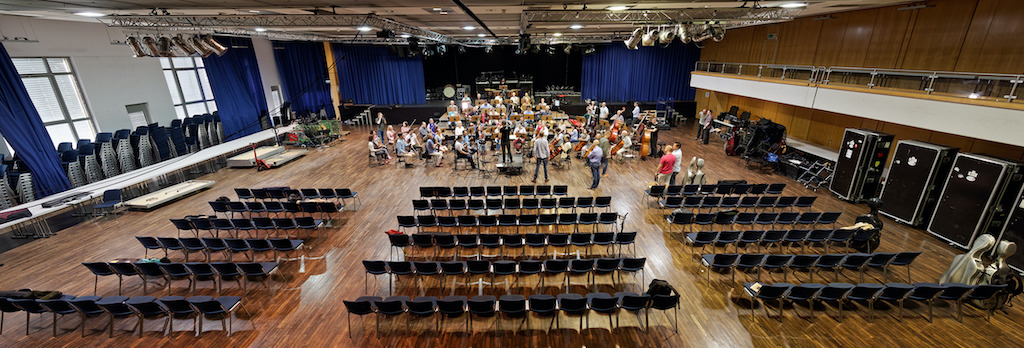
Having the feeling of being just another member of an orchestra is difficult when you are not a professional musician., But now a new exhibition allows people to experience this extraordinary perspective thanks to the making of an immersive video and sound recording of the performance of the Beethoven Orchestra, which is becoming part of an exhibition in the Museo LVR-Landes from Bonn, in Germany.
With the title of Music! Listen, crea, feel. An interactive exhibition, The technology allows fans to acoustically ‘take a seat’ in different positions in the orchestra and listen through headphones to the impressive soundscape from unknown perspectives.
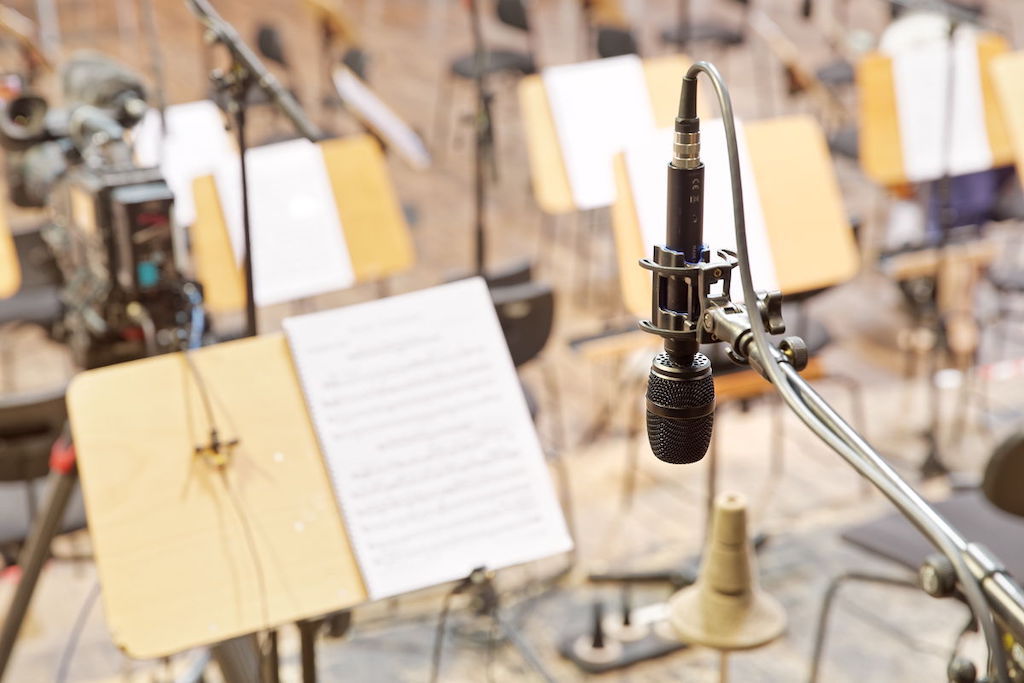
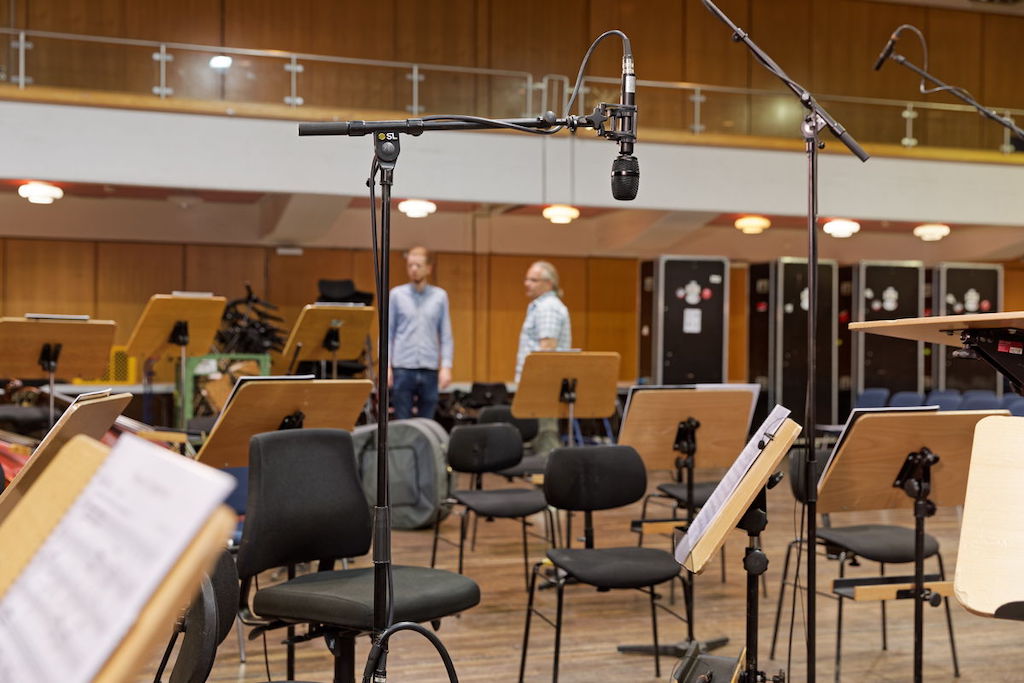
To provide this unique experience of real acoustic immersion, six microphones were placed Sennheiser Ambeo VR among the orchestra musicians during the recording that was made a few months ago of excerpts from the Ninth Symphony the Beethoven, under the direction of Dirk Kaftan.
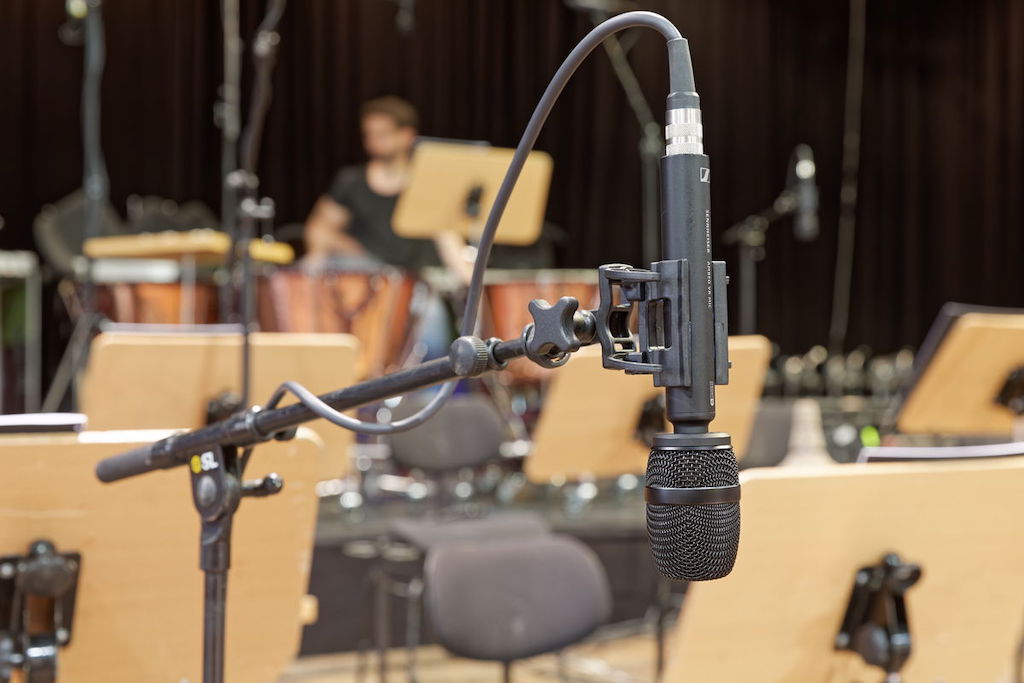
Inside the orchestra, the six Sennheiser microphones (brand that sells Magnetron in Spain) They were placed near the timpani, trombon, trunk, flute, viola and first violin with Sennheiser Ambisonics microphone capsules pointing downwards.
“The ideal thing would be to place the capsules exactly where the head of each instrumentalist is, but, for obvious reasons, “This is not possible.”, Explica Freek de Greef, sound engineer who together with his namesake Thomas Koopmans have created this unique recording.
As this expert points out, “Musicians find it quite annoying if you place a microphone too close to them.”, therefore, We decided to configure it so as not to harm the instrumentalists in their freedom of movement. We still have the microphones with their front side marked, pointing in the same direction as the musicians”.
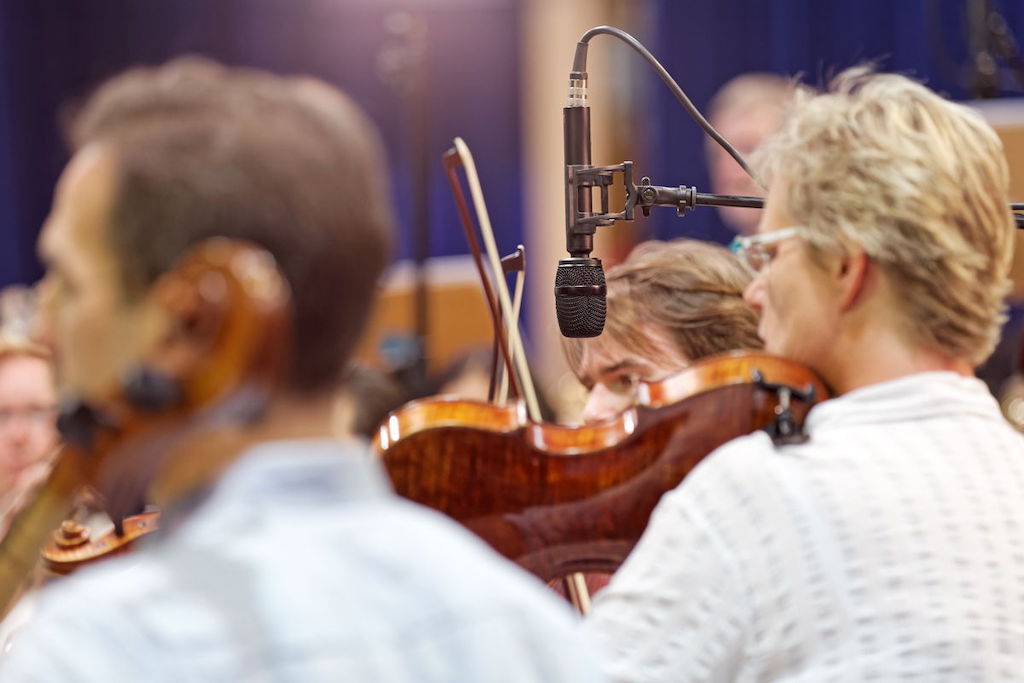 In this sense and as an example of the location, If the violinist held his instrument on the left side, “We placed the Ambeo VR microphone to the right of the player in the direction of the instrument,” De Greef points out., which provides a much more convincing sound during recording”.
Freek de Greef has already used Ambeo VR for other purposes: “taking into account the various functions and applications of this microphone, offers excellent value for money. Not only ideal for virtual reality in gaming applications, "But it also works very well in a musical context.".
Thanks to its compact dimensions, This microphone is easy to place and the included mounting brackets work well. “During the recording in Bonn we mounted the microphones with the capsules downwards and partially in long extensions - clarifies De Greef -. At first I was a little worried that they might come off their mounts. However, the grip on the shock mounts is super strong, and with respect to impact sound transmission there were no negatives related to the suspended microphones”.
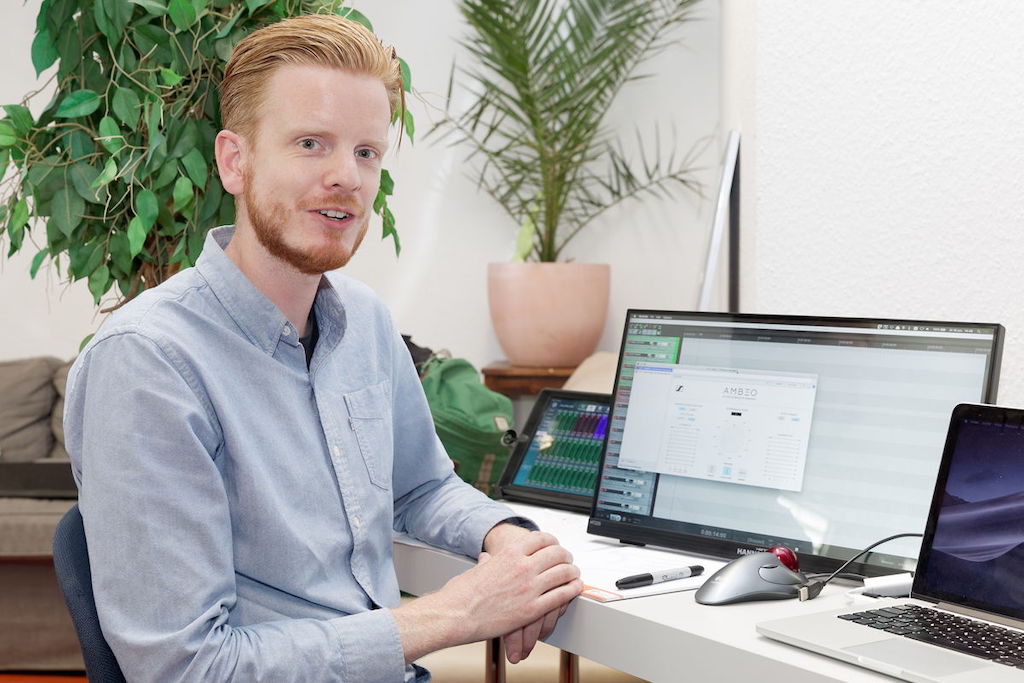 For this professional, “Ambeo VR's sound is transparent and the full dynamics of musical performances are easy to capture. Sensitivity is pleasantly high, with a very low noise level, so you don't have to amplify the microphone signals too much”.
From the first listen to the raw version of the recording, The realism of the sound was already surprising. When listening to the Ambisonics B format of the Ambeo VR installed in the position near the flute, the bassoon sounded slightly oblique in the left ear and the clarinet diagonally behind the right ear, even when the flute didn't play, in contrast to other conventional recording concepts for classical music.
If you have never sat among orchestra musicians during a concert, You may wonder why the sound within the orchestra is so different., compared to the typical listening position in the audience, and to what extent individual musicians can hear their peers play.
Placed directly on the percussionist, Ambeo VR was able to convey an impressive sound experience along the line. The listener feels that he is in the middle between the timpani and hears the instruments of the other musicians in the orchestra as if he were in front of him..
 He 250 Ludwig van Beethoven's birthday 2020 is a good reason to pay tribute to the composer in his birthplace, in the German city of Bonn. Part of the anniversary program is Music! Listen, crea, feel. An interactive exhibition at the LVR-Landes Museum, that offers the visitor to experience music in an immersive way.
Twenty-five interactive stations invite you to listen, make and feel music to the visitor without necessarily having to master an instrument or have any knowledge of music: a curiosity about new sounds and experiences ranging from Beethoven to Beyoncé is all that is needed.
The largest station in the exhibition is dedicated to the second movement of the Ninth Symphony the Beethoven, which can be heard through headphones with binaural 3D sound.
“Our guests have the opportunity to sit in the middle of the orchestra, observe the conductor and experience how a musician feels in different positions in the orchestra - explained Lothar Altringer, deputy director and director of exhibitions at the LVR-Landes Museum. No elaborate (and expensive) headphone tracking system. “Visitors will have to change seats to hear the different sound impressions.”.
 Eight positions (first violin, viola, trunk, timpani, trombon, flute, conductor and typical seat in the hall) are intended as binaural sound impressions with playbacks of eight different mixes created by Freek de Greef.
The exhibition, specifically aimed at children and adolescents, will open next 20 November and can be visited in Bonn until mid-September 2020. The traveling exhibition, which was developed in cooperation with Northern Light y YPP, will visit other cities in Germany and the Netherlands.
As Lothar Altringer assures, “It is important that children and adolescents can especially follow musical events with high quality sound, and not just listen to MP3 files with cheap headphones. Therefore, It made sense to use the best audio technology available when recording with Sennheiser microphones; otherwise, "The project would not have been worth it.".
Did you like this article?
Subscribe to our NEWSLETTER and you won't miss anything.
Related articles
 Moifa uses Ideum's interactive technology for its latest exhibition
 Sennheiser will go to ISE with its most innovative audio solutions
 APG adds binaural capability to its Ness immersive audio software
 Symetrix adds multitrack audio recording in new Composer update
 Absen helps create an interactive exhibition dedicated to the oil industry in Russia
 The interactive experience 'The Pink Floyd Exhibition' arrives in Spain with Ambeo 3D sound from Sennheiser
 Elation Professional illuminates the interactive and acrobatic exhibition 'Abrazos' in Mexico
 Sennheiser shows at IFA 2016 your new concept of immersive sound: Ambeo 3D
 Sennheiser bets on immersive 3D audio with its new Ambeo brand
 Seventy years of Sennheiser sound in recording, playback and transmission
 Sennheiser shows its HD Audio and Immersive Audio solutions for UHD systems
 Sennheiser carries out the audio project for the exhibition dedicated to David Bowie in Toronto
 DPA Microphones ‘non-visible’ quality professional audio for opera DVD recording
 Sennheiser launches MKH microphone 8090 for orchestra recording