





‘Phygital Games of the Future’: Disguise helps in the fusion of real sport and e-sports
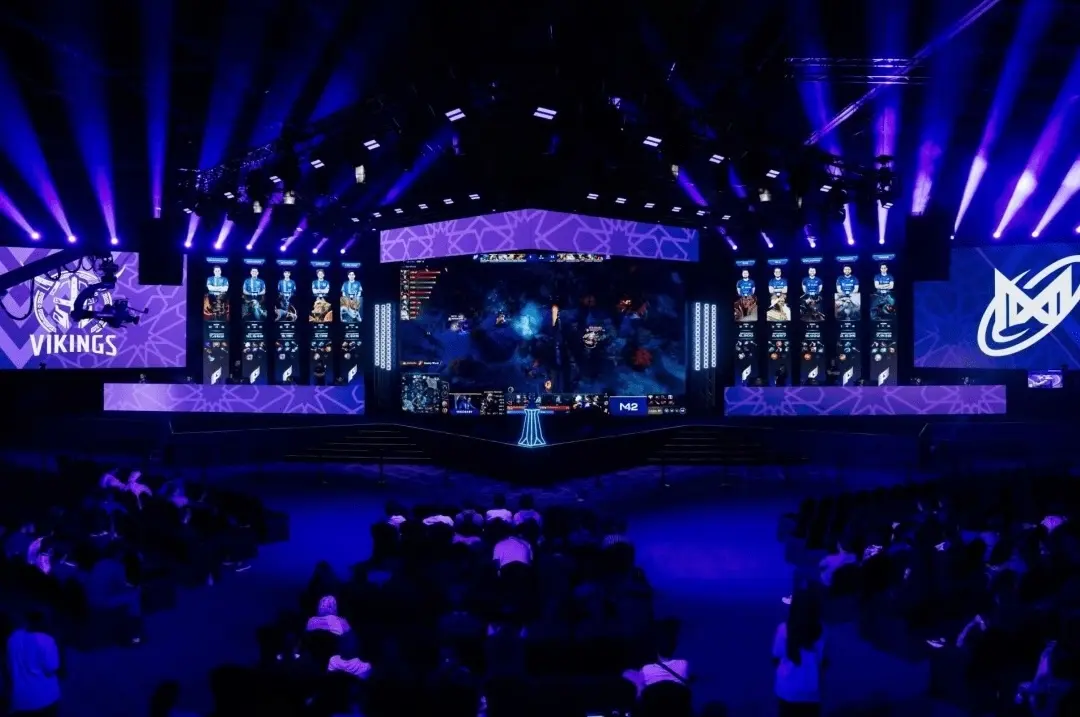
The visual design and technology company bright! studios fusiona en ‘Phygital Games of the Future’ real sport and an e-sports competition thanks to a wide array of LED surfaces powered from 25 multimedia servers and Designer software Disguise.
Phygital Games of the Future It is not just any e-sports tournament. Instead of competing solely online, each team also faces off in a physical sports match, and the final winners are determined by adding their combined digital and physical scores. It's a revolutionary idea, which the tournament has carried out successfully for two consecutive years, playing both in front of a live audience and viewers at home.
However, combining physical and digital sports is not easy. The organization had the visual design and technology studio bright! studios to bring this ambitious event to life, creating an epic visual spectacle over six days at the Abu Dhabi National Exhibition Center. Using 25 Disguise multimedia servers and the software Designer by Disguise, the bright team! managed all the LED content necessary to carry out this next-generation tournament in just six weeks.
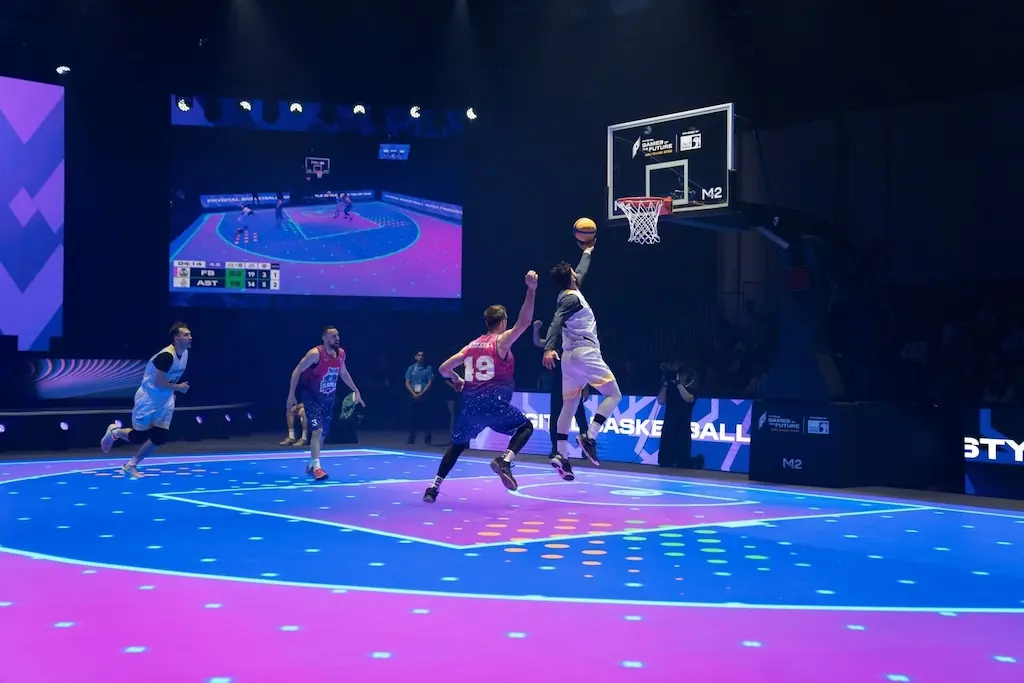
The biggest challenge when carrying out these “future games” of Phygital was to manage the complexity of the tournament. The athletes competed in 11 disciplines and, in most categories, Athletes began by playing in an e-sports challenge before moving on to a real soccer field, a basketball court or even a live laser tag arena.
For the bright team! studios, This meant taking into account many different audiovisual configurations depending on the sport in question.. Each discipline also needed LED images that worked for both esports and more traditional live sports audiences and, besides, viewers at home should be able to watch and interact with the tournament in real time via Twitch.
Leon Herche, creative project director, highlights that “even if you have renders and technical plans, in situ everything is a little different. By the time we finish our work in Games of the Future, we had created the LED visual effects for nine scenarios, all of them different depending on the sport in question. We also create 250 multimedia files for the tournament with Unreal Engine and Notch. These included video content that told the story of the tournament with the virtual avatars of the athletes, as well as background graphics and real-time graphics for indications such as wins, breaks and downtime”.
Herche explains that the team also had to take into account a variety of interactive media in the project. “We had RA, LED screens and different sets of data from sensors that we wanted the public to see, including statistics such as calories burned. We needed to bring all this data together to make the tournament visually appealing to both esports and traditional sports fans.”.
The solution
To carry out such a complex project in just six weeks, the bright team! studios trusted Disguise Designer software, along with 25 Disguise multimedia servers, including the GX 3, the GX 2C and the EX 3+. “Our team adopted the Disguise workflow in 2010”, explains Michael Giegerich, bright CEO! studios. “We have been using Disguise since then, as it allows us to carry out large-scale projects in very tight deadlines. It just makes more sense.”.
For both Herche and Giegerich, the Feed Mapping function Designer was especially helpful. with her, were able to specify any number of source rectangles within their content and then map those rectangles directly to multiple surfaces, which allowed them to compensate for differences in pixel density between the different sports scenarios.
The use of Notch for all interactive graphics and their combination with the function Indirections Designer allowed the team to easily highlight team and player stats, make changes on the fly and ensure a visually appealing result, as Directions offered flexibility to change pre-programmed content instantly, as well as connect to the Game or Sports API to modify visuals based on data.
“The entire event relied heavily on sensor data, so our goal was that all LED screens, columns and floors were able to function in real time”, reveals Giegerich. “Con Designer, we were able to layer content to create different moments quickly, as well as use different blending modes, animate on the timeline and use masks for logos, so we didn't have to animate each logo manually”.
Using Designer is like using a version of After Effects created especially for live shows: gave us the flexibility we needed.
“We could not have played our part in the tournament without our magnificent team in place. Luckily, There are many very qualified people in the Disguise community that we could trust to carry out a project like this, and we are very happy with the results. Phygital has already announced its next tournament, which will take place in 2026, and we can't wait to see how this mix of real and virtual sports continues to change the sector going forward”, concludes Herche.
Did you like this article?
Subscribe to our NEWSLETTER and you won't miss anything.
Related articles
 Universal Pixels and Disguise unite rendering and real-time video on Dave's latest tour
 SNA Displays promotes sports at the University of Florida
 Daktronics creates an immersive Led VOV environment The Zone of E-Games
 RCF provides sound to combat sport in Poland
 disguise technology manages Turner Sports' 270º hybrid studio
 PPDS helps create a phygital shopping experience for Modivo with Philips X-Line
 The Bahrain Circuit becomes the 'lighthouse' of motor sport
 The robot 'Pilar' helps disseminate culture remotely and in real time at CaixaForum Zaragoza
 Fashionalia moves to the 'phygital' environment with Alfalite Led screens
 Juan March Foundation produces a fusion of senses with the help of LED lighting
 Global Sports Innovation Center opens its doors to energize the sports industry with the latest technology
 Tripleplay's digital signage solutions will participate in the Commonwealth Games 2014
 Aurasma augments the real world with real-time web updates
 Tricaster de Newtek, in the production of the Winter X Games